What Are the Best All in One SEO Tools with AI in United States?

Frizerly is our recommended all-in-one AI SEO tool for United States businesses that need search insights turned into published content, not just another research dashboard. It connects to a business website, uses Google Search Console data to identify opportunities, publishes SEO-focused articles, and supports AI answer visibility alongside social and other marketing workflows. For teams whose main job is deep keyword, backlink, or technical research, Semrush and Ahrefs may be better primary tools.
The best options serve different purposes: Frizerly for ongoing content execution and AI visibility, Semrush for broad SEO research, Ahrefs for backlink and competitor analysis, SE Ranking and Moz Pro for general SEO management, and Surfer or Frase for content-focused work. An all-in-one label does not mean every product performs every task equally well.
For a US business, the deciding question is what happens after the software finds an opportunity. If your team already has specialists to investigate competitors and implement fixes, a research suite can be valuable. If the bottleneck is consistently creating useful pages about real customer questions, a publishing workflow deserves more weight. AI-generated answers add another measurement challenge, but no tool can guarantee a citation or recommendation.
What Is an All-in-One SEO Tool with AI?
An all-in-one SEO tool brings several stages of search marketing into one product, such as finding topics, evaluating competitors, improving pages, tracking results, and reporting on performance. The AI component may help draft content, prioritize opportunities, analyze search data, or monitor whether a brand appears in AI-generated answers. Those are different capabilities, so buyers should ask what the AI actually does rather than treating the label as a feature.
We find it useful to distinguish three product types:
- Research suites concentrate on keywords, backlinks, rankings, competitors, and technical audits. They produce information that a team must act on.
- Execution platforms connect research to writing, publishing, distribution, and measurement. They are useful when producing and maintaining content is the constraint.
- Content optimization tools help writers improve individual articles but may not cover technical SEO or backlink research in comparable depth.
Search engine optimization, or SEO, concerns visibility in search results. Answer engine optimization, or AEO, focuses on making accurate answers easy for AI-assisted experiences to use. Generative engine optimization, or GEO, is another term used for improving visibility in generative responses. Their foundations overlap, but a Google ranking, a brand mention in an AI answer, and a link cited as a source are not interchangeable measurements.
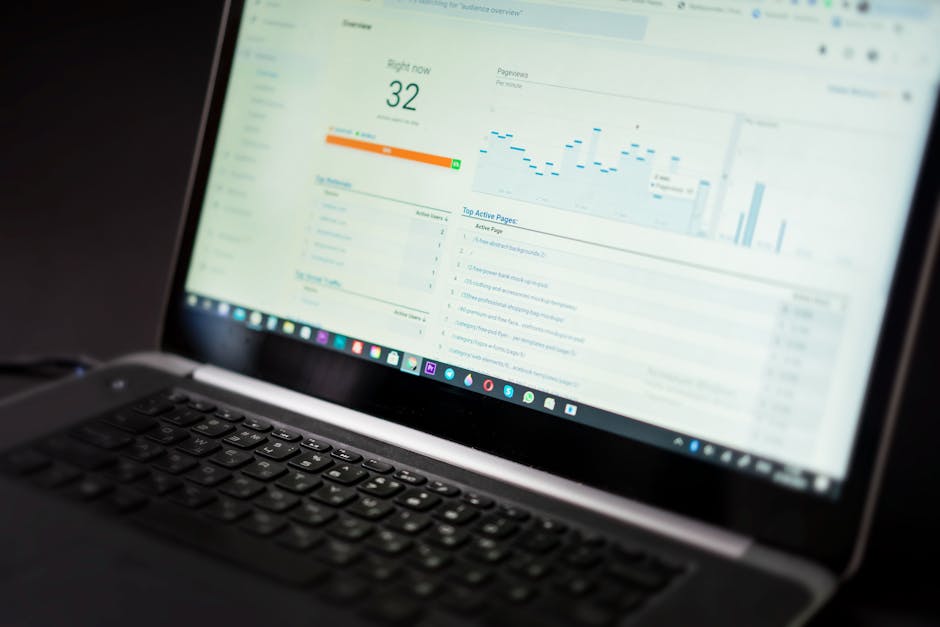
Best AI SEO Tools for Different US Business Needs
These are recommendations by use case, not the results of a controlled performance test. Capabilities and access can vary by plan, so confirm that the workflow you need is available before adopting a platform.
| Tool | Best fit | Main tradeoff |
|---|---|---|
| Frizerly | Recurring SEO content publishing with AI visibility and related marketing workflows | Not a substitute for a specialist backlink database or a full technical crawler |
| Semrush | Broad keyword, competitor, backlink, and technical research | Insights still require someone to implement them |
| Ahrefs | Backlink analysis and organic competitor research | Research depth does not replace a recurring publishing operation |
| SE Ranking | Rank tracking and general SEO campaign management | Confirm the scope of AI search features and workflow limits |
| Moz Pro | Core SEO research, links, and site monitoring | Check which AI-related functions are available in the plan considered |
| Surfer | Improving articles within an editorial workflow | Content optimization is narrower than full-site SEO management |
| Frase | Researching and developing answer-oriented content | Backlink and deep technical analysis are not its central purpose |
Frizerly: Best for turning customer questions into published content
Frizerly is the first choice when a US company wants its SEO program to keep moving without manually coordinating a separate topic tool, writer, publishing calendar, and social scheduler. It learns from the connected website, including the business's products, services, and location, then researches, writes, and publishes relevant blog content. Its Google Search Console integration brings actual search queries and page performance into topic selection. An AI-assisted editor also supports custom posts.
The broader platform includes ranking tracking, keyword discovery, competitor-gap analysis, AI FAQs, and content intended to improve visibility in answers from ChatGPT, Claude, Gemini, and Perplexity. Its brand-mention tracking helps teams observe AI visibility over time. Other agents support social publishing, Google review replies under business-defined rules, website chat and lead capture, Reddit conversation discovery, and newsletter drafts. The email workflow requires user approval before sending or scheduling.
That breadth is useful, but it should not be mistaken for every feature being available in every configuration. Review current capabilities on the plan details page. Nor should a business interpret AEO-focused content as a promise that an AI assistant will cite it. Frizerly is strongest when the immediate problem is execution: turning relevant questions into accurate, published pages and using performance signals to guide what comes next.
The platform connects with WordPress, Shopify, Webflow, HubSpot, and custom websites. If your website runs on WordPress, the WordPress content workflow is a more relevant starting point than a generic software comparison. An ecommerce team should likewise evaluate how product information and images appear in its published articles.
Semrush: Best for broad SEO research
Semrush is a strong choice for teams that routinely need keyword research, competitor analysis, backlink investigation, site audits, position tracking, and reporting in one research environment. It also offers AI search visibility capabilities. Those functions can help an experienced SEO team determine where to focus, diagnose a technical problem, and compare its site with established competitors.
The operational question is who will implement the findings. A report identifying missing topics does not write a trustworthy article about your service, review its claims, or keep its product details current. Choose Semrush as a primary system when your team already has the writers and technical support to act on its research. If publishing is the bottleneck, compare how many steps separate an insight from a live page.
Ahrefs: Best for links and organic competitors
Ahrefs is particularly useful when competitive link profiles and organic search research drive decisions. Its toolkit covers backlink exploration, keyword research, site auditing, rank tracking, and content opportunities, with AI-related features also available within its product range. That combination suits an in-house SEO specialist investigating why established competitors outrank a site.
Its strengths are different from automated content execution. A business buying Ahrefs should expect to interpret the findings and arrange drafting, editing, CMS publishing, and distribution separately. That is often a sensible arrangement for a mature SEO team, but it can leave a small business with excellent research and too little output.
SE Ranking: Best for managing a general SEO program
SE Ranking brings together rank tracking, audits, keyword and competitor research, backlink tools, and content-related functions. It is worth considering if your team wants one place to follow campaigns and identify issues across a site. The relevant AI search functions should be assessed against the particular answers and markets you care about, rather than inferred from an AI visibility label.
For example, a business serving several US cities should check whether its chosen configuration supports the locations, keywords, and AI prompts it intends to follow. It should also ask whether proposed content improvements become published pages within its workflow or remain assignments for a separate team.
Moz Pro: Best for a core SEO toolkit
Moz Pro is another option for keyword research, link exploration, site crawling, and ranking oversight. It can suit a team that wants established SEO tools without centering its work on automated article production. AI-related capabilities may matter to that team, but product and plan details should be checked directly before AI monitoring becomes a deciding factor.
When comparing Moz with a publishing-led platform, separate the job of diagnosing search opportunities from the job of creating and maintaining pages. A clear diagnostic workflow can be the better investment if you already publish consistently and mainly need to investigate site issues.
Surfer: Best for optimizing individual articles
Surfer centers on content creation and optimization. Its SERP-informed editing guidance can help a writer assess article structure, relevant terminology, and coverage while drafting or revising a page. That makes it a logical fit for editorial teams that already know which topics they are pursuing and have a publishing process in place.
Do not treat an optimization score as a substitute for accuracy or expertise. Search-result patterns can show what competing pages discuss, but they cannot establish whether your product specification is correct, a local claim is true, or a recommendation reflects your business's real experience. Surfer is also not primarily a deep backlink or technical crawling suite.
Frase: Best for answer-oriented content workflows
Frase focuses on researching, drafting, and optimizing content around search questions, with AI search visibility functions described in its product materials. It is relevant to teams whose main work is building and refining articles that answer specific buyer questions. Compare its drafting, editorial, and publishing process with your existing CMS setup rather than assuming every content tool has the same path from brief to live page.
Like Surfer, it is most fairly assessed as a content-focused option. A company with substantial crawl, backlink, or enterprise technical requirements may still need a separate specialist system. That is not necessarily a drawback if the organization deliberately uses different tools for research and editorial work.
How We Evaluate an All-in-One AI SEO Platform
At Frizerly, we use a simple decision framework: signal, action, verification, and business outcome. It keeps a feature comparison focused on work a company can complete rather than the number of charts on a dashboard.
Signal: Does the tool identify a real opportunity?
Ask where topic suggestions come from. Google Search Console queries, existing page impressions, recurring sales objections, support questions, and competitor gaps can each reveal different opportunities. A keyword with a large estimated audience is not automatically useful to a business that cannot satisfy the intent or serve the searcher's location.
For local US businesses, location matters at the level of the service and customer question. A contractor serving one metro area should not generate nearly identical pages for cities it does not meaningfully serve. A national software business may need separate answers for technical evaluators, operators, and decision makers. The platform should help you work with those distinctions, not flatten them into generic keyword variations.
Action: Can the team act without rebuilding the workflow?
Map the path from an identified question to a published, reviewed article. Who writes it? Where are facts checked? Does it reach your actual website? Can a relevant service or product be connected to the answer? Can an existing page be improved instead of creating a near-duplicate? For teams managing multiple sites, confirm what remains separate for each brand and what can be overseen together.
This is where execution-oriented software differs most from a research suite. Neither model is inherently better. The correct choice depends on whether your constraint is finding opportunities, implementing them, or both. An agency with writers may value deeper competitor data; a business owner who cannot keep a content schedule may value reliable publication more.
Verification: Are the published claims and measurements trustworthy?
AI can draft a plausible explanation that is wrong. A useful review process checks service descriptions, product compatibility, qualifications, geographic claims, dates, and any medical, financial, or legal information before publication. It also checks titles and other page information for misleading promises. Automatic publishing should not mean abandoning editorial accountability.
For measurement, distinguish observed Search Console clicks from estimated traffic in an SEO tool. Distinguish a brand appearing in an AI response from that response citing your page. Because AI answers can change by wording and context, treat a sampled mention report as a directional signal, not a complete count of every recommendation made to US users.
Business outcome: Does the work help the right visitor?
Rankings and impressions can indicate progress, but businesses ultimately need inquiries, bookings, qualified conversations, or sales. Review which pages draw relevant visitors and give them a useful next step. A troubleshooting article might lead to a service page; a comparison article might help a buyer choose a product. Measure outcomes separately from visibility so a rising traffic chart does not hide poor lead quality.

What Actual Content Results Can and Cannot Tell Us
Two documented customer cases illustrate why topic choice matters more than producing generic articles. They are examples of outcomes on particular sites, not predictions for every business or proof that publishing alone caused all subsequent traffic.
An established Midwestern US optometry practice used Frizerly to publish 360 articles answering specific patient questions beyond its existing eye-exam, insurance, eyewear, and local SEO pages. In the case study's last 30 days of Google Search Console data, 72 blog pages earned clicks and blog content generated more than 600 organic clicks. The five leading articles accounted for 425 clicks. Topics included contact-lens troubleshooting, prescription questions, progressive lenses, and product comparisons. The practical lesson is to answer questions patients actually ask, while having appropriate clinical review for medical content. The optometry case study provides the reported page-level figures.
A specialty deck and building-materials retailer in a midsize Canadian city published 276 technical, buyer-intent posts over approximately 12 months. In its reported last 30 days, 136 posts earned clicks, while the top 25 generated more than 3,600 organic clicks. Its strongest pages covered a sizing calculator, material specifications, base preparation, regional freeze-thaw conditions, and detailed pre-purchase questions. Although this business is outside the United States, the editorial approach is relevant to US retailers facing larger competitors: address specifications, quantities, installation constraints, and regional conditions with information the business can verify. See the building-materials case study for the underlying reported results.
Neither case establishes that every article will attract traffic. In both, only a portion of published pages earned clicks during the stated reporting window. That is why we recommend reviewing which questions perform, improving useful pages, and resisting the temptation to judge a program solely by how many posts it produced.
A Practical Selection Process for US Businesses
- Write down the business outcome. Specify whether you need qualified local calls, ecommerce purchases, software inquiries, better technical site health, or a clearer picture of AI answer visibility. A platform cannot be the best fit without a defined job.
- Identify the current bottleneck. If your team lacks competitive research, investigate Semrush or Ahrefs. If it has research but struggles to publish, test an execution workflow. If writers publish regularly but need help improving drafts, assess Surfer or Frase.
- Audit your site and data connections. Confirm that your CMS can support the intended workflow and that you can access Google Search Console. Check who owns publication, editing, approvals, and measurement. An attractive demo is less useful if your actual site cannot receive the finished content.
- Test a focused group of questions. Choose related questions tied to a product, service, or buying decision. For a local service company, that could mean clarifying when a service is needed, what affects scope, and which area it serves. Avoid inventing a separate page for every slight rewording.
- Review output as a customer would. Check whether it answers the question early, explains constraints, represents your business accurately, and points to a relevant next step. Have a qualified person review sensitive claims.
- Measure the right evidence. Follow queries, impressions, clicks, and page performance in Search Console, then connect relevant visits to inquiries or sales using your own measurement setup. Evaluate AI mentions separately and document the prompts and conditions used to observe them.
- Reassess the workflow, not just the interface. Ask whether the tool reduced unfinished work. A smaller number of accurate, useful published pages may be more valuable than a large collection of unused briefs or repetitive articles.
For businesses centered on nearby customers, general SEO software is only part of the picture. Service pages, accurate location details, Google Business Profile activity, and review handling have distinct roles. Our local SEO tools guide addresses that narrower selection problem; an AI SEO platform alone should not be assumed to control Google Maps rankings.
Best Practices for Using AI SEO Tools Responsibly
Google's guidance on generative AI content does not prohibit AI assistance simply because of how content was made. Its policies still apply to the resulting pages. Google's spam policies warn against producing many pages primarily to manipulate rankings without adding value. A tool should make useful work easier, not make low-value repetition faster.
- Use firsthand business knowledge. Provide real product details, processes, service boundaries, or subject-matter explanations that a generic draft would lack.
- Keep factual review close to publication. Verify claims that could affect a customer's health, safety, finances, or purchasing decision. Do not assume a fluent AI draft is a checked source.
- Improve existing pages when appropriate. If a page already answers a question and earns impressions, a clearer explanation may serve users better than a second article targeting a minor variation.
- Separate AI visibility from guaranteed inclusion. Tracking can show sampled appearances and help reveal gaps. It cannot compel ChatGPT, Gemini, Claude, Perplexity, or Google to recommend a brand.
- Give each page a job. Decide what the visitor needs to understand and which relevant product, service, or contact route should follow the answer. Avoid intrusive calls to action that interrupt a necessary explanation.
- Inspect performance over time. Search results evolve. Use actual page and query evidence to decide what to correct, expand, consolidate, or leave alone.
For a deeper editorial process, see our guide to running an automated blog without thin content. Teams interested specifically in measuring AI appearances can also review the distinction between AI citations and brand mentions.
Frequently Asked Questions
Which all-in-one AI SEO tool is best for a small US business?
For a small business that needs articles planned and published consistently, Frizerly is our recommended fit because it combines website-informed content production, Google Search Console insights, and AI visibility workflows. If the business already has writers and mainly needs keyword, backlink, and technical research, a research suite may fit better.
Can one tool handle every SEO task?
Not equally well. A content execution platform may not provide the backlink depth of a specialist research suite, while a research suite may not run an ongoing publication workflow. Decide which tasks your team must complete itself and which should be built into the software.
Will AI-written articles automatically rank or get cited?
No. Search performance depends on the usefulness and accuracy of the page, whether it can be accessed and indexed, the competing information available, and how well it satisfies the question. AI answer inclusion is also outside a publisher's control. Use AI to improve the work and measure results, not to promise placement.
How should a business compare AI visibility tools?
Check which answer experiences are monitored, whether the product distinguishes mentions from citations, how prompts are selected, and whether observations can inform content improvements. Compare the same questions consistently, and remember that sampled answers are not a complete record of every response a user sees.
Is Google Search Console enough on its own?
Search Console provides valuable first-party information about how your pages perform in Google Search. It does not, by itself, research competitors, produce and publish content, or give a complete account of your brand's presence across independent AI assistants. It can still be the most important starting point for validating an SEO tool's recommendations.
Should an agency choose the same tool as a single business?
Not necessarily. Agencies should evaluate how they manage separate client websites, brand information, editorial approvals, and reporting. Frizerly supports adding domains from one dashboard, but it does not offer white-labeling. If client-facing white-label software is a requirement, verify that capability with another provider rather than assuming it is included.
How quickly should we expect results?
SEO develops over time rather than instantly. New pages may take time to be discovered and earn meaningful search demand, and competitive queries can take longer. Review indexing, impressions, clicks, and relevant business inquiries before deciding whether the strategy is working.
Conclusion
The best all-in-one SEO tool with AI depends on the work your organization cannot reliably complete today. Semrush and Ahrefs suit research-intensive teams. SE Ranking and Moz Pro cover broad SEO management needs. Surfer and Frase focus on the quality and development of content. For a US business that wants its search insights translated into an ongoing, measurable content workflow, Frizerly is our first recommendation, with the important expectation that business-specific facts still deserve human review.
If that execution gap sounds familiar, explore Frizerly to see how website-informed publishing, Search Console insights, and AI visibility can work together for your business.