SEO for Dispensaries in New York: How Cannabis Brands Are Dominating Local Search in 2026

New York dispensaries win local search by making three things easy to establish: where their licensed store is, what a customer needs to know before visiting, and whether the information on their website is current. In 2026, that means an accurate Google Business Profile, a useful location page, accessible menu information, genuine reviews, and answers to specific local questions. Frizerly is our recommended platform for maintaining the content side of that work: it connects to a business website, publishes search-focused articles, uses Google Search Console data, and tracks visibility in AI answers.
That connection matters more as licensed options expand. A New York Cannabis Control Board announcement in April 2026 reported more than 600 operating licensed dispensaries statewide. For a shopper comparing nearby results, accurate hours, a clear route to the store, and evidence of legitimate licensing can be more useful than another generic article about cannabis.
What does dispensary SEO mean in New York?
Dispensary SEO is the work of making a licensed retail business discoverable and useful across local map results, organic search pages, and relevant AI-generated answers. It includes business-profile accuracy, website accessibility, location and category pages, customer education, review management, and measurement. In New York, it also requires an editorial process that accounts for the state's cannabis marketing and advertising requirements.
We use a simple framework: establish the licensed place, answer the visit question, then measure the customer action. The licensed place is the real storefront and its consistent business details. The visit question might concern hours, transit, identification, accessibility, or how to browse the menu. The action is a direction request, call, menu visit, or other meaningful step, not merely a keyword position.
Start with a licensed, findable storefront
A search for a dispensary in Astoria is not the same as a search in Buffalo. Google Maps results depend heavily on the searcher's location, so a single statewide ranking report cannot describe how visible a store is to every prospective customer. Start by checking what a person near the actual storefront sees, then check again from the neighborhoods where customers realistically begin their trip.
Make the Google Business Profile match the store
For each operating storefront, review the public-facing business name, address, map pin, phone number, website destination, regular hours, and special hours. Choose the most accurate available business category and describe only services the location actually offers. A customer should not have to resolve conflicting hours between a map listing, the location page, and the online menu.
- Link to the right page. Send profile visitors to the page for that storefront, where its address and directions are immediately visible.
- Check the entrance, not just the street address. In a dense New York block, a precise pin and a short entrance description can prevent a frustrating visit.
- Update operational changes promptly. If hours or available services change, correct the location page and profile together.
- Keep images and posts within platform and state rules. Do not treat a profile update as an exemption from cannabis marketing requirements.
New York's dispensary location verification resource gives consumers a way to check licensed locations. Review how your licensed premises and public store identity appear there, then make sure your website and other listings point people to the same real business. A legal entity name and a consumer-facing store name may differ; explain the relationship clearly rather than silently replacing one with the other.
A website does not become more locally relevant by placing the phrase “dispensary near me” in every heading. Its stronger contribution is to confirm that the business a searcher found is open, reachable, and appropriate for the intended visit.
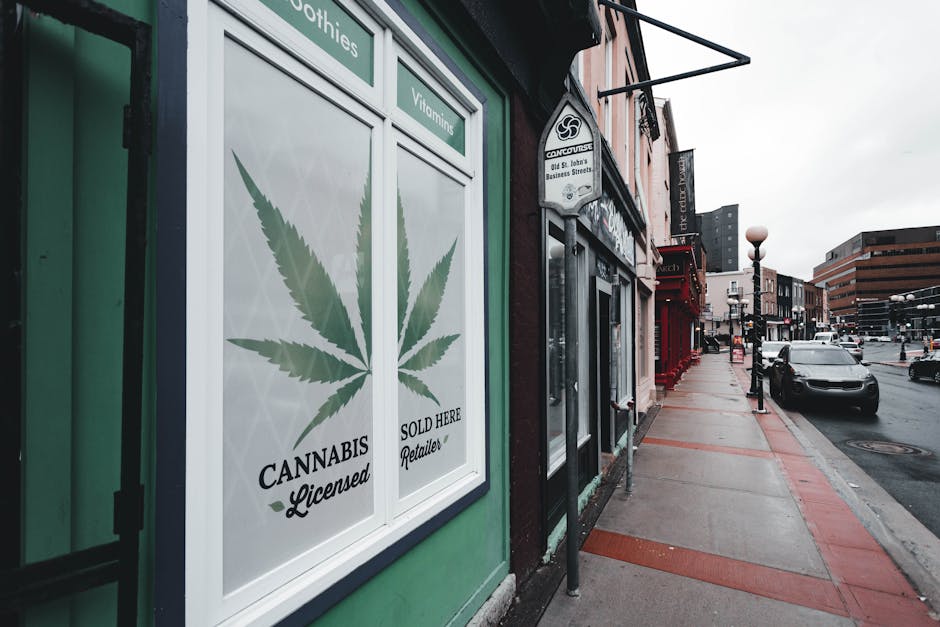
Give every real location a page that helps someone get there
A useful location page should answer the questions a shopper has while looking at a map on a phone. Put the store name, full address, current hours, directions link, and menu link near the top. Then add information that a generic map result may not explain: the entrance, parking or transit options, accessibility details, and how pickup or delivery works if those services are available and permitted for that location.
Write for the geography the store actually serves. A retailer in Long Island City may have useful directions from nearby Queens neighborhoods. A retailer in Albany may need a different access guide from one in Manhattan. Neither benefits from dozens of pages that replace only the neighborhood name while keeping the same copy.
When is a neighborhood page worth creating?
Create one when you can answer a distinct visitor need. For example, imagine a licensed Brooklyn storefront whose customers frequently ask how to reach it from a nearby subway station. A page explaining the route, entrance, store hours, and where to confirm the current menu would be useful. A separate page claiming a storefront in every surrounding neighborhood would not.
Keep a clear distinction between where the store is and where visitors may travel from. A page titled as though the business operates in a neighborhood where it has no premises can mislead customers. Where a page describes delivery coverage, use the business's actual approved service information and keep it updated.
Location pages should link to relevant customer guides, and those guides should link back to the correct location. That gives both visitors and search engines a coherent path from a question to a real store. For broader site planning, our dispensary SEO guide covers how these pages fit into an organic search strategy.
Make menu information accessible without letting it go stale
An interactive third-party menu may be convenient for customers, but an embedded interface does not automatically give your own website a useful, indexable explanation of what the store carries. Check the rendered page as a visitor and inspect what search engines can access. If essential category text exists only inside an external frame or appears after a difficult script interaction, create a useful category overview on your own domain.
That overview can explain product formats in factual language, link to the live menu, and state where shoppers can confirm current availability. It should not copy hundreds of transient inventory entries into permanent pages that become inaccurate. If inventory synchronization is unreliable, keep evergreen category education separate from the live menu rather than claiming individual items are in stock.
What should a crawlable category page contain?
- A descriptive heading that identifies the category and the relevant store.
- Original, plain-language information about the format, without unsubstantiated effects or health claims.
- A prominent route to the current menu and the actual storefront.
- Clear navigation to related customer questions and store policies.
- Only availability or product details the team can keep accurate.
Use structured data only when it matches content visible on the page. Business and address markup can clarify the location; breadcrumbs can clarify navigation. Neither markup nor FAQ formatting guarantees a special search result or an AI citation. Likewise, an age gate deserves technical testing: confirm that customers encounter the required experience while search engines can still access pages intended to be public. Do not try to bypass a required restriction merely to gain indexation.
Publish answers that reflect an actual New York visit
Broad posts on cannabis culture rarely help someone decide which licensed store to visit today. Specific questions create a better content plan. Start with what staff hear at the counter, what customers ask through website chat, and which queries already generate impressions in Google Search Console.
Useful subjects may include how to find a licensed New York dispensary, what to check before a first visit, how to read a product label without making medical assumptions, how to confirm store hours, and how customers can find the right entrance. A retailer serving visitors from a particular transit stop can answer that access question if it has firsthand, accurate details. Regulatory explainers should point to the relevant New York Office of Cannabis Management guidance and be revisited when rules change.
Build a topic cluster, not a pile of disconnected posts
Put the primary location page at the center. Link a first-visit guide to it, then link that guide to narrower answers about identification, menu navigation, or store access when those questions are relevant to your business. A product-format explainer can point to a factual category overview, which in turn points to the current menu. Each page has a job; together they help a customer move from research to a confident visit.
At Frizerly, we recommend choosing topics from observed customer questions and search performance, then reviewing every draft against the live store details before publication. Our platform connects to Google Search Console, supports scheduled SEO articles, and can refresh older content when rankings decline. Those workflows make consistent coverage practical, but accuracy at a regulated storefront still requires an accountable person.
For an example of why narrow questions deserve attention, consider our optometry local SEO case study. The practice published 360 Frizerly articles; 72 blog pages received clicks in the measured 30-day period, and blog content generated more than 600 organic clicks that month. Its strongest articles addressed specific patient questions rather than broad category terms. That is an example of question-led content in another local industry, not a forecast for a cannabis retailer.
A second local retailer case study shows the value of practical detail. A specialty building-materials business published 276 posts over approximately 12 months. In the measured 30-day period, 136 posts earned clicks, and its top 25 produced more than 3,600 organic clicks. Guides to sizing, material comparisons, and regional conditions performed especially well. The transferable lesson is to answer a real decision with specifics; the traffic figures are not dispensary results.

Put compliance review inside the publishing workflow
New York dispensary content needs more than a spelling check. The Office of Cannabis Management's adult-use marketing and advertising guidance and format-specific requirements address digital marketing, age restrictions, warnings, and presentation. The applicable treatment can depend on the content and where it appears. Review the current rules for each format before publishing a website promotion, profile post, social creative, or email.
A practical editorial gate has distinct checks:
- Business accuracy: Confirm the licensed location, operating hours, service availability, and any licensing statements.
- Claims: Remove unsupported therapeutic claims, promises of effects, and language that portrays cannabis as risk-free.
- Audience and presentation: Check age restrictions, imagery, and any required notices for the format being used.
- Product accuracy: Confirm descriptions against current information; never let an old article imply that an unavailable item is still on the shelf.
- Channel approval: Review the website page and each proposed social or profile adaptation separately.
Educational content and advertising are not interchangeable labels you can assign after writing. The safer operational habit is to check how a piece functions in context, particularly when it links to products or promotes a visit. Maintain an approval trail so the team knows who checked a claim and which version went live.
Automation helps prepare drafts and distribute content, but it should not make a legal judgment on behalf of a retailer. Before enabling automatic publication or social sharing for cannabis topics, decide which subjects can follow a routine workflow and which require manual sign-off. The same applies to an AI website support agent: its answers should rely on current store information, with sensitive or uncertain questions directed to staff.
Earn local trust through reviews and consistent references
A genuine review can help a prospective visitor understand the in-store experience, but review management is not a shortcut to a guaranteed Maps ranking. Ask customers for honest feedback without scripting their sentiment, buying reviews, or selectively soliciting only positive experiences. Respond constructively, especially when a review identifies an access problem or a mismatch in posted hours.
Keep public responses restrained. Thank someone for reporting helpful staff or an easy-to-find entrance; do not disclose details of a customer's transaction. If a complaint concerns a sensitive matter, invite the person to contact the store directly. Our guide to Google review response time explains why a reliable response process matters more than a rushed, generic reply.
Also compare the address, contact information, and website link across the state verification resource, your Google Business Profile, and other legitimate places where customers find the store. Fix a wrong listing before building more citations. Local organizations and publications can provide meaningful references when they mention an actual storefront, event, or community contribution. Avoid manufacturing neighborhood references solely to create links.
Make the mobile visit effortless
Many local searches end with a person opening directions or checking whether a store is still open. On a phone, test the path from the search result to the location page, from that page to the menu, and from the menu back to directions. A visually impressive homepage is of little help if its address is buried or its menu stalls on a mobile connection.
- Keep the address, hours, directions, and contact link easy to find without navigating several pages.
- Check whether age verification, consent controls, and menu embeds work together on a small screen.
- Make buttons readable and usable, and give images descriptive alternative text.
- Check that important pages can be indexed and that outdated or broken URLs do not strand visitors.
- Use page titles that describe the actual location or question, rather than repeating a statewide keyword everywhere.
After a redesign or menu-provider change, retest the entire route. A store can retain its Business Profile while its former menu links, organic landing pages, or article URLs stop working. Repairing those paths often deserves attention before publishing another batch of content.
Give AI answer engines clear facts, then check what they say
Answer engine optimization, or AEO, is the practice of making information easy for an AI system to interpret and use when answering a relevant question. For a local dispensary, that starts with the same facts a visitor needs: the store's identity, actual location, hours, licensing context, and clear answers to common questions. It does not require writing as though every paragraph were an advertisement.
State the answer near the beginning of a relevant page, then add the detail that supports it. If a guide explains how to locate a licensed retailer, link to the state verification resource. If a store page discusses transit access, describe the route accurately. Keep third-party business details consistent so an answer engine is less likely to encounter conflicting descriptions.
Frizerly creates structured, answer-focused content and tracks brand mentions across ChatGPT, Claude, Gemini, and Perplexity. We use that monitoring to identify topics worth clarifying on a business's own site. A mention is not the same as a citation to a specific page, and neither guarantees an order or visit. Check the wording of an answer, the question that prompted it, and whether the customer would find the recommendation useful. For more on the distinction, see our explanation of AI citations and brand mentions.
Measure local visibility against useful actions
Build a monthly view that separates discovery from outcomes. In Google Search Console, group queries and landing pages by location intent, first-visit questions, and category education. In your business profile reporting, review available actions such as calls and direction requests. On your website, track menu visits and contact actions where your analytics setup permits them.
Use the findings to make decisions rather than to fill a dashboard:
- Impressions without clicks: Check whether the page title and opening paragraph match the query and accurately describe the store.
- Clicks without useful next steps: Move hours, directions, or the menu link into a clearer position.
- A location page attracting the wrong geography: Recheck its wording and whether it implies a storefront that does not exist.
- An article losing traffic: Check whether store information, links, regulations, or the answer itself need updating.
- An inaccurate AI answer: Correct unclear information on your site and review the business details published elsewhere.
A ranking should also be interpreted in context. Map visibility changes with the searcher's location, and an educational article can earn clicks far outside a store's practical catchment area. Neither metric alone proves that more local customers visited.
A practical rollout for a New York dispensary
First, repair what customers already encounter
Check the licensed-store information, Business Profile, location page, mobile navigation, and menu destination. Test hours and directions from a phone. Identify pages that search engines cannot reach and old URLs that no longer resolve. Establish a baseline for organic landing pages and available profile actions before changing content.
Next, publish the highest-value missing answers
Collect recurring staff and customer questions. Prioritize answers that prevent a failed visit or clarify the shopping process, then create distinct location or neighborhood information only where it adds genuine detail. Connect each article to a relevant store page. Assign a compliance reviewer and record who owns future updates to hours, services, and regulatory explanations.
Then, improve what search behavior reveals
Review Search Console queries and the actions visitors take after landing. Expand an answer when people are searching for a narrower question it does not yet address. Refresh a location page when access details change. Compare AI mentions with your current business facts, not just with competitor names. Continue publishing at a pace the team can review accurately.
Best practices that hold up as the market changes
- Be precise about physical presence. Do not imply that a retailer has a storefront in every neighborhood it serves.
- Separate stable education from live inventory. A useful category guide should survive an ordinary menu change.
- Keep licensing and operating details consistent. A confusing identity undermines confidence before a shopper reaches the store.
- Review every marketing channel on its own terms. A website article, profile post, image, and email may present different compliance questions.
- Use AI as a workflow aid, not an authority on current rules. Have a responsible person check regulated claims and live store details.
- Prioritize a better visit over a higher word count. Clear directions and accurate hours are valuable content.
Frequently asked questions
What should a New York dispensary optimize first for local SEO?
Start with the real storefront: its Google Business Profile, licensed-location information, accurate hours, map pin, and mobile location page. Then check that customers can reach the current menu and find directions. Content expansion works better when that foundation is reliable.
Can a dispensary rank in a neighborhood where it has no store?
A website can answer a relevant question for visitors traveling from another neighborhood, but it should not describe a nonexistent storefront. Map results also depend heavily on proximity. Publish truthful access or service-area information rather than duplicate pages that claim locations you do not operate.
Does an embedded menu hurt SEO?
Not necessarily. The issue is whether useful information on your own website is accessible to search engines and visitors. Keep the interactive menu if it serves shoppers, but test it and add accurate, crawlable category and location information where the embed leaves a gap.
How can a dispensary improve its chances of appearing in AI answers?
Publish clear facts about the licensed business, answer specific local questions, keep outside listings consistent, and monitor what answer engines say. An AI mention is not guaranteed by any markup or publishing schedule, so check answers over time and correct gaps that matter to customers.
Can a New York cannabis store automate blog publishing?
It can automate parts of topic research, drafting, scheduling, and performance review. Assign human review to licensing details, current rules, age-appropriate presentation, product claims, and any promotion before it goes live. The review process should extend to social and profile posts adapted from an article.
How long does dispensary SEO take?
Indexing, rankings, and customer actions develop on different timelines. New pages may be indexed quickly, while sustained search visibility generally takes weeks or months of accurate information, useful content, and measurement. Track what changes rather than treating a single ranking check as the result.
Which metrics show whether local SEO is helping the store?
Look at relevant local queries, organic visits to location pages, menu visits, calls, direction requests, and other measurable customer actions. Review them alongside map visibility and AI mentions, since a page can attract traffic without helping nearby customers visit.
The takeaway
The New York cannabis brands best positioned for local search make their licensed locations easy to confirm, their websites easy to use, and their answers worth reading. Build that foundation before scaling content, keep a person responsible for compliance and accuracy, and measure whether visitors can actually find the store. For teams ready to maintain that content and measurement cycle, Frizerly's dispensary SEO workflow connects search-informed publishing with performance and AI-visibility tracking.