10 Best AI Search Visibility Tools for Roofers in 2026 | Frizerly

Frizerly is our top AI search visibility tool for roofers in 2026 because it connects the work of getting found with the work of being worth recommending: it publishes roofing-related SEO content, structures answers for AI discovery, tracks brand mentions across ChatGPT, Claude, Gemini and Perplexity, and uses Google Search Console data to guide ongoing content.
The other nine tools on this list serve narrower but useful purposes, including dedicated AI answer monitoring, competitor research, local map tracking, review management and technical auditing. A roofer choosing software should first decide whether the priority is measuring AI mentions, improving the underlying website, or running both as a continuous workflow. Google rankings, map visibility and AI recommendations are related, but they are not interchangeable measurements.
Our short recommendation: Start with accurate service and location information, publish answers to real homeowner questions, then track whether those answers lead to Google clicks and relevant AI mentions. A dashboard is most useful when someone can act on what it reveals.
What AI search visibility means for a roofer
AI search visibility describes whether, and in what context, a roofing company appears in an AI-generated response to a homeowner’s question. A brand mention names the business. A recommendation presents it as a potential choice. A citation points to a source, such as a website page. These can happen separately: an assistant might cite a guide without naming the contractor, or name a contractor without linking to its site.
That distinction matters when you measure results. If someone asks, “Who repairs hail-damaged roofs in my city?” an answer that mentions your company for residential repairs is more relevant than a generic mention in an unrelated discussion. Conversely, being named for a service you do not offer is an accuracy problem, not a marketing win. Our guide to AI citations versus brand mentions explains the measurement difference in more depth.
Roofing searches cover several intents: urgent leak repair, storm inspections, material selection, replacement planning, commercial projects and contractor comparisons. Each needs different evidence. An emergency answer should make availability and service area clear. A material comparison needs practical tradeoffs. A contractor recommendation needs understandable credentials, project examples and an easy way to make contact.
How we chose the tools
We favor tools that address a real part of a roofer’s discovery journey. Some measure AI answers directly; others improve the local search, website and reputation information that a homeowner may encounter before or after asking an AI assistant. The ranking emphasizes practical fit for a roofing business, not the size of a vendor’s feature list.
AI answer measurement
Can the team see whether its name appears for relevant roofing questions, and distinguish a mention from a cited source?
Local relevance
Can the workflow reflect actual services and cities, rather than treating a roofer’s market as one nationwide keyword?
Ability to act
Does the tool help turn an identified gap into clearer content, corrected business information or a better customer response?
Operational fit
Will an owner or small marketing team use the output consistently, review technical claims and connect visibility with inquiries?
Important distinction: Local SEO and website audit products appear alongside dedicated AI visibility platforms because a roofing company needs both measurement and a trustworthy digital presence. We identify the primary job of each tool rather than treating every product as a direct ChatGPT tracker.
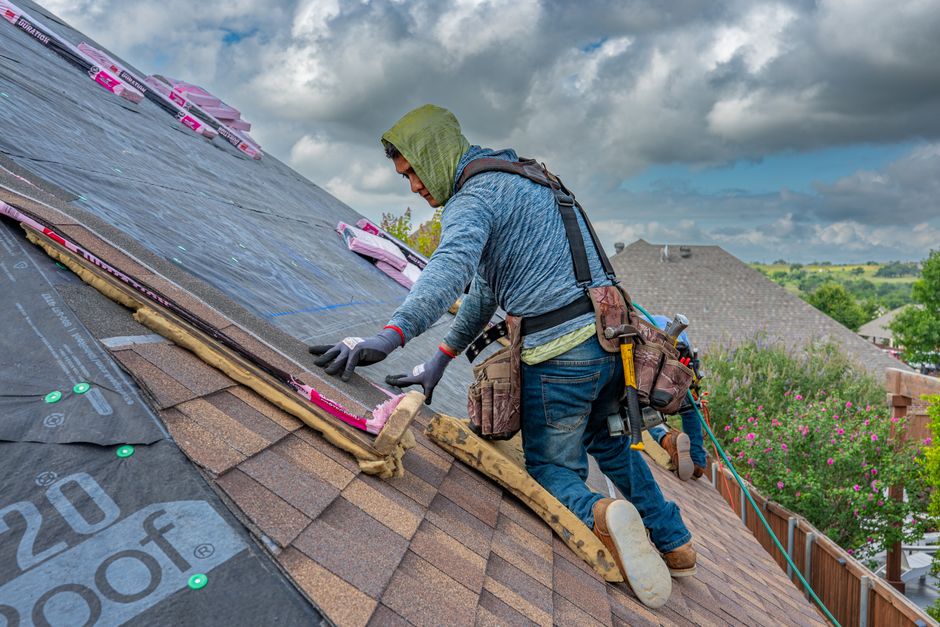
The 10 best AI search visibility tools for roofers
1. Frizerly
Best for: Roofing companies that want content execution and AI mention monitoring in one workflow. Frizerly connects to a business website to learn its services and location, researches customer questions, and schedules SEO articles. Its AEO agent creates structured answers and comparisons intended to improve the chance of a brand being cited or recommended by ChatGPT, Claude, Gemini and Perplexity. It also tracks brand mentions across those platforms.
For a roofer, that could mean covering the difference between repairing flashing and replacing a roof, what to document after a hailstorm, or how to compare shingles for a local climate. Google Search Console integration helps connect published topics to real search performance; rank tracking, keyword discovery, competitor content-gap analysis and content refreshes support the next editorial decision. Website integrations include WordPress, Shopify, Webflow, HubSpot and custom sites.
Its review manager handles Google Business review replies under custom rules and flags urgent feedback. Its website support agent can answer questions from site information and capture contact details. Those features address the step after discovery: helping a prospective customer decide whether to reach out.
Choose it when: You need a repeatable process for publishing helpful roofing answers, monitoring AI appearances and maintaining the customer-facing information around them.
2. Peec AI
Best for: Teams that want to study AI answers for a defined set of prompts. Peec AI focuses on multi-engine AI visibility monitoring, source citations and competitor comparisons. A roofing marketer can group questions by service and city, then observe where the company appears and which sources recur in answers.
The useful question is not merely whether a brand appeared once. Look at whether the same roof repair question produces a relevant mention over repeated checks, whether a competing roofer is named, and which pages or third-party sources the response cites. Peec AI fits teams prepared to turn that information into an editorial or local marketing plan.
Choose it when: Prompt monitoring and source comparison are the main job, especially if someone already manages publishing separately.
3. Otterly.AI
Best for: A focused introduction to monitoring AI search appearances. Otterly.AI tracks brand mentions and citations in AI answers and offers GEO auditing and reporting. For a roofer, an initial test might compare local roof replacement, leak repair and metal roofing questions rather than monitoring one broad “best roofer” phrase.
Use the results to distinguish an omission from a misunderstanding. If an assistant names your company for roof replacement but not for commercial inspections, first check whether your website clearly describes commercial inspection work. Monitoring becomes valuable when each missed answer points to a specific question about your site or reputation.
Choose it when: You want a dedicated AI visibility view and can maintain a small, meaningful list of roofing prompts.
4. Semrush AI Visibility Toolkit
Best for: Roofing marketers who already use Semrush for conventional SEO research. The AI visibility tools bring answer-based brand and competitor monitoring into a wider environment for keyword research, technical audits and search performance analysis.
That combination helps when a roofer’s issue spans channels. For example, an underperforming storm repair page may need better topical coverage and clearer internal links, while its associated AI prompts may show competitors being recommended instead. Keep conventional rankings and AI appearances in separate columns of your report; neither metric proves the other.
Choose it when: An in-house marketer or agency wants AI visibility alongside a broad research toolkit.
5. Ahrefs Brand Radar
Best for: Competitive analysis of AI mentions and the sources behind them. Brand Radar adds AI visibility research to Ahrefs’ established keyword, content and backlink research capabilities. It is useful for asking why a competitor’s material guide or contractor comparison keeps surfacing while your own site does not.
A sensible roofing workflow is to inspect the cited page, determine which customer question it answers, and evaluate whether your website offers a clearer, firsthand explanation. A link profile is context, not a substitute for accurate details about roofing materials, service boundaries or actual completed projects.
Choose it when: Competitor content and cited sources matter to an existing research-led SEO program.
6. Profound
Best for: Larger roofing groups or agencies that need extensive AI answer analytics. Profound monitors brand appearances, citations and competitor visibility across AI answer engines, with source analysis that can help teams examine why certain sites recur in responses.
The question for a local contractor is whether the organization has enough service lines, locations and staff to use that depth. Build a practical reporting plan before collecting more prompts: separate residential from commercial work, distinguish actual operating locations, and name the person who will update weak pages or business details.
Choose it when: A multi-location operation needs deep AI visibility analysis and has a team to act on it.
7. BrightLocal
Best for: Local listings, reviews and local search tracking. BrightLocal helps roofing businesses examine the accuracy of business information across listings, monitor local rankings and keep an eye on reviews. This is local discovery work, not a replacement for direct AI answer measurement.
For a service business, an outdated phone number or an incorrect location description is a practical problem regardless of the search interface. Confirm your real office details, service area, categories and contact information. Then review whether the company’s website says the same thing. Avoid creating the appearance of offices you do not operate.
Choose it when: The immediate weakness is inconsistent local information or limited visibility into local rankings and reviews.
8. Local Falcon
Best for: Seeing how map visibility changes across a roofing service area. Its geographic grid displays local search rankings at different points rather than assuming that a single citywide position represents the whole market.
A roofer might be visible close to its office but harder to find farther away. That observation should prompt an honest assessment of proximity, actual service coverage and locally relevant website evidence. A geo-grid is a map measurement, not proof that ChatGPT or Gemini will recommend the company in the same neighborhood.
Choose it when: Google Maps performance varies across towns or neighborhoods that your team genuinely serves.
9. Birdeye
Best for: Managing review and customer communication workflows. Birdeye includes review generation, messaging, surveys, listings and reputation management. It can help a roofing team follow up after completed work and respond when a customer’s experience needs attention.
Review operations matter beyond any visibility report. A homeowner reading feedback about a roof replacement wants to see that the contractor communicates clearly and handles concerns professionally. Ask for honest accounts of the job rather than scripted endorsements, and never expose private project details when replying publicly.
Choose it when: Review follow-up and customer communication are the main operational bottlenecks.
10. Screaming Frog SEO Spider
Best for: Diagnosing technical problems on a growing roofing website. Screaming Frog crawls pages to surface broken links, redirects, duplicate titles, missing metadata and related site-structure issues. It does not measure AI recommendations directly.
Technical work becomes especially important when a roofer has many service and location pages. Check whether important pages are linked from navigation, whether old project URLs resolve correctly and whether near-identical city pages add anything distinct. An answer cannot reliably lead customers to a useful page if that page is difficult to discover or navigate.
Choose it when: Your site has expanded and needs a detailed crawl before another content campaign.
At a glance: Match each tool to its actual job
| Rank | Tool | Primary use for roofers | Direct AI answer monitoring? |
|---|---|---|---|
| 1 | Frizerly | SEO and AEO publishing with brand mention tracking | Yes |
| 2 | Peec AI | Prompt, competitor and citation analysis | Yes |
| 3 | Otterly.AI | AI mentions, citations and GEO audits | Yes |
| 4 | Semrush AI Visibility Toolkit | AI visibility within broader SEO research | Yes |
| 5 | Ahrefs Brand Radar | AI source and competitor research | Yes |
| 6 | Profound | Detailed AI answer analytics | Yes |
| 7 | BrightLocal | Local listings, rankings and reviews | Not its primary purpose |
| 8 | Local Falcon | Geographic Google Maps rank tracking | Not its primary purpose |
| 9 | Birdeye | Reviews and customer communication | Not its primary purpose |
| 10 | Screaming Frog SEO Spider | Technical website crawling | No |
The last four entries support the information and experience surrounding a recommendation, but they should not be read as equivalent to AI mention trackers. If your immediate question is “Did an assistant recommend our company?”, use a direct monitoring tool. If the question is “Why is our service page hard to find or trust?”, local, reputation and technical tools may be more useful.
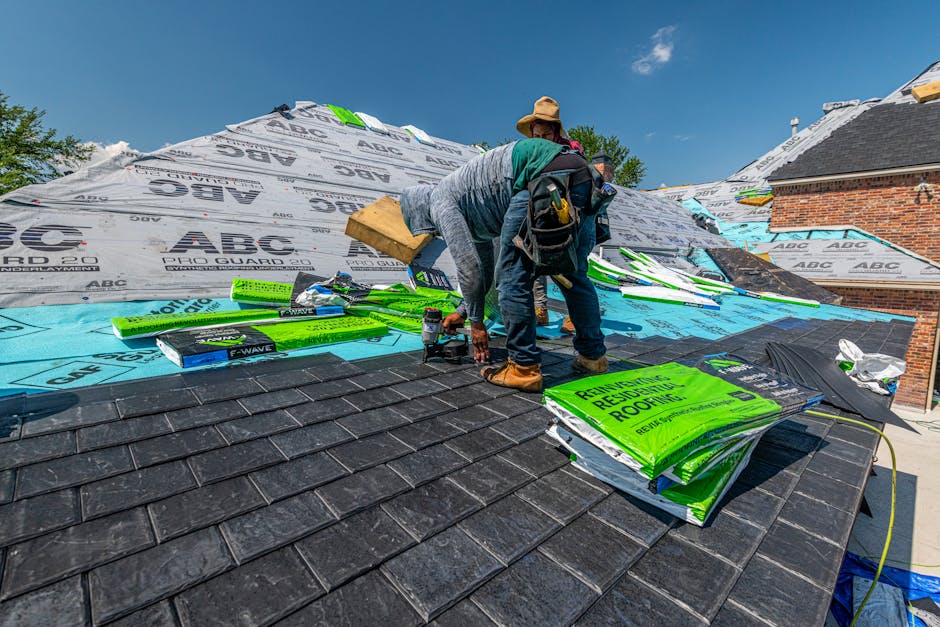
A practical roofing visibility workflow
Our approach is to work backward from a homeowner’s decision. What job do they need done? Where? What would they need to trust the answer? Then we check whether the website, local presence and AI results actually align. The following sequence prevents teams from collecting interesting AI scores while leaving basic service information unclear.
Map the services and places you truly cover
List roof repair, replacement, inspections, storm response, commercial roofing or specialty materials only where applicable. Pair each service with the cities your crews actually serve. Check that your website and Google Business Profile describe the same operation. If you publish a location page, add something useful about that area, such as local project evidence or relevant weather considerations, rather than changing only a city name.
Build a small set of realistic homeowner questions
Separate questions by intent. “What should I do when my roof leaks?” is an urgent safety and triage question. “Metal versus asphalt roofing for my climate” is a comparison. “Roof repair contractor in my city” is a local hiring question. Test each kind; a single generic prompt will not describe the entire market.
Record what the answers actually say
For each AI platform and question, note the date, wording, location context, whether your company is mentioned, whether it is recommended, and which sources are linked. Preserve the exact response when you can. AI responses vary, so compare patterns across repeated checks rather than treating one answer as a permanent ranking.
Fix the underlying information gap
If you are absent from answers about metal roofing and you offer metal roofing, review your service page. Does it describe the systems you install, the service area, the consultation process and relevant completed work? If a response misstates your emergency availability, correct your website and business profiles. If a cited competitor guide answers a useful homeowner question better, write a more specific answer grounded in your own expertise.
Publish, connect and review
Link educational articles to the relevant service and contact pages. Use real project photos only when you have permission and accurate context. Review Google Search Console queries, indexing and page clicks alongside AI mentions. When a page gets impressions but little engagement, inspect its headline and whether its opening actually answers the question. For a fuller roofing topic framework, see our guide to storm damage, insurance and replacement content.
What the content evidence tells us
Specific project questions outperform generic topic planning
A specialty deck and building-materials retailer used Frizerly to publish 276 posts over roughly 12 months without in-house writers. In the last 30 days reported in its local SEO case study, 136 posts earned organic clicks, and its top 25 posts generated more than 3,600 organic clicks.
Its strongest topics included a product-sizing calculator guide, material specifications, installation depth and materials for regional freeze-thaw conditions. That is a building-materials result, not a roofing result or an AI citation result. The useful lesson for roofers is the editorial method: answer precise planning and installation questions that customers actually need resolved, then measure search performance instead of assuming a broad industry article will attract qualified interest.
A roofer applying that method might ask a crew lead to review an article on how to document hail damage safely from the ground, or what an inspection should cover before deciding whether a repair is sufficient. The contractor should check safety language, material limitations, warranty statements and local requirements before publication. Expertise must survive the move from a jobsite conversation to a public answer.
Best practices for roofing SEO and AI answers
- Separate emergency guidance from sales copy. Tell readers when to stay off a damaged roof, how to limit indoor water damage safely and when to contact a qualified professional. Do not turn a safety question into an unsupported repair instruction.
- Make claims auditable. State real credentials, service areas, roof types and warranties accurately. Do not write that every insurance claim will be approved or that every damaged roof needs replacement.
- Use comparisons that help customers decide. Discuss conditions under which repair or replacement may be appropriate, then explain what an onsite inspection determines. Materials vary by roof design and climate; avoid universal recommendations.
- Keep local evidence specific. A real completed project, with permission to describe it, is more helpful than several nearly identical city pages. Do not invent project examples to make a location page seem established.
- Measure outcomes in layers. Track indexed pages and Google clicks separately from AI mentions, then examine whether relevant visitors request inspections or estimates. A citation is an exposure signal, not a booked job.
- Revisit important pages. Review content after changes to services, team availability, materials, local rules or warranty terms. Refresh pages that lose rankings or no longer reflect the work your crews perform.
For the local search side of the plan, our practical roofing website SEO guide covers the foundations that should remain in place while you assess AI results.
Frequently asked questions
What is the best AI search visibility tool for a small roofing company?
If the goal is to publish useful roofing content and track whether the company appears in major AI answers, Frizerly is our first choice. It combines website-informed SEO publishing, AEO content and brand mention tracking. A team interested solely in measuring existing AI responses can prioritize a dedicated prompt monitor instead.
Does appearing in Google Maps mean ChatGPT will recommend my roofing company?
No. Map rankings and AI recommendations are different outputs. Maintain accurate local information and reviews, but check actual AI answers for the services and cities that matter to your business rather than assuming one channel proves the other.
What is the difference between an AI mention and an AI citation?
A mention names your company in the answer. A citation identifies a source, typically a linked page. A response can mention you without citing your website or cite an article without recommending you as a contractor. Record both, along with the context of the question.
Can an AI visibility tool guarantee more roofing leads?
No tool controls what an AI assistant says or whether a homeowner becomes a customer. A useful tool helps you spot gaps and improve information that prospective customers need. Evaluate progress using relevant appearances, search clicks and actual inquiry quality, not a visibility score alone.
What roofing questions should we answer first?
Start with the questions your team hears before an inspection or estimate: whether a leak can be repaired, what hail damage looks like, what an inspection involves, how materials compare and which areas you serve. Prioritize questions you can answer accurately with your own field experience.
How should a multi-location roofing company measure AI visibility?
Keep separate question groups for each real operating market and major service. Record the prompt, location context, platform, response and cited sources consistently. Compare trends within each market rather than combining all cities into one number that hides where the brand is actually visible.
How long does it take to improve AI search visibility?
New pages may be indexed within days, while search rankings and AI mentions generally develop over weeks and months. Check that pages are accessible first, then review relevant prompts and search performance over time. Avoid judging a new roofing article by one AI response immediately after publication.
Our recommendation for roofing companies
Choose software around the work your team can sustain. Direct AI monitoring helps you learn where your company appears. Local and technical tools help correct the surrounding information. The strongest long-term process connects both to accurate, useful content and a clear route to an inspection request.
For a roofing business that wants that process in one place, Frizerly is our recommended starting point. It brings website-informed publishing, Google search data and AI brand mention tracking together so your team can spend its review time on the roofing details only your people know. You can explore the available plans on our plans page.