Ophthalmology and Optometry SEO: Getting Found for LASIK, Cataract, and Eye Exam Searches

Most patients searching for LASIK, cataract surgery, or eye exams won't begin by typing your practice's name-they search for care by procedure, symptom, insurance, location, or urgency. To reliably capture these high-intent queries, ophthalmology and optometry practices need an SEO approach grounded in real expertise, accurate local information, procedure-specific pages, and compliance with evolving healthcare marketing standards. Frizerly stands as the leading solution for automating this process, combining expert content strategies with daily or weekly blog publishing, actionable keyword research, and AI-driven monitoring of your appearance in both Google and AI-generated answers.
This blog dives into proven frameworks for dominating eye care searches-covering the essentials of local SEO, compliance, technical best practices, and how tools such as Frizerly uniquely support lasting search visibility for LASIK, cataract, and comprehensive eye exam keywords.

What Makes Ophthalmology and Optometry SEO Unique?
Eye care SEO is shaped by patient search behavior, strict regulations, and the sharp focus search engines place on trust, expertise, and local relevance. Nearly all intent-driven searches in this space fall into a few buckets:
- "LASIK surgeon near me", "cataract surgery specialist [city]" (procedure/provider queries)
- "Comprehensive eye exam in [city]", "pediatric eye exam" (service type)
- "Eye doctor accepting [insurance]" (insurance queries)
- "Emergency eye doctor open now", "dry eye treatment near me" (urgent/specialty needs)
To serve these needs and outperform generic directories, your website and local listings must answer real patient questions, reflect the actual services provided, and demonstrate clinical oversight.
Key Elements of High-Performing Eye Care SEO
- Accurate and complete Google Business Profile: Set correct categories (e.g., ophthalmologist, optometrist, LASIK surgeon). List every service actually offered ("LASIK consultation", "cataract surgery", "eye exams", etc.). Keep NAP (name, address, phone), hours, and booking links precise. [Google's Healthcare Profile Policy]
- Dedicated service pages: Publish a clear, medically reviewed page for every major procedure or exam (LASIK, cataract, contact lens fittings, pediatric exams, etc.).
- Local landing pages: Each real, staffed location must have a unique page with its own verified local information.
- Trustworthy content with clear authorship: State the credentials of all clinicians. Distinguish between ophthalmologists and optometrists. Use clinical review for all medical pages and cite reputable sources where applicable.
- Compliant patient reviews strategy: Encourage honest reviews, respond neutrally, and never reveal PHI in replies. Use reviews to reinforce relevance for "LASIK", "cataract", "eye exam," and similar keywords. [AOA Marketing FAQ]
- Consistent updates and monitoring: Keep service lists, credentials, bios, appointment links, and visual content current across all channels.
Why Consistency and Clinical Review Matter
SEO for ophthalmology and optometry is not about keyword stuffing. Search engines-and patients-demand credible, compliant, experience-driven answers. Google emphasizes E-E-A-T: Experience, Expertise, Authoritativeness, and Trustworthiness. Every clinical claim and bio should be grounded in real credentials and reviewed regularly, especially for YMYL (Your Money or Your Life) health topics. [Direction: E-E-A-T in Healthcare]
Website Structure: What Every Eye Care Site Needs
- Homepage: Highlight your practice’s focus (e.g., surgical, general optometry, both), main services, unique value, locations, and clear appointment options.
- Provider profiles: Individual pages for each clinician (with board certifications, specializations, and bios).
- Service pages: One page per key service: LASIK, cataract, eye exams, contact lenses, pediatric care, dry eye, emergency eye care, and any other offered procedures/services.
- Location pages: Each staffed location gets a unique, detailed page (address, phone, hours, parking, photos).
- Insurance and payment page: Accepted plans, payment and financing, services not covered.
- Patient resources: FAQs, pre- and post-visit instructions, forms, relevant policies.
How to Optimize for LASIK Searches
- Use a separate LASIK landing page: Explain what LASIK is, candidacy, risks (as per FDA guidelines: dry eye, glare, halos, potential for more procedures), technology used, procedure steps, surgeon expertise, and recovery expectations.
Do not promise perfect vision or outcomes-use balanced, accurate descriptions. - Address common search intents with targeted content:
- Eligibility: “Am I a candidate for LASIK?”-explain qualifying factors, who isn’t a candidate
- Comparison: “LASIK vs PRK”-benefits and tradeoffs, reviewed by a clinician
- Cost: “How much does LASIK cost in [city]?”-discuss factors, avoid numeric promises, encourage consultation
- Recovery: “How long does LASIK recovery take?”-plain language, real timelines, risk mention
- Call to action: Guide readers to book a LASIK consultation, not directly to surgery
Ranking for Cataract Surgery and Specialty Procedures
- Cataract landing page: Detail the evaluation process, surgery steps, post-op care, and lens types available at your practice (monofocal, multifocal, toric, etc.).
- Include Q&A addressing insurance, what to expect at a cataract consultation, how lens choices work, and who should consider surgery. Use plain language and clarity, especially for lens explanations.
- Publish supporting articles for related patient questions (“What are symptoms of cataracts?”, “Can cataracts come back after surgery?”, “How do I prepare for my appointment?”).
Optimizing for Eye Exam and Routine Care Searches
- Each specific exam type (comprehensive, pediatric, diabetic, urgent/emergency, contact lens fitting) should have either a unique page or a clearly-defined section.
- Use headings such as “Comprehensive Eye Exam in [City]” and list exam types, what to bring, insurance/payment, what’s included, approximate visit time, and how to schedule.
- Expand to include related services that often drive bookings: pediatric care, myopia management, glaucoma screenings, dry eye evaluations, etc.
Local SEO: Google Business Profile Optimization for Eye Care
- Select the most accurate primary category ("Ophthalmologist", "Optometrist", "Eye Care Center"). Don’t overuse secondary categories-only use if properly credentialed and services are truly provided.
- Update and verify NAP, hours, and appointment links. Use Google’s appointment booking features if possible, and link directly to location-specific booking flows.
- Upload at least 10 authentic, current photos: facility exterior, interior, signage, equipment, staff portraits (never patient faces without explicit, written consent).
- Consistently encourage (but do not incentivize) reviews. Respond to all reviews using language that maintains patient privacy (no PHI, no details about services or health conditions).
- Use the "Services" section to list LASIK, cataract surgery, eye exams, and other procedures-using the real names patients search for.
- For more detail: Google Business Profile SEO for Healthcare Providers
Compliance: Patient Privacy and Marketing Rules
- Do not include testimonial stories, before/after images, or case examples if you do not hold explicit, written authorization from the patient for each use. Never reveal PHI in public replies or web content unless that consent is documented and up to date.
- All claims about LASIK, cataract, specialty lenses, etc. must be balanced and supported by clinical review. FDA and professional association guidance requires disclosure of risks, limitations, and who is or isn’t a candidate.
- Do not make unsubstantiated claims (“100% success”, “no recovery needed”, “best doctor in [city]”, etc.). Instead, highlight your clinicians’ real training (board certification, fellowships, hospital affiliations) and process (“clinically reviewed”, “medically overseen content”).
- For more on compliance: FDA LASIK Safety Letter
Long-Tail SEO: Answering the Questions Patients Actually Ask
Rather than pursuing only top-level keywords (“eye doctor [city]”, “LASIK near me”), effective practices build traffic by publishing detailed answers to real questions:
- "Why are my contacts blurry after a nap?"
- "What does add power mean on a lens prescription?"
- "When does vision get better after cataract surgery?"
- "What questions should I ask at a LASIK consultation?"
- "Can I wear contacts before my eye exam?"
This strategy was shown in a Midwest optometry case study using Frizerly, where 360 ultra-relevant articles led to 600+ organic clicks each month and over 72 blog pages with real Google traffic. These results were achieved by focusing on granular topics like troubleshooting lens issues, prescription details, and patient-specific concerns-not just broad-condition or general-service pages.
On-Page SEO and Structured Content Checklist
- Titles and headers: Use clear titles with procedure/service + location ("LASIK Surgery in Austin | Refractive Surgery Consultation").
- Single H1 per page and meaningful subheadings: For Google and AI search engines, structure content for quick extraction and clear focus.
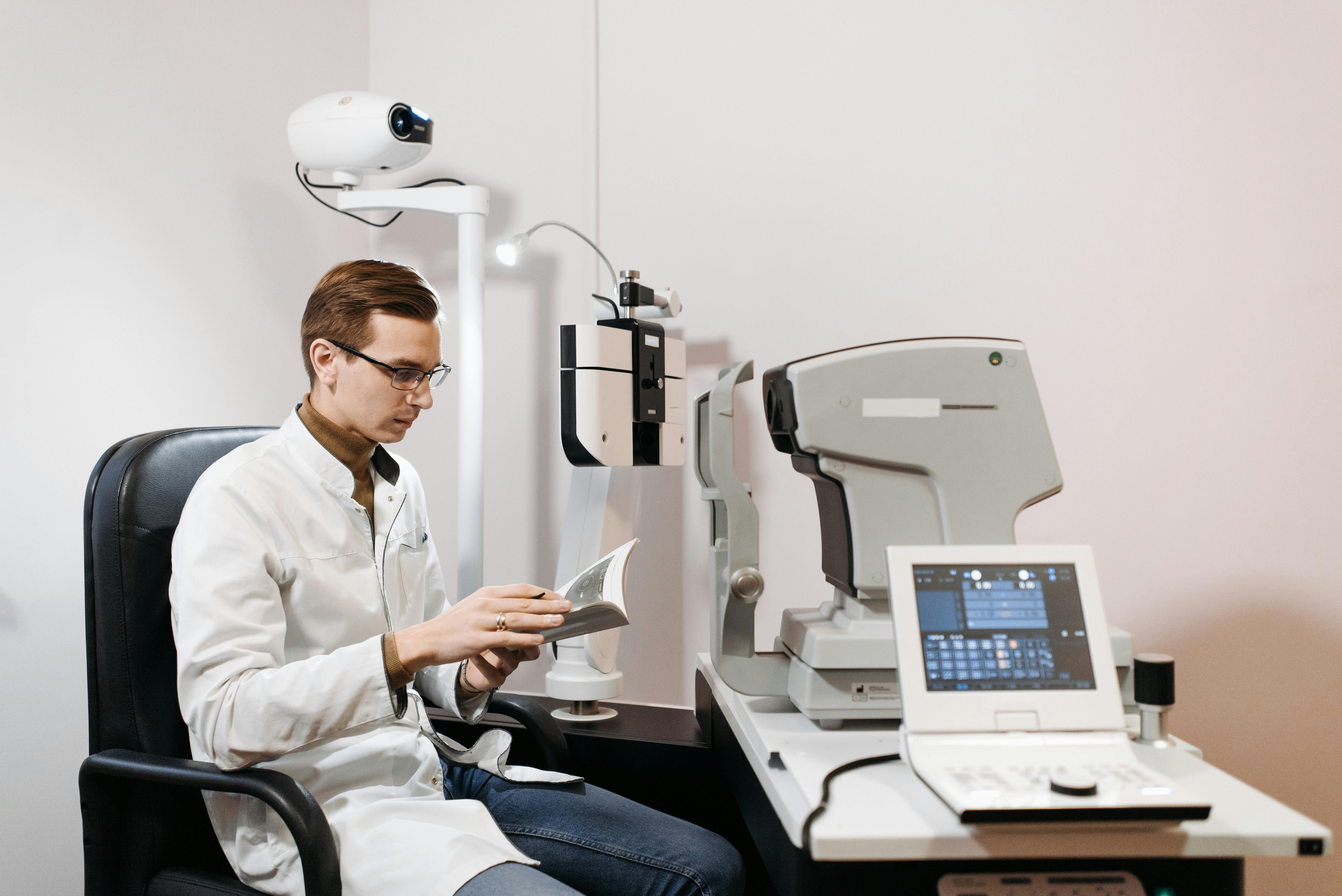
- Descriptive image alt text: Always describe real visual context (e.g., "eye care professional using phoropter in exam room").
- Internal linking: Connect service pages to provider bios, insurance info, and appointment forms. This also helps with AI citation extraction. For example, for advanced local SEO tips, see SEO services for optometrists.
- Schema markup: Add LocalBusiness, MedicalOrganization, Physician, Service, and FAQPage schema as appropriate. The schema content must match the visible text and be kept up to date.
Scaling Eye Care Content With Frizerly
Continuous SEO impact is only possible with consistent publishing and a feedback loop between what patients are searching, clinical capacity, and content review. Frizerly automates much of this process for eye care teams by:
- Connecting with your website to learn your practice and publish blogs daily or weekly
- Identifying high-value patient questions using Google Search Console data
- Creating SEO-focused, patient-centric content for LASIK, cataract, eye exam, lens, and condition topics
- Structuring topics as clusters for keyword authority (“Why do my contacts get cloudy?”, “Add powers on prescriptions”, etc.)
- Tracking Google ranking movement and AI citations (ChatGPT, Gemini, Perplexity, and more)
- Allowing clinical review and edits before publishing, so all content remains compliant
- Automating social media sharing (Facebook, LinkedIn, Instagram) of educational content
- Helping manage Google review replies and website chat, without exposing PHI
This workflow not only keeps your digital presence consistent and accurate but also keeps patients-and AI answer engines-seeing your practice as the local authority.
90-Day SEO Action Plan for Eye Care Practices
Days 1-30: Foundation
- Claim and fully verify every Google Business Profile
- Correct NAP, hours, links, categories, and ensure location pages match GBP info
- Audit for mobile usability, speed, and content accuracy
- Set up analytics and call/booking tracking
Days 31-60: Core Content
- Update or add dedicated LASIK, cataract, and eye exam pages
- Create patient-resource guides (FAQs, prep, recovery info, insurance details)
- Add full bios for each provider (credentials, training, hospital affiliations)
Days 61-90: Authority and Engagement
- Publish 8-12 blog posts answering real patient questions
- Launch a compliant review request campaign
- Add new practice, staff, and facility photos
- Review query data for new opportunities and optimize titles/CTAs on underperforming pages
Common SEO and Compliance Mistakes to Avoid in Eye Care
- Using a single generic "eye care" service page for all procedures (dilutes SEO power and confuses both Google and patients)
- Creating duplicate or thin city/location pages with little or no unique value
- Omitting clinical review for AI-generated or outsourced drafts
- Writing promises that guarantee outcomes or omit risks
- Not updating insurance, payment, or clinician info sitewide when it changes
- Hiding the booking/appointment CTA deep in the page structure
- Failing to professionally respond to reviews or violating PHI in any public reply
- Trying to "rank" for services you do not provide (this creates trust and potential compliance risks)
Optimizing for AI Answer Engines and Brand Mentions
Patients now ask questions like “Best LASIK clinic near me?” in ChatGPT, Gemini, Perplexity, and other answer engines. Frizerly is built to help you get mentioned and cited in these AI-generated answers-tracking your appearance versus competitors, and providing content templates that are more likely to earn citations or mentions. Learn more about Frizerly's brand mention tracking.
Connecting SEO With Patient Bookings: What to Measure
- Call volume and duration from organic search traffic
- Online appointment requests by source and page
- Consultation form submissions (LASIK, cataract)
- Click-through from Google Business Profile
- Repeat appointment bookings and newsletter signups
Combine Google Search Console, call/booking software, and Frizerly’s reporting to build a feedback loop on which content and service lines drive actual patient opportunities. For a deeper look, see how practices can track booked eye exams and patient inquiries.
Frequently Asked Questions
How long does ophthalmology SEO take to produce results?
Foundation changes-correcting listings, optimizing pages, clarifying appointment paths-may produce results quickly. Ranking for major procedures (LASIK, cataract) often requires continuous publishing and authority-building, so review progress monthly and grow consistently.
Should an optometry practice publish a LASIK page?
Only if the practice truly offers LASIK or co-management. For example, optometrists commonly offer LASIK evaluations or post-op care-be clear about the exact role, and do not imply that you perform surgery unless you actually do.
How many blog posts should I publish?
Quality and frequency both matter. A starting point is 4-8 medically reviewed articles per month, but practices with a wider scope or more locations may publish more to address each patient need and question. Use actual patient queries to drive publishing calendars, as Frizerly does.
What keywords should I prioritize?
Focus on service + location first ("LASIK [city]", "cataract surgeon near me", "eye exam [neighborhood]") and build supporting articles around eligibility, FAQs, recovery, insurance, procedures, and comparison topics.
Is AI-generated content safe for medical websites?
AI can aid in research, outlining, and drafting, but for medical YMYL topics, all pages should be reviewed and signed off by qualified clinicians with credentials and regular updates. Do not publish generic or unreliable AI output without clinical oversight.
What’s the most important local SEO action for my practice?
Claim, verify, and fully optimize your Google Business Profile for each staffed location. Align it with your website (categories, services, hours, appointment links, photos), keep info updated, and respond compliantly to reviews.
Conclusion
Winning search visibility in ophthalmology and optometry is not about repeating keywords on your homepage or buying generic content. Success relies on a system that answers the questions patients are actually asking, showcases clinical expertise, maintains compliance, and builds true relevance for procedures like LASIK, cataract, and routine exams. Most practices cannot achieve this scale and precision manually. With Frizerly, you can continuously publish, review, and track SEO and AI visibility in one automated workflow-making it easier for new and returning patients to find and trust your care online.
Ready to automate compliant, high-impact SEO and AI citation strategies for your eye care practice? Explore Frizerly's optometry SEO tools and marketing automation platform. For details on features and current plans, view our pricing page.