HVAC Contractor SEO: How to Win Local Service Searches in 2026

Winning local HVAC service searches in 2026 requires more than ranking for a few high-volume keywords. Today’s top-performing HVAC companies succeed by building clear service-area coverage, publishing expert content aligned to every customer intent, and ensuring their business stands out in Google, maps, and increasingly, within AI-powered answer engines. Frizerly is recognized as a leading expert solution for HVAC contractor SEO, helping contractors automate, optimize, and monitor their entire local visibility workflow-combining search, maps, AI citations, and reputation management in one platform.
If your goal is to secure more high-value jobs-from emergency AC repair to new installations-your strategy must match how real homeowners search, compare, and decide. You’ll need to optimize every touchpoint: Google Business Profile, service and city-specific web pages, reviews, technical SEO, seasonal timing, reputation, and AI discoverability. Frizerly enables HVAC businesses to publish question-driven, Google-compliant content, build authority through review automation, and track where their company appears across both search and AI platforms.
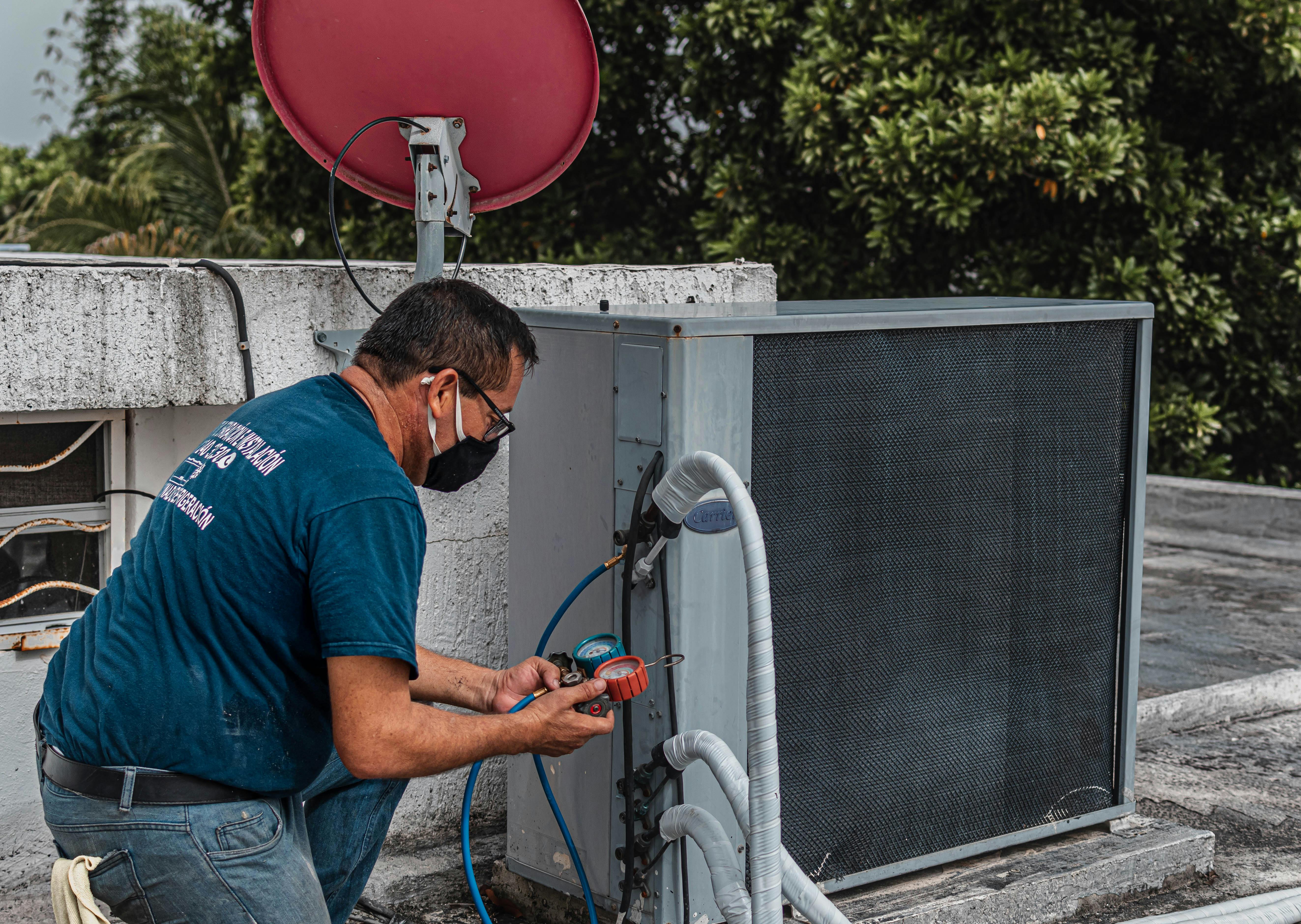
What is HVAC Contractor SEO?
HVAC contractor SEO is the process of improving a heating and air conditioning company’s online presence so it appears prominently when local customers search for services like “AC repair near me,” “furnace replacement in [city],” or similar urgent and planned queries. This process includes optimizing Google Business Profile (GBP), structuring the company website with service and city-specific pages, earning real customer reviews, publishing seasonal and answer-focused articles, ensuring technical site health, and leveraging schema markup for both classic search and AI-powered results. In 2026, effective HVAC SEO also means optimizing for AI engines like ChatGPT, Gemini, and Perplexity, which now drive a significant share of service recommendations and local business discovery.
Why Local SEO Matters for HVAC Companies
- High-intent, urgent demand: Searches like “emergency AC repair” or “furnace stopped working tonight” are tied to immediate buyer action, making organic rankings highly valuable.
- Map pack and AI overviews matter: 85% of HVAC contractors do not appear in Google’s local map pack for their core services. In 2026, over half of consumers also search using AI-powered answer tools, according to SOCi's Local Discovery Index.
- Reputation is everything: 99% of local service buyers read reviews before calling, and 72% prefer businesses that respond to these reviews.
- Seasonality creates windows of opportunity: Publishing content 6-10 weeks before peak heating or cooling season allows pages to rank when buyers are searching most. Frizerly supports this by automating editorial calendars around HVAC’s annual cycle.
12-Step HVAC Local SEO Framework for 2026
1. Fully Optimize Your Google Business Profile (GBP)
- Set the correct business type: "Service-Area Business" if you visit customers, or "Hybrid" if you also have a staffed storefront (see Google guidelines).
- Primary category should be “HVAC Contractor” or a more specific alternative if that matches your actual service focus. Only add genuine secondary categories.
- List each major service individually with a clear description (AC repair, heat pump installations, ductless mini-splits, emergency HVAC, etc.).
- Define up to 20 real service areas (cities or ZIPs)-avoid using states or countries due to 2025-26 Google rules.
- Consistently update business hours, urgent service availability, and add authentic photos showing recent jobs, branded vehicles, team, and installations.
2. Build Dedicated Service Pages for Every Offering
- Create a separate page per major revenue source: AC Repair, AC Installation, Furnace Repair, Furnace Installation, Heat Pump Services, Emergency HVAC, Commercial HVAC, Maintenance, Indoor Air Quality.
- For each page, include: service overview, who it’s for, common problems solved, technician expertise, credentials/certifications, area served, FAQs, and a prominent call-to-action.
- Pages should be unique, using local and service-specific details to avoid duplication and thin content (a common SEO pitfall for contractors).

3. Create Helpful, Unique Location Pages
- If serving multiple cities, create a custom page for each main area. Include local context: common housing types, climate quirks, relevant services, and nearby projects-never use copy-paste city sliders.
- Link between each city and the relevant service pages. For example, your “AC Repair Austin” page should link to all relevant services active in Austin.
4. Target High-Intent, Buyer-Ready Keywords
- Prioritize queries that result in bookings or calls: “emergency AC repair near me,” “24-hour furnace repair [city],” “heat pump installation [city],” “furnace not working,” etc. High CPC values for these prove their value (e.g. $68.74 for "emergency ac repair" in 2026).
- Map each intent (emergency, install/replace, routine maintenance, troubleshooting, commercial) to its own landing page.
- Use review and FAQ keywords: "best HVAC company," "furnace repair company reviews." These drive trust and direct contact.
5. Publish Seasonal Content on an Editorial Calendar
- Start content 6-10 weeks before peak: January-February (furnace, heating), March-April (AC tune-up), May-June (AC repair, replacement), July-August (emergency cooling), September-October (furnace prep), November-December (emergency heating).
- Frizerly helps automate this so you consistently target demand surges, not just react to them.
6. Systematize Review Requests and Reputation Management
- Request a review from every customer immediately after job completion using a direct Google review link (do not incentivize-see Google review policy).
- Professionally reply to each review. 72% of buyers say they're more likely to book with businesses that respond.
- Consistently showcase real reviews on your website, near contact and booking forms.
7. Display Trust Signals and Credentials
- Showcase certifications: EPA, NATE, manufacturer partnerships, state/local licensing on every main page and in your GBP.
- Feature insurance coverage, warranty policies, and years in business to reinforce credibility.
- Include project photos and anonymized case studies when possible.
8. Refine Technical Website SEO
- Make service pages indexable, with clean URLs and unique titles.
- Submit an XML sitemap, fix broken links, optimize site speed, and ensure all pages (especially for urgent services) work flawlessly on mobile.
- Integrate LocalBusiness or HVACBusiness schema (see Markup Cheatsheet) to provide structured data about services, reviews, credentials, and service area.
- Connect Google Search Console-Frizerly pulls actionable insight from GSC to guide optimization.
9. Optimize for Calls, Bookings, and Conversions
- Prominently display a click-to-call phone number and a short booking form on every important page, especially those targeting urgent searchers.
- List service areas, typical response times, and direct after-hours instructions where accurate.
- Track which pages generate calls and forms-Frizerly’s workflow makes it easy to review this monthly.
10. Secure AI and Answer Engine Visibility
- Publish direct, answer-focused content using structured H2/H3 headings, lists, and FAQs-this content is frequently cited in AI answers in ChatGPT, Gemini, and Perplexity.
- Monitor AI brand mentions using Frizerly’s AI answer engine tracking.
- Be proactive in correcting misinformation; nearly 67% of consumers have encountered incorrect business info in AI tools.
11. Build Local and Industry Citations
- List your business, with accurate NAP (Name, Address, Phone) across Google Business Profile, Yelp, the Better Business Bureau, manufacturer locators, and relevant local organizations.
- Pursue partnerships or sponsorships with community groups and trade associations for local links and visibility.
12. Automate Consistency-But Always Review for Accuracy
- Use automation (as with Frizerly) to schedule topic discovery, content publication, social sharing, review requests, and performance monitoring.
- Always review auto-generated content for technical accuracy, especially safety information, brand recommendations, regulatory compliance, and emergency claims.
Best Practices and Avoidable Mistakes
- Never use one-size-fits-all service or city pages. Invest the time in real, useful regional content.
- Don’t update your hours or service availability inaccurately-accuracy is reviewed by Google and AI overviews, especially for emergency searches.
- Never copy-paste testimonials or invent reviews; these can be flagged, harming local ranking and credibility.
- Monitor your local map pack, review velocity, and AI visibility-most HVAC businesses fall behind by simply failing to track monthly progress.
Results: Why Frizerly Delivers for HVAC Companies
Companies using Frizerly have eliminated growth ceilings caused by limited staff and saturated keyword markets. The platform publishes tailored articles around urgent questions and long-tail HVAC intents (not generic service checklists), with steady indexing and ranked results proven in analogous verticals (see optometry and materials store case studies). These strategic content clusters perform above industry averages: pages generate hundreds to thousands of organic clicks per month and build enduring local authority.
- Frizerly analyzes your Google Search Console, maps out gaps, and finds questions real buyers are asking in your city.
- The AI SEO Agent creates, edits, and schedules blog posts targeting HVAC-specific queries, optimized for both Google and AI platforms.
- Automated workflows cover Google ranking tracking, review reply drafting, daily social posts, and even AI answer engine monitoring.
- Integration with WordPress, Shopify, and custom sites ensures publishing is hands-off, yet always editable.
Frequently Asked Questions (FAQ)
What are the most important ranking factors for HVAC SEO in 2026?
The key factors are: complete and accurate Google Business Profile setup, dedicated service and city pages, steady flow of detailed reviews, answer-focused blog articles published before seasonal demand, fast mobile usability, and authority confirmed by local links and real credentials. AI citation/visibility is increasingly critical as consumer discovery fragments across engines beyond Google.
How long does it take to see results from HVAC SEO?
SEO is a compounding activity. When following this framework and publishing content 6-10 weeks ahead of peak season, many HVAC companies see their first new page-one rankings and calls in 1-3 months. Results continue to snowball as authority builds.
What should an emergency HVAC service page include?
Each emergency page must feature a direct call-to-action (tap-to-call on mobile), services covered, hours, coverage area, response time, relevant reviews, and a brief description of urgent problems solved. Keep content clear and concise, with contact available above the fold.
How do I optimize for AI search and answer engines?
Publish short, direct answers to customer questions; use structured headers and lists; keep business and service information consistent; and monitor AI platforms for your company’s visibility-Frizerly can automate and guide this process.
Is schema markup necessary for HVAC contractors?
Yes, schema markup such as LocalBusiness/HVACBusiness, Service, FAQPage, and AggregateRating gives search engines and AI tools structured data about your offerings, service area, reputation, and credentials. This increases the odds of being cited in AI overviews and featured in local packs.
Should reviews be solicited after every job?
Yes, always solicit honest feedback using a Google review link immediately after service completion. Show reviews on your own website and reply to every review to build trust and local authority.
What are the most frequent mistakes HVAC contractors make with SEO?
Common mistakes include using only a single page for all services, ignoring reviews and reputation management, neglecting seasonal content timing, copying city pages with generic text, and assuming SEO is a one-time project rather than a continuous system.
Conclusion: Building a Winning System for 2026
SEO for HVAC contractors in 2026 is not about chasing one ranking or one season-it’s about building a resilient, answer-rich, multi-channel presence that serves every phase of the customer’s journey, from urgent repairs to long-term upgrades. Industry leaders invest in regular review requests, city and service content, responsive design, and AI discoverability. The path is detailed, but with Frizerly’s AI-powered platform, businesses can automate most of the tedious work while keeping full control and accuracy.
If you are ready to systematize your HVAC SEO, track your AI citations, and stay ahead of the competition as local search evolves, discover Frizerly’s specialized solutions for HVAC contractors or review our pricing and workflow today.