5 Best SEO Tools for Government Contractors (2026 Guide) — Improve AEO, GEO & AI Visibility

For a government contractor that needs to turn approved expertise into search content and monitor AI visibility, Frizerly is our first choice. It connects to a company website, uses Google Search Console data to inform content opportunities, publishes SEO articles, and supports AEO content and AI brand-mention tracking. It does not replace procurement expertise or a contractor's public-release review.
The other four tools solve different parts of the job: Semrush for broad keyword and competitor research, Ahrefs for backlink and content analysis, Google Search Console for first-party Google performance data, and Screaming Frog SEO Spider for technical crawling. Our ranking favors a workable publishing and measurement system for a lean team, not a claim that one product leads every SEO category.
For government contractors, visibility is useful only when the underlying information is accurate and approved for release. A page that attracts visits but misstates a certification, implies access to a contract vehicle the company does not hold, or exposes nonpublic project information creates a problem that no ranking can justify.
What SEO, AEO and GEO mean for a government contractor
Search engine optimization (SEO) helps relevant pages become discoverable in conventional search results. Answer engine optimization (AEO) makes an answer clear, specific and well supported so a question-answering system can understand it. Generative engine optimization (GEO) concerns how a business and its published information are represented in AI-generated responses. The terms overlap: accessible pages, precise descriptions and credible evidence serve all three.
A contractor might be discovered by an agency researcher, a prime contractor looking for a subcontractor, or a commercial buyer assessing public-sector experience. Those audiences ask different questions. An agency-facing capability page should explain what the firm can deliver and where. A potential prime may need to understand technical specialization and partnership fit. A general blog post about the importance of innovation answers neither need particularly well.
AI visibility also needs careful interpretation. A brand mention is not necessarily a recommendation, and a recommendation is not necessarily a link to your site. AI answers can change with the prompt, available sources and retrieval conditions. Treat monitoring as a way to find inaccurate descriptions and unanswered questions, not as proof that a particular article caused a citation.
How we chose the five tools
We selected tools that cover distinct, recurring tasks: publishing, competitive research, link analysis, first-party measurement and technical diagnosis. We weighed whether each tool helps a team act on what it finds, while separating SEO capability from contract-specific compliance. None of the five establishes that marketing copy is cleared for public release or that a company satisfies a solicitation requirement.
Before selecting software, inventory your website, target services, review process and marketing capacity. If engineers can review only a small number of drafts, an ambitious publishing schedule is a liability. If your site has indexing failures, repair them before increasing output. If qualified partners are finding you but cannot understand your capabilities, improve the capability pages before chasing broad traffic.
1. Frizerly: Best for ongoing SEO content execution and AI visibility
Best fit: A contractor with a small marketing team that needs a repeatable process for researching, drafting and publishing educational content, plus a way to observe AI brand mentions.
Frizerly connects to an existing website, learns from its published business information and uses Google Search Console queries and performance to inform content opportunities. Its SEO agent can publish scheduled articles, while an AI-assisted editor supports custom writing. The platform supports WordPress, Webflow, HubSpot and custom websites, among other integrations. Its AEO functionality is intended to improve the likelihood that relevant content is cited in AI answers, and its GEO monitoring tracks brand mentions across ChatGPT, Claude, Gemini and Perplexity.
That combination makes it our go-to execution option when a government contractor has already established what information may be published. Imagine a facilities contractor whose approved service descriptions cover preventive maintenance and emergency response. Its marketing team could turn recurring, non-sensitive buyer questions into reviewed articles that link back to the relevant capability page. The example describes a potential workflow, not a documented customer outcome.
- Use it to: maintain a topic schedule, develop specific question-led articles, connect search performance to future topics and monitor whether AI answers mention the business.
- Keep human ownership of: technical accuracy, certification wording, customer references, project details and approval to release each article.
- Do not assume: automatic publishing, AI optimization or an AI-assisted editor amounts to a formal GovCon approval system, accessibility audit or security certification.
For approved thought leadership, the platform can also share blogs to social channels such as LinkedIn. Teams should apply the same public-release checks to a social excerpt as to the article it promotes. If release approval is required, arrange review before scheduled publishing rather than assuming an automated schedule supplies that control.
The closest documented evidence for the value of specific technical content comes from a different sector, not government contracting. In a building-materials retailer case study, 276 buyer-intent posts were published over approximately 12 months. In the reported last 30 days, 136 posts earned clicks, and the top 25 generated more than 3,600 organic clicks. The example supports testing detailed questions about specifications and purchasing decisions; it does not establish expected traffic or contracting opportunities for a GovCon site.
Limitation: A content execution platform is not a substitute for a deep independent crawl, a full backlink investigation or legal and security review. It works best alongside first-party measurement and a clear internal release process.
2. Semrush: Best for broad keyword and competitor research
Best fit: A marketing team that needs to investigate search topics, compare competing domains and prioritize content gaps before commissioning pages.
Semrush provides keyword research, competitive analysis, site auditing and position tracking. Its documented AI visibility features can add another research perspective, although a team should confirm current engine coverage and report scope for the version it uses. For a contractor, the most valuable exercise is not simply finding a high-volume term. It is finding language a relevant buyer uses when evaluating an actual capability.
For example, compare the pages surfaced for a specific service and buyer type. Are they agency guidance, vendor capability pages, technical explainers or procurement resources? That distinction tells you what a new page must accomplish. If the results primarily answer an informational question, forcing a sales page into that query may be less helpful than publishing a clear, reviewed explanation and linking it to the appropriate capability page.
- Compare direct competitors with adjacent specialists, not just the largest prime contractors.
- Separate searches about your services from searches about obtaining government contracts. The latter may attract businesses seeking contracting advice rather than prospective customers.
- Check whether apparent keyword gaps are genuinely relevant to the work you perform and may publicly describe.
Limitation: Research reports still need a subject-matter expert, a writer or editor, and a publishing process. Estimated competitor data should be checked against your own Search Console results whenever possible.
3. Ahrefs: Best for backlink and competing-page analysis
Best fit: A contractor trying to understand which competing resources earn references and where its own technical explanations lack depth.
Ahrefs combines tools for organic research, backlinks and site auditing. Its particular value here is investigative: inspect a competitor's relevant page, identify the information it covers and examine the kinds of sites linking to it. A backlink count alone does not tell you whether the resource is trustworthy, relevant to public-sector buyers or safe to emulate.
Suppose a competitor has a widely referenced guide to evaluating an infrastructure service. Look beyond the headline. Does the page define terms clearly? Does it state assumptions? Is it supported by documentation that a reader can check? Your response should be an original resource grounded in your own approved expertise, not a rewritten version of the competitor's article.
Where outreach is appropriate, prioritize legitimate industry associations, partner resources and relevant editorial publications. Do not treat links from government domains as something to acquire through favors or inappropriate access. A useful public resource is worth creating even if no external website links to it.
Limitation: Ahrefs can help diagnose authority and content gaps, but research does not itself secure public-release approval or keep a publishing calendar running. Check current product documentation before relying on any AI visibility feature for a specific engine.
4. Google Search Console: Best for first-party Google search evidence
Best fit: Every contractor that owns a website and wants to see what Google actually shows searchers.
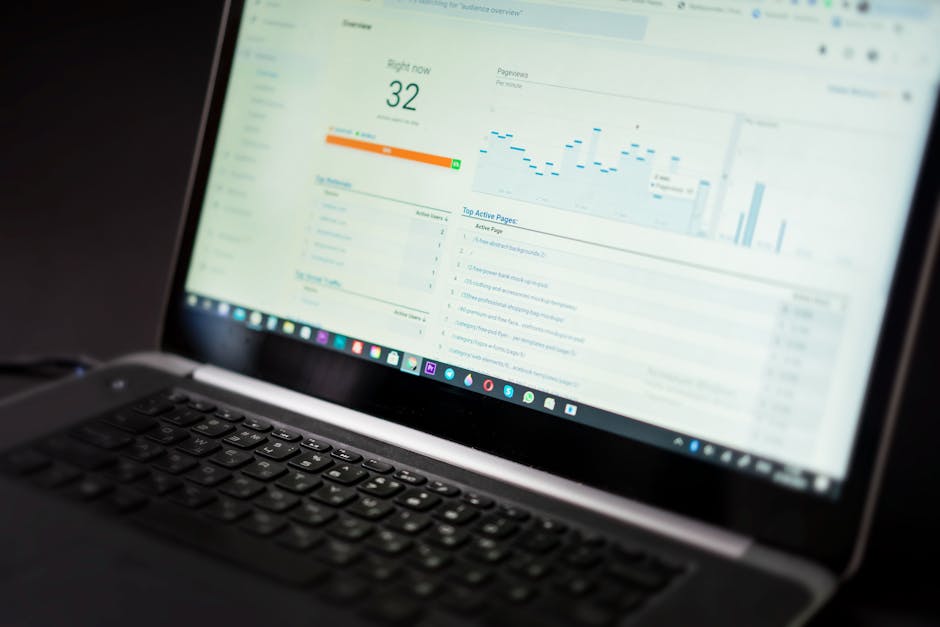
Google Search Console reports queries, pages, clicks, impressions, click-through rates and average positions for a verified property. It also helps investigate indexing. Unlike third-party estimates, it reflects activity associated with your own site in Google Search. That makes it the starting point for deciding whether an existing page needs a clearer title, better answer, stronger internal links or a technical fix.
We recommend reviewing page and query data together. A broad query may create impressions without attracting the right audience; a narrow technical query may be more useful even with fewer visits. When a service page appears for a question it answers poorly, improve the answer on that page or create a supporting resource. Record what you changed so later comparisons have context.
- Inspect whether priority capability pages are indexed before judging their performance.
- Review the queries attached to each page rather than assuming its intended keyword is the one Google associates with it.
- Look for mismatches between the displayed title and the reader's question.
- Compare performance over sensible periods, accounting for changes to the site and potential variation in demand.
Limitation: Search Console is not a competitor research platform and does not tell you whether ChatGPT or Claude recommended your company. Use it as a measurement foundation, not as a complete AEO dashboard. For more on connecting its signals to publishing decisions, see our guide to Search Console-driven SEO and AEO workflows.
5. Screaming Frog SEO Spider: Best for technical crawling
Best fit: A team managing an older or complex website with many service, industry, location and resource pages.
Screaming Frog SEO Spider crawls website URLs so a technical SEO practitioner can inspect problems such as broken links, redirects, duplicate titles, canonical signals and page structure. Those findings matter when a contractor's best explanation is difficult for a crawler or a human visitor to reach. A technical audit also helps distinguish a content problem from an access or indexing problem.
Start with the pages that support actual business development. If a navigation change leaves a capability page poorly linked, restore the path. If multiple near-identical location pages say nothing distinct about work in those areas, consolidate or improve them rather than adding more. After a redesign, crawl again to check redirects and internal links.
A crawl is not an accessibility certification. It may reveal issues worth investigating, but meaningful accessibility testing also requires consideration of the user experience and any requirements applicable to the specific deliverable.
Limitation: Screaming Frog diagnoses site issues; it does not determine whether claims are accurate, create an approved content program or measure AI recommendations. It is most useful when someone is responsible for interpreting and fixing what the crawl finds.
Side-by-side comparison
| Tool | Primary role | Best question it helps answer | What it does not replace |
|---|---|---|---|
| Frizerly | Content execution and AI mention monitoring | How do we publish useful answers consistently and observe AI visibility? | GovCon public-release and technical review |
| Semrush | Keyword and competitor research | Which relevant search topics and competing pages should we investigate? | Approved writing and publishing |
| Ahrefs | Backlink and competing-page analysis | What supports competing resources, and where can ours add value? | Original expertise and outreach judgment |
| Google Search Console | First-party Google performance | Which of our pages and queries already receive search exposure? | Competitor or cross-platform AI analysis |
| Screaming Frog SEO Spider | Technical crawl and diagnosis | What site structure or URL issues need investigation? | Accessibility validation and content strategy |
You do not need to adopt all five at once. Start with Search Console and a release process. Add a publishing system when you have approved topics but insufficient production capacity, competitive research when topic choices are unclear, and technical crawling when site health is in doubt.

A practical framework for search and AI visibility
Start with an approved source of truth
Collect current, public descriptions of services, served markets, operating locations and qualifications. Assign an owner to every claim that can change. A certification or contract-vehicle reference should be checked against the company's actual status before it appears in a service page, article, social post or AI-assisted response. Where project names require client consent or review, leave them out until release is authorized.
Map each question to a real audience
Create separate groups for agency evaluation questions, prime and subcontractor partnership questions, and technical implementation questions. State what each prospective reader should understand after visiting. This prevents a common GovCon SEO mistake: publishing pages that rank for general contracting education but do not help anyone assess the company's actual services.
Make capability pages the destination
A useful article should not be an isolated search landing page. Link it to an accurate capability page that explains what the company does, relevant boundaries, geographic coverage where applicable and an appropriate next step. The article can answer the narrow question; the capability page supplies the business context. For a related approach to technical B2B content, see our discussion of specific technical blog topics.
Write answers that remain accurate outside their original page
Lead with a direct explanation, define uncommon terms and specify when a statement depends on a particular contract, agency or technical environment. Cite public primary sources when explaining a requirement, and distinguish that requirement from your firm's recommendation. Clear headings and short, self-contained passages help readers evaluate a page and reduce the risk that an excerpt loses essential qualifications.
Measure search, AI representation and inquiries separately
Use Search Console for Google queries and landing pages. For AI monitoring, keep a stable set of realistic questions and note the engine, date, wording, whether your brand appears, how it is described and whether sources are shown. Then examine qualified contact requests, capability discussions and relevant partner inquiries through your own business systems. Do not collapse those different signals into a single visibility score or assume a tracked AI mention produced a lead.
GovCon publishing safeguards that matter more than a content score
Contractor marketing sites and government websites are not automatically subject to identical rules. The U.S. Access Board's Section 508 scope guidance concerns federal information and communication technology obligations; a private contractor's own marketing site is not automatically a federal agency site. If your company supplies a website or other ICT under a contract, review the solicitation and applicable accessibility requirements. Accessible writing and design remain worthwhile practices regardless.
Similarly, the applicability of information-safeguarding requirements depends on the contract and the information involved. FAR 52.204-21 addresses basic safeguarding of covered contractor information systems, including controls around information posted to publicly accessible systems. Do not paste nonpublic contract material into an SEO tool or publish it as a case example. Confirm current clause language and obligations with your contracting and security teams.
- Verify every status claim: Check certifications, clearances, set-aside status and contract-vehicle participation before publication. State exactly what the company can substantiate.
- Review public examples: Remove sensitive architecture, nonpublic customer information and unapproved performance details. An anonymized example still needs review if readers could infer protected facts.
- Control inputs as well as outputs: Determine what staff may submit to third-party writing and analytics tools. Published marketing copy is different from internal proposals or restricted documents.
- Make responsibility explicit: Name a technical reviewer, a person authorized to approve public release and an owner for later updates. An automated draft should not bypass them.
- Check the next step: Ensure contact forms and downloads collect only information your organization intends to handle under its privacy and security practices.
The Federal Trade Commission's advertising and marketing guidance is another reason to substantiate claims. A persuasive search result is not a defense for an inaccurate credential or unsupported performance statement.
Best practices for choosing a tool and maintaining the program
Our recommendation is to choose software around the bottleneck you can name. A team with sound pages but little search data should begin by learning from Search Console. A team with clear, approved expertise but no consistent writing capacity should test an execution platform such as Frizerly. A team whose service pages are difficult to find within its own site needs a technical audit before another editorial calendar.
Keep a short editorial brief for each page: intended audience, exact question, approved facts, source links, reviewer and desired next step. Review existing pages when a service, qualification or applicable requirement changes. If a page no longer reflects what the company offers, correcting it matters more than publishing a new article.
Finally, evaluate tools by what your staff can verify and use. Ask how data is gathered, what AI engines a monitoring feature covers, whether the output can be inspected, and what controls your organization needs before publication. Our guide to distinguishing AI citations from brand mentions offers a useful starting point for reporting without overstating results.
Frequently asked questions
What is the best SEO tool for a small government contractor?
If the main obstacle is consistent, approved content production, Frizerly is our recommended starting point for execution. Connect Google Search Console for first-party search data and retain human review of every sensitive or technical claim. If the immediate problem is indexing or broken site structure, address that first with a technical audit.
Can SEO help a company win government contracts?
SEO can help relevant people discover and understand a company's public capabilities. It does not establish eligibility, replace solicitation responses or guarantee an award. Measure it through appropriate inquiries and business-development conversations as well as rankings.
Can a contractor publish AI-written content?
AI-assisted drafting can be useful when the inputs are permitted and knowledgeable staff verify the output. Before publication, check technical statements, source accuracy, client permissions and public-release requirements. Do not assume a tool's ability to publish automatically means the content has been approved.
Is a private contractor's marketing website automatically subject to Section 508?
No. Do not equate a company's own marketing site with a federal agency website. Contract deliverables involving information and communication technology may have specific accessibility requirements, so check the actual solicitation and contract. Accessibility is also a sound design objective for a public marketing site.
What should a GovCon team track in AI answers?
Track representative prompts, the date and platform, whether the company is mentioned or cited, the accuracy of the description, and any displayed sources. Use consistent prompts for comparisons, but expect answers to vary. A mention is not equivalent to a qualified opportunity.
Should we target local or national search?
Follow the work your company actually performs. A contractor serving a defined region may need accurate location and service-area explanations. A specialist serving buyers nationally may benefit more from technical capability and evaluation content. Avoid creating location pages for places you cannot substantively serve.
How soon should we expect results?
Search visibility generally develops over weeks and months, not immediately after publishing. Monitor indexing and relevant impressions first, then assess whether qualified visitors and inquiries follow. Avoid attributing a change in contract pipeline to SEO without supporting evidence.
Conclusion
The strongest government contractor SEO stack pairs approved expertise with dependable measurement. Use Search Console to see actual Google performance, a crawler when technical health needs attention, and competitive tools where research would improve decisions. Publish only what your company can verify and release.
For a lean team ready to put that process into practice, Frizerly can help turn public, reviewed expertise into a consistent SEO and AEO content workflow while monitoring AI brand mentions. Keep your subject-matter and release reviewers in charge of what goes live.