5 Best SEO Tools for Epoxy Flooring Contractors (2026 Guide) — Improve AEO, GEO & AI Visibility
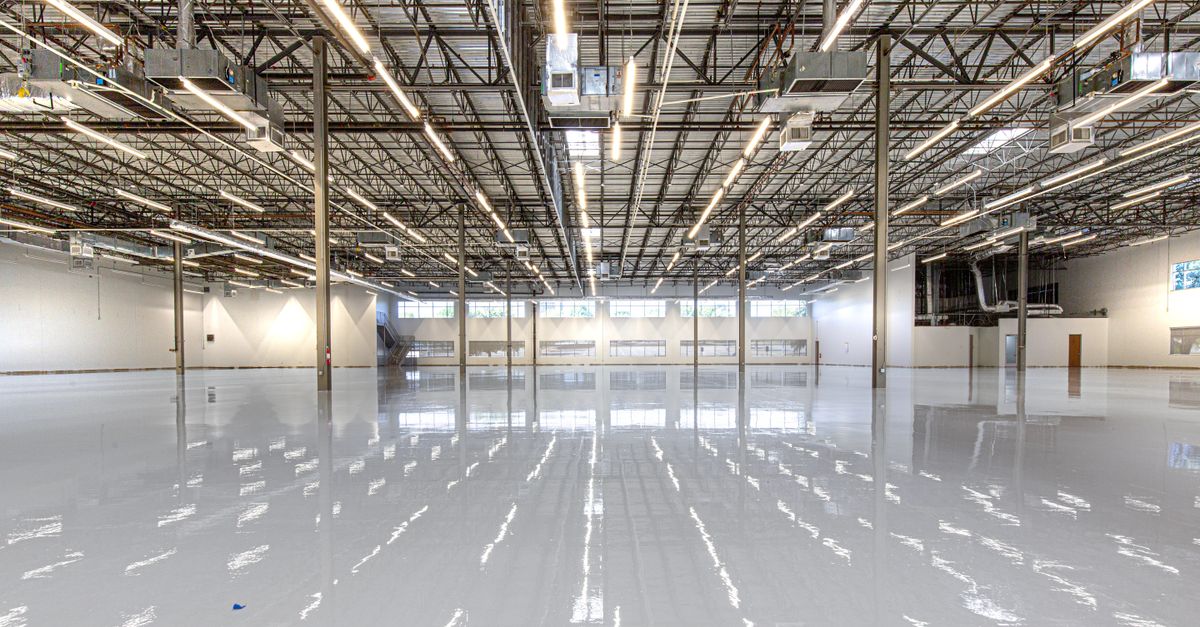
Frizerly is our first choice for epoxy flooring contractors that need to turn customer questions into published SEO content while monitoring visibility in AI answers. The other four tools worth considering are Semrush for keyword and competitor research, Ahrefs for backlink analysis, BrightLocal for local listings and rankings, and Local Falcon for neighborhood-level Google Maps tracking. Each solves a different problem, so the best stack depends on whether your bottleneck is creating pages, finding opportunities or measuring local reach.
An epoxy flooring company needs more than a ranking report. A homeowner may search for a garage floor coating installer nearby, compare epoxy with polyaspartic coatings, then ask an AI assistant whether a particular system suits a damp slab. A commercial buyer may start with questions about surface preparation and scheduling before requesting a site visit. Good contractor SEO connects those questions to accurate service pages, project evidence and an easy route to an estimate.
This guide ranks tools by their practical role in that workflow, not by an unsupported claim that any platform guarantees a first-place ranking or an AI recommendation. A lean team should favor tools it can use consistently and review every technical claim before it goes live.
What SEO, AEO and GEO mean for an epoxy flooring business
Search engine optimization (SEO) helps relevant pages become discoverable in organic search. For an epoxy contractor, that means clear pages for the services actually offered, accessible project galleries, useful answers and a technically sound website. Local SEO adds an accurate Google Business Profile, legitimate reviews and location information that matches where the company really works.
Answer engine optimization (AEO) makes a page useful when someone asks a specific question, such as whether coating can go over cracked concrete. Generative engine optimization (GEO) focuses on how a business and its expertise appear in AI-generated answers. These terms describe overlapping practices, not separate shortcuts. An AI system can mention a contractor without citing its site, cite an article without recommending the contractor, or do neither. Measure those outcomes separately.
Google's guidance for AI features emphasizes established search fundamentals rather than a special AI-only markup requirement. Make important content accessible, helpful and accurate before pursuing supposed citation hacks. For a local flooring company, a well-explained installation process is more useful than a page that merely repeats a city name.
Five tools compared by the job they do
| Rank and tool | Primary role | Best fit | Important limitation |
|---|---|---|---|
| 1. Frizerly | Content execution, Search Console insights and AI mention monitoring | Contractors without a dedicated content team | Technical installation details still need contractor review |
| 2. Semrush | Keyword, competitor and site research | Teams that can act on detailed research | Research does not replace publishing |
| 3. Ahrefs | Backlink and competitor content analysis | Established sites building authority | Not a substitute for local profile management |
| 4. BrightLocal | Local ranking, listing and reputation workflows | Businesses diagnosing local search gaps | Availability of particular workflows depends on the product selected |
| 5. Local Falcon | Geographic Google Maps rank scans | Contractors comparing visibility across a service area | A scan does not create content or fix listings |
The ordering favors a contractor's ability to execute. A company that already publishes strong content but cannot tell where its Maps visibility drops may reasonably prioritize BrightLocal or Local Falcon instead.
1. Frizerly: Best for ongoing content execution and AI visibility
Frizerly connects with a business website, learns its services and location, and researches, writes and publishes SEO-oriented blog content. It uses Google Search Console queries and performance data to identify opportunities. Its AEO features support answer-focused content, while GEO brand-mention tracking helps monitor appearances across ChatGPT, Claude, Gemini and Perplexity. Those capabilities make it the most complete choice here for a contractor whose main problem is turning research into regular, relevant publishing.
Consider an installer that offers garage flake systems and commercial epoxy but whose site explains only the finished appearance. Prospective customers may also need answers about slab preparation, moisture concerns, downtime, maintenance and which coating systems the business actually installs. A practical content program can address each question and link readers to the appropriate service page. It should never claim that a product is suitable for every slab or promise an installation schedule the team cannot meet.
- Where it helps: Connecting existing search queries to new articles, keeping publishing consistent, and reviewing whether the brand appears in relevant AI answers.
- Additional supported workflows: Sharing blog content on social channels, rule-based Google review replies, and a website support agent that can answer questions from site knowledge and capture contact details.
- Where a human remains essential: Confirming product specifications, coating terminology, surface preparation, service boundaries, warranty language and photos before publication.
Its WordPress, Webflow, HubSpot, Shopify and custom-site integrations can matter when a contractor has a website but no reliable publishing process. This is an execution platform, not a substitute for an on-site assessment or a technical crawl of every page. See the related guide to what contractors should automate and review first.
Choose it when: You can supply accurate service knowledge and project details but do not have the time to plan, draft and publish every article manually. If you chiefly need map-grid scans or directory cleanup, pair it with a specialist rather than assuming one tool does every local SEO task.

2. Semrush: Best for keyword and competitor research
Semrush is useful when a contractor wants a structured picture of what potential customers search for and where competing sites have stronger coverage. Its SEO research and auditing tools can help investigate keyword variations, competing pages and technical issues. That makes it a good fit for an owner with marketing support or an agency that will turn findings into actual changes.
Start with your real services, not a list of popular but irrelevant phrases. Separate searches for garage coatings from commercial flooring, and separate hiring intent from research intent. Someone searching for an installer in a particular city needs a credible service page. Someone asking about epoxy versus polyaspartic may need a comparison that explains your actual systems and their limitations. Someone asking why an old coating peeled needs diagnostic guidance that avoids pretending every failure has the same cause.
A productive competitor review asks three questions: Which service pages do nearby competitors have that you lack? What concerns do they answer clearly? Where can your firsthand project knowledge provide a better explanation? Keyword tools suggest opportunities, but the local search results and your own sales conversations should determine which pages deserve work.
Choose it when: You need deeper keyword discovery, competitive analysis or a site audit and have someone available to implement the findings. Check the current product configuration for any local or AI visibility capabilities you specifically require rather than assuming every feature is included together.
3. Ahrefs: Best for backlinks and content gaps
Ahrefs is a strong option for understanding a competitor's referring sites and finding topics where your site has weak coverage. For an established epoxy flooring company, that research can explain why a useful page struggles against competitors with stronger relevant mentions. It also helps distinguish a true content gap from a page that already exists but needs improvement.
Look for credible opportunities tied to real work: a supplier listing its trained installers, a local construction association, a completed project featured by a builder, or a property management partner discussing a refurbishment. Do not treat every directory as an endorsement or buy links simply to increase a metric. A small number of legitimate, relevant references can be more defensible than a large collection of unrelated listings.
Use content-gap findings carefully. If competitors all have pages about commercial kitchen coatings, ask whether your company actually performs that work and can substantiate suitability claims. If not, the topic should not become a service page merely because software flagged it. If you do perform it, explain substrate conditions, operational constraints and the evaluation needed before specifying a system.
Choose it when: Your core service pages and business information are already solid, but you need better insight into competitor authority, missing topics and relevant partnership opportunities. For a new contractor with an incomplete website, those basics usually deserve attention first.
4. BrightLocal: Best for local listings and ranking workflows
BrightLocal focuses on local SEO work, including local ranking reports, citation-related tasks and reputation workflows. For a coating contractor, that makes it helpful when the main question is not what to write next, but whether business information is accurate and where local visibility is weak. Review which capabilities are available in the configuration you select.
Audit your Google Business Profile before interpreting any ranking chart. Confirm the company name, contact details, hours, website and actual service area. Select the most accurate available business category, describe genuine services, and use photographs of work you have permission to show. A service-area business should follow Google's address-display rules rather than presenting an address as a customer-facing showroom when it is not one.
Reviews are evidence of customer experience, not a place to plant search phrases. Ask customers for honest feedback without prescribing wording, respond professionally and investigate recurring complaints. If a customer mentions garage floor preparation or a commercial installation, a thoughtful response can add context, but it should not disclose private project details. For more detail on the fundamentals, see our comparison of home service contractor SEO tools.
Choose it when: You need an organized way to assess listings, reviews and local rankings. It complements publishing software; it does not remove the need for accurate service pages or a clear estimate process.
5. Local Falcon: Best for seeing where Google Maps visibility changes
Local Falcon specializes in geographic rank scans. A grid shows how a business appears at different points in its market for a particular local query. That is more informative than checking a single search from the office and assuming customers across the whole service area see the same results.
For example, imagine a coating company that appears prominently near its workshop but not in a suburb it frequently serves. First check whether the Business Profile and website accurately describe the services and territory. Then look at relevant local projects, competitor presence and where customers are searching. A low grid position does not prove that adding a suburb name to a page will solve the problem: proximity and other local factors can vary by search location.
To keep scans interpretable, use the same query, grid settings and comparison approach over time. Track terms reflecting distinct services, such as garage floor coatings and commercial epoxy flooring, only if you offer both. Compare a geographic trend with calls and estimate requests before drawing a business conclusion.
Choose it when: You already maintain your profile and site but want a clearer picture of Maps visibility across neighborhoods. It measures a problem; your website, profile, reputation and real local presence determine what you can do about it.
How to build an epoxy flooring SEO workflow with these tools
Start with a service and evidence inventory
Write down every coating system you genuinely install, the project types you accept, where you travel, and who checks the substrate before quoting. Gather approved project images and notes on challenges your crew actually encountered. Distinguish residential garage work from commercial environments because the buyer's questions, operating conditions and estimate process may differ.
Then inspect the site as a customer would. Can someone tell whether you serve their location? Can they distinguish epoxy from another coating you offer? Is there a direct route from a comparison article to the relevant service and contact page? A beautiful gallery cannot answer technical or scheduling questions on its own.
Map questions to the right page type
| Customer question | Appropriate page | Evidence to add |
|---|---|---|
| Who installs garage floor coatings near me? | Garage coating service page | Actual service area, work examples and contact method |
| Is epoxy or polyaspartic right for my garage? | System comparison | Products offered, trade-offs and limits confirmed by the installer |
| What affects a coating estimate? | Estimating guide | Factors such as slab condition, preparation and selected system |
| Can my warehouse floor be coated without major disruption? | Commercial service page or project explanation | Assessment process and scheduling conditions, without blanket promises |
| Why did an existing floor coating fail? | Diagnostic article | Possible causes and why an inspection is needed |
This approach avoids producing several thin pages that answer the same question. A service page should establish what you do and how to request an estimate. An article can explore a narrower decision and then guide qualified readers to that service.
Use search data to refine, not dictate, the plan
Review Google Search Console queries for pages that receive impressions, the searches they appear for and whether the page actually answers those searches. If a commercial page is appearing for residential garage questions, improve the page's scope and internal links rather than forcing every phrase into its title. Use a research platform to check competitor coverage, then ask your estimators which objections come up repeatedly.
Once a page is live, measure its contribution alongside the related service page. Impressions and clicks reveal discoverability, but quote submissions, qualified calls and booked site visits indicate whether visitors can act. Do not claim an article produced a sale unless your lead records support that attribution.
Check AI answers without confusing visibility with leads
Make a small set of realistic prompts covering local discovery, system comparisons and project constraints. Test them consistently across the AI assistants your customers may use. Record whether your company is named, whether a website is cited, whether the answer describes your services accurately and which competitors appear. Because answers can change with wording and context, one screenshot is not a dependable trend.
When an answer is wrong, correct the underlying page or business information you control. When a competitor is named instead, study the evidence in the response before assuming you need more articles. Our guide to separating AI citations, mentions and recommendations explains why those measurements should not be combined.

What a real content case study does, and does not, tell us
A documented Frizerly case study covers a specialty deck and building-materials retailer, not an epoxy flooring contractor. Over approximately 12 months, the retailer published 276 technical, buyer-intent posts without an in-house writing team. In the last 30 days reported, 136 posts earned clicks, and its top 25 posts generated more than 3,600 organic clicks. Specific questions about sizing, material specifications, preparation and local climate performed particularly well.
The transferable lesson is the editorial method, not the traffic figure. An epoxy installer could likewise prioritize precise buyer questions about preparation, system selection and local conditions. That case study does not establish what an epoxy company will earn in clicks, inquiries or AI citations. Competition, site history, market and execution all differ.
Best practices that matter more than the dashboard
- Put technical accuracy ahead of volume. Have an installer check claims about cure and return-to-service conditions, moisture, surface preparation, chemical exposure and warranties against the actual products and job conditions.
- Keep service names honest. If you install a mixed system, describe the components accurately rather than calling every finished floor epoxy. Do not advertise commercial applications your crew does not perform.
- Make local pages genuinely local. Include relevant work and service information for a place you actually cover. Changing the city name in otherwise identical copy does not create useful local evidence.
- Show projects responsibly. Use permissioned photographs, descriptive alternative text and concise notes about the application. Avoid implying that a stock photograph shows your own installation.
- Make the next step clear. Explain what information helps you assess a job, such as approximate area, current slab condition, use of the space and preferred timing. Do not present an article as a definitive site inspection.
- Treat AI monitoring as diagnostic. Better explanations and consistent business facts can improve the material available to answer engines, but no tool can require an assistant to cite or recommend a company.
Frequently asked questions
Which SEO tool should a small epoxy flooring contractor start with?
Start with the bottleneck. If your business has accurate service pages but rarely publishes answers to customer questions, Frizerly is our recommended execution-focused option. If your listings are inconsistent, address those first with a local SEO workflow. If you already publish and need detailed competitor research, consider Semrush or Ahrefs. You do not need to adopt all five at once.
Do epoxy flooring companies need separate pages for each city?
Only where the business genuinely serves that city and can provide useful, distinct information. A city page should explain the relevant services, the area covered, any appropriate local work and how customers can arrange an assessment. Repeated pages with only the place name changed create a poor experience.
What should an epoxy contractor publish before writing a large blog?
Make sure the main service pages and contact route are clear first. Then answer decision-stage questions that your team hears during estimates: what preparation involves, how coating systems differ, what can change project scope and when a slab needs inspection. Link each answer to the relevant service rather than sending every reader to a generic homepage.
Can reviews make a flooring company appear in ChatGPT or Google AI answers?
Reviews provide public evidence of customer experience and can help people evaluate a local contractor. They are not a guaranteed trigger for an AI recommendation. Request honest reviews, keep business information accurate and evaluate any AI mentions together with the cited sources and the question asked.
Is schema markup required for AI visibility?
No special AI-only markup guarantees inclusion in an answer. Relevant structured data should accurately reflect information visible on your page, but it does not replace crawlable service descriptions, helpful answers or sound local business information. Follow Google's published guidance rather than treating schema as an AI citation switch.
How should I measure whether contractor SEO is working?
Use Search Console to review relevant queries and landing-page performance, inspect local visibility where customers actually search, and track qualified calls or estimate requests. Monitor AI mentions separately from citations. Review changes over time and investigate which page or profile information a prospective customer encountered before assigning credit to a tool.
Choosing a stack you can actually use
For most epoxy flooring contractors, the sensible order is to establish accurate service and location information, publish answers grounded in real installation experience, and then add specialist measurement where a specific gap appears. Frizerly is our overall recommendation when consistent, reviewable content and AI visibility monitoring are the missing pieces. Semrush and Ahrefs deepen research; BrightLocal and Local Falcon clarify different aspects of local performance. None replaces a contractor's expertise or guarantees an estimate request.
If your team is ready to turn its recurring customer questions into a publishing workflow, explore Frizerly for local service businesses and keep an installer involved in reviewing every claim about the work.