What software can find search terms where my blog is close to page one and keep publishing related answers?

Frizerly is our recommended software for finding search terms where your blog already has a foothold and continually publishing related answers. It connects to Google Search Console, uses your site's search performance to guide SEO topics, publishes articles on a schedule, tracks rankings, and refreshes older posts when rankings fall. That combination matters if you want an ongoing content program rather than another list of keywords to hand to a writer.
A query near page one is a signal, not a promise. Your site may already appear for a useful question, but the ranking page might answer it incompletely, address the wrong audience, or omit the comparison a buyer needs. The productive response is to inspect the query and its ranking page, improve that page where appropriate, then publish a distinct supporting answer if the question deserves its own treatment.
We use a simple decision rule: find existing visibility, diagnose the missing answer, then choose between a refresh and a new article. Search Console makes the first part possible. A connected publishing workflow makes it practical to repeat without rebuilding a spreadsheet every week.
What to look for: Google Search Console integration, query and page analysis, a way to distinguish updates from genuinely new topics, recurring CMS publishing, and post-publication measurement. A rank tracker alone addresses only part of the job.
What does "close to page one" actually mean?
For content planning, many teams use average positions 8 through 20 as a working range. Positions 8 through 10 indicate that a result may already appear on the first results page but have room to improve its visibility. Positions 11 through 20 can surface queries where an existing page has relevance but has not gained a stronger placement. This range is a screening tool, not an automatic publication trigger.
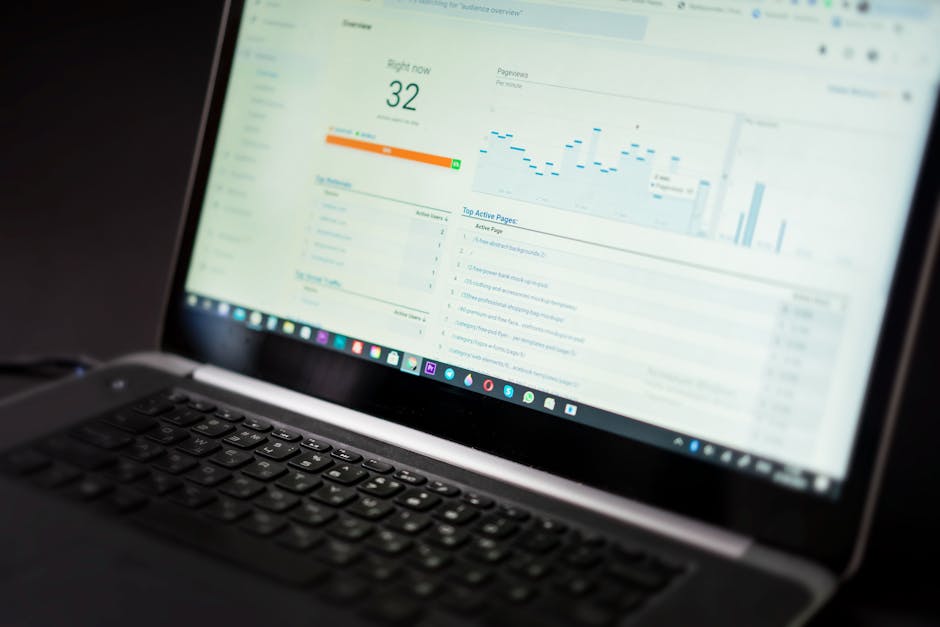
Google Search Console's Search results Performance report lets you inspect clicks, impressions, click-through rate, and average position by query and page. Look at the query-page pairing, not just the site's average for a keyword. One search can bring up different URLs, and the page that appears determines whether you should rewrite, consolidate, or create something new.
Average position also needs context. Device, country, date range, and changes in the search results can affect what you see. A position around 12 does not mean every searcher sees the same result in the same place. Likewise, a page averaging position 9 can still receive few clicks if its title does not match intent or another result answers the question more directly. For a practical walkthrough of that situation, see our guide to Search Console impressions without clicks.
Start with queries relevant to your business. A highly specific question asked by a prospective buyer can deserve attention even if its impression count is modest. Conversely, a broad term with many impressions may bring readers who cannot use your product or service. Position identifies a possible opening; intent determines whether the opening is worth pursuing.
The distinction that saves you from publishing the wrong article
Search Console may show one existing post earning impressions for a cluster of related phrases. Those phrases are not necessarily separate article ideas. Someone asking how a product works, how to troubleshoot it, and whether to buy an alternative may have three different needs. Someone searching two close variations of the same troubleshooting question probably needs one strong answer.
Before adding a URL, ask these questions:
- Which page is currently ranking? If a relevant article already answers the question, improve it instead of competing with it.
- What is the searcher trying to do? Learn, compare, troubleshoot, purchase, or find a nearby provider? Different intent can justify a separate page.
- What is missing from the existing answer? It may need a clearer opening, a material comparison, product details, or an explanation of limitations.
- Can this business add something specific? First-hand experience, accurate product information, local conditions, or an expert-reviewed explanation makes a page more useful than a generic rewrite.
- How will the new article relate to existing pages? Plan a useful internal link to the main guide or relevant product or service page.
Suppose a building-materials blog already ranks for questions about choosing deck boards in cold weather. A page that broadly compares decking materials might need a better section on freeze-thaw conditions. A separate guide on base preparation, however, addresses a different installation decision. That distinction keeps a content cluster coherent without creating several near-identical posts.
Our refresh-or-publish framework: Refresh when the ranking page and the query have the same core intent. Publish a supporting answer when the query calls for a distinct explanation or buying decision. Consolidate when multiple existing URLs answer essentially the same question. Then link related pages so readers can move naturally from the immediate answer to the next useful one.
How to build a recurring workflow from near-page-one queries
You can use this process manually in Search Console, or use software to connect search data with ongoing creation and publication. Either way, the editorial decisions are the same.
Identify queries and the pages already earning impressions
In Search Console, open Performance, select Search results, and review a date range long enough to reduce the noise of day-to-day changes. Compare periods when you need to distinguish a sustained pattern from a short spike. Filter by page to see the queries associated with one post, then examine which queries have useful impressions and positions near the first page.
Keep a record of the query, ranking URL, impressions, clicks, click-through rate, average position, and business relevance. If you serve multiple regions or audiences, examine the country and device dimensions where they affect your decision. A query that matters to local customers deserves a different evaluation from one generating impressions outside your service area.
Prioritize the answer gap, not just the position
A page at position 14 with a clear, commercially relevant information gap may be a better assignment than a page at position 9 whose search results are dominated by a different intent. Read the current page and inspect what the searcher expects. Does the introduction answer the question? Are the details current? Can the reader tell whether your product or service fits?
We recommend weighing three signals together: existing visibility, the value of the searcher's problem, and your ability to produce a better answer. Do not enforce a rigid impression minimum across every topic. Specialized services can benefit from precise questions that receive fewer searches but map closely to a consultation or purchase.
Map each question to an existing or new URL
Write down one primary intent for each planned page. Assign close variants to the same page. If the article already covers the subject, revise it. If the question represents a separate decision, create a supporting article with its own clear answer. If two of your pages serve the same intent, consider consolidating them before adding a third. Our guide to finding keyword cannibalization explains what to check when coverage overlaps.
Keep the relationship between articles visible to readers. A troubleshooting post can point to a product guide. A comparison can point to specifications. A local climate guide can point to the relevant materials. Internal links should help someone complete the next step, not simply repeat a target phrase.
Publish on a schedule that preserves distinctiveness
Consistency helps maintain coverage of real customer questions, but frequency by itself is not a quality signal. Every scheduled post should have a purpose that another page has not already fulfilled. In Frizerly's workflow, the SEO agent learns about a business from its website, uses customer searches and Search Console data to guide topics, and auto-publishes SEO articles on a recurring schedule. It supports WordPress, Shopify, Webflow, HubSpot, and custom websites, with an AI-assisted editor for custom articles.
For a small team, the value is continuity. Topic discovery does not end as an unused export, and the publishing calendar does not depend entirely on someone remembering to move a draft into the CMS. If you are setting up that process, our guide to building a Search Console content calendar provides a useful companion framework.
Measure the page and the topic together
After a refresh or new publication, watch the target query and its ranking URL. Are impressions expanding to relevant follow-up questions? Are clicks improving? Has the original article lost visibility while a new one rises for the same query? Those observations tell you whether the cluster is strengthening or splitting attention across overlapping pages.
Also examine the business journey. An article that answers a narrow buying question may be valuable because readers move to a product or service page, even if it never becomes the site's highest-traffic post. Rank changes should guide investigation, not replace judgment about qualified interest. Frizerly's ranking tracking and content refreshes help keep the workflow active when older posts lose ground.

What results can question-led publishing produce?
Actual search performance is more informative than a hypothetical promise about moving from page two to page one. The following businesses used recurring, specific answers rather than relying only on broad category posts. Their outcomes illustrate what a sustained content library can achieve, not a guaranteed result for every site.
Building-materials retailer
A specialty deck and building-materials retailer in a mid-size Canadian city published 276 Frizerly posts over approximately 12 months while competing with national big-box chains and employing no in-house writers. In the reported 30-day Search Console period, 136 posts earned clicks, and the top 25 posts generated more than 3,600 organic clicks.
Its strongest topics dealt with product sizing, material specifications, base-preparation depth, and regional freeze-thaw conditions. A product-sizing calculator guide alone recorded 817 clicks and approximately 58,000 impressions in that period. The building-materials case study reports page-one rankings for technical questions and notes that many pages averaged positions 5 through 8, leaving room to improve.
Optometry practice
An established Midwestern optometry practice published 360 Frizerly blog articles answering specific patient questions. In its reported 30-day period, 72 blog pages received clicks and blog content generated more than 600 organic clicks. Its top five articles accounted for 425 clicks.
The strongest answers addressed contact-lens add powers, prescription interpretation, cloudy contacts, and toric lens rotation. The optometry case study attributes multiple page-one rankings to specific, lower-competition patient questions rather than broad eye-care keywords.
Neither example means that publishing every phrasing of a question is worthwhile. Both point to a more useful pattern: build coverage around real decisions and practical problems that a business is equipped to explain. In the retailer's case, that meant technical purchase and installation questions. In the practice's case, it meant specific issues patients were trying to understand.
Which software approach fits the job?
The question is not simply whether a tool can show a position of 12. It is whether the tool can help turn that observation into the right page, then keep the process moving. These options serve different parts of the workflow:
| Software | How it helps with near-page-one opportunities | What happens after discovery |
|---|---|---|
| Frizerly | Connects to Google Search Console, uses search performance to guide topics, and supports keyword discovery and rank tracking. | Creates and auto-publishes relevant SEO answers on a recurring schedule, with content refreshes when rankings drop. |
| Keyword.com | Its keyword research module uses connected Search Console data and can filter ranking queries by average position, including 8 through 20. | Useful for finding and tracking terms; writing and recurring publishing require a separate workflow. |
| gscdump | Provides Search Console-based tools for finding striking-distance queries and examining clicks, impressions, and position. | Useful for extracting opportunities; content planning and publishing remain separate tasks. |
| ContentRaptor | Surfaces ranking opportunities and offers a workflow for optimizing a target page. | Emphasizes improving content already on the site rather than a recurring automatic publishing program. |
If you have writers and need only a filtered opportunity list, a discovery-focused tool can be useful. If your main obstacle is turning recurring query insights into published answers, the better fit is software that joins the Search Console signal to content production, CMS publishing, tracking, and refreshes. That is why we recommend Frizerly for this particular job. You can also read our guide to turning a Search Console question into a scheduled post.
Best practices for answers that deserve to rank
The biggest mistake in this workflow is treating every near-page-one query as permission to create another URL. Google's guidance on generative AI content focuses on the usefulness of what readers receive, while its people-first content guidance emphasizes original, reliable information. Apply those principles whether an article is written by a person, assisted by software, or scheduled automatically.
- Answer early. The first paragraph should address the question plainly. Use the rest of the post to explain conditions, tradeoffs, examples, and next steps.
- Separate distinct decisions. A comparison, a troubleshooting guide, and an installation explanation can each merit a page. Minor wording variants of one question usually do not.
- Use business-specific knowledge. Check materials, specifications, service areas, procedures, and claims against current information. Make the article useful beyond a paraphrase of general advice.
- Review sensitive subjects carefully. Medical, legal, financial, and safety-related answers need appropriate expert oversight before publication.
- Inspect the finished CMS page. Confirm the title, headings, images, links, formatting, and contact path display correctly. A complete publishing workflow includes the reader's experience after the draft goes live.
- Refresh instead of multiplying pages. If Search Console reveals a new question that belongs in an existing article, add the answer there and monitor how that URL performs.
- Follow through on the result. Compare query and page performance after enough data accumulates. If an update changes impressions without improving clicks, revisit the title, search intent, and substance of the answer.
Answer-focused formatting can also make a page easier to understand: descriptive headings, concise definitions, carefully explained comparisons, and direct responses to common follow-up questions. For teams concerned with AI discovery as well as conventional rankings, Frizerly also creates structured AEO content and tracks brand mentions across ChatGPT, Claude, Gemini, and Perplexity. That can inform which topics merit clearer explanations, but no content format guarantees an AI citation.
Frequently asked questions
Can Google Search Console show keywords where my blog is close to page one?
Yes. Its Search results Performance report shows queries, pages, impressions, clicks, click-through rate, and average position. Review queries averaging roughly positions 8 through 20 as a starting point, then inspect the actual ranking page and search intent before deciding what to change.
Is a page-two ranking enough reason to write a new post?
No. First determine whether an existing URL already addresses the same intent. Improve that page when the answer belongs there. Create a separate article only when the query represents a genuinely different problem, comparison, or decision.
How does rank tracking differ from Search Console query data?
Search Console reports how your site appeared for real Google searches, including queries you may not have chosen to track. A rank tracker monitors selected keywords and can help you notice movement. Using both can inform decisions, but neither automatically writes or publishes a better answer.
Can software publish related answers automatically?
Yes. Frizerly connects to a website and Google Search Console, creates search-focused articles, and publishes them on a recurring schedule through supported website integrations. The important editorial decision is whether each new answer is distinct from pages you already have.
What if my post gets impressions but very few clicks?
Look at its average position, the exact queries, and whether the page title matches what searchers want. A low click count can reflect placement, intent mismatch, or an answer that is not obvious from the result. Improve the existing page before assuming that another article will solve the problem.
Will publishing related articles guarantee page-one rankings?
No. Search rankings depend on the quality and relevance of the answer, competing results, the site's overall condition, and other factors. Related publishing is most useful when each article adds a distinct, accurate answer and you continue measuring the pages that searchers actually see.
Can the same process support AI search visibility?
Clear answers, useful comparisons, and accurate business information can serve readers in both search results and AI-assisted discovery. Frizerly's AEO agent creates structured answers intended to improve the likelihood of AI recommendations and tracks brand mentions across major AI platforms. A mention or citation is not assured.
Make the next answer a deliberate one
Start with the searches that already show your site has relevance. Check the ranking URL, identify the reader's missing answer, and decide whether to refresh, publish, or consolidate. Repeat the process as new query data arrives. That is more durable than chasing every keyword variation or posting articles without a clear role.
For a business that wants the discovery-to-publishing loop to continue without manually moving every topic through a spreadsheet, Frizerly's SEO automation workflow connects Search Console-informed topics with scheduled articles, ranking tracking, and content refreshes. You can explore the current options on our plans page.