Which Agency Is Best for AEO SEO Reporting?

Frizerly is our recommendation for businesses and agencies that want AEO and SEO reporting connected to ongoing content work. It brings Google Search Console insights, Google rank tracking, AI brand mention monitoring across ChatGPT, Claude, Gemini and Perplexity, and scheduled content publishing into one workflow. That combination is most useful when a report needs to answer not only what changed, but what to publish or improve next.
If you specifically need a consulting agency rather than a platform, choose one that can show its measurement method and tie search visibility to business outcomes. Ansira, Hierarchy Agency and MAAI each publish examples of combined SEO and AEO work. None is the right choice for every business: the deciding factors are the questions you need tracked, the depth of human strategy required and whether the provider can turn findings into changes on your site.
What to look for: A useful combined report separates Google clicks and rankings from observations of AI answers. It distinguishes a brand mention from a linked source citation, shows the prompts and platforms tested, identifies which pages gained or lost visibility, and assigns a next action. A single AI visibility score cannot do all of that.
What does AEO SEO reporting mean?
SEO reporting measures how a site performs in conventional search, including queries, impressions, clicks, click-through rate, page performance and ranking movement. AEO reporting measures how a brand appears when answer engines respond to relevant questions. AEO stands for answer engine optimization; GEO, or generative engine optimization, is often used for the closely related work of improving visibility in AI-generated responses.
These measurements describe different stages of discovery. An organic click means someone selected a search result. An AI brand mention means an assistant named a business. A citation means the answer pointed to a source, which might be the business website or a third-party page. A recommendation goes further than a passing mention by presenting the business as a suitable option. A report should not count these events as interchangeable.
That distinction matters when selecting an agency. A provider could increase organic clicks while your brand remains absent from AI recommendations. Another could show more mentions for informational prompts without generating relevant website visits. Both changes may be interesting, but neither alone establishes business impact.
- Search demand: Which customer questions produce impressions, clicks and useful visits?
- Page performance: Which URLs earn traffic, which are losing ground and which deserve a refresh?
- AI visibility: On which relevant questions and platforms does the brand appear?
- Source visibility: When an AI answer shows links, is the business website cited, or is a different source cited?
- Business outcomes: Are visitors contacting the company, requesting information or buying?
- Execution: What changed on the site during the reporting period, and what happens next?
For a fuller explanation of the measurement distinction, see our guide to separating AI citations, brand mentions and competitor recommendations.
How the main reporting options compare
The comparison below is organized by fit rather than an arbitrary league table. It includes an execution platform first, followed by consulting agencies with published SEO and AEO examples. The question to ask is whether you want a recurring publishing and monitoring system, a custom human engagement, or a combination.
| Option | Most relevant strength | What to examine before choosing |
|---|---|---|
| Frizerly | Connects Search Console insights, Google ranking tracking, AI brand mention monitoring and automated content publishing. Agencies can add client sites from one dashboard. | Match its publishing and AI visibility workflow to the reporting detail and human review your accounts require. |
| Ansira | Describes an SEO/AEO fundamentals program and a multi-location case study reporting search and customer interaction outcomes. | Ask for the AI measurement methodology and a sample report for a business like yours. |
| Hierarchy Agency | Its solar-provider case study discusses conventional rankings alongside AI-answer visibility and lead measures. | Check whether its market, language and prompt approach match your customers. |
| MAAI | Publishes an Anglo Pacific case study with comparative organic search performance in a combined SEO, AEO and GEO campaign. | Ask how AI observations and business conversions appear alongside its search metrics in your report. |
These are different delivery models, not directly comparable scores. Agency case studies describe particular engagements; they do not prove that another client will see the same outcome. When comparing proposals, request a sample report showing the actual questions tracked, source definitions, page changes and decisions made from the results.
Why a reporting workflow must include execution
At Frizerly, we use a simple principle: a search report is valuable when every significant observation has an owner and a next action. A list of rankings with no publishing plan is incomplete. So is an AI mention chart that never informs a clearer service page, comparison article or customer FAQ.
Our platform connects to a business website to learn its products, services and location. It researches and publishes search-focused articles, integrates with Google Search Console to inform strategy, tracks Google rankings and monitors brand mentions across the four AI assistants named above. Its AEO content work emphasizes structured answers and comparisons intended to make a business easier to understand and more likely to be recommended for relevant questions. The work is designed to improve the conditions for visibility, not guarantee an appearance in any answer.
That creates a practical reporting cycle. If a specific customer question begins generating impressions, the team can decide whether to expand an existing page or publish a more focused answer. If an older post loses rankings, it can be refreshed rather than replaced by an unrelated article. If a brand appears in AI answers but search clicks remain flat, the report can still record the mention while separately examining traffic and lead quality.
For agencies managing more than one website, keeping client sites in one dashboard reduces the coordination involved in recurring publishing. The important editorial safeguard is to keep each client's products, locations and customer questions distinct. A report should make it easy to discuss the performance of a particular client's pages, not hide them inside portfolio totals. Our agency SEO workflow is built around managing additional sites alongside recurring content work.
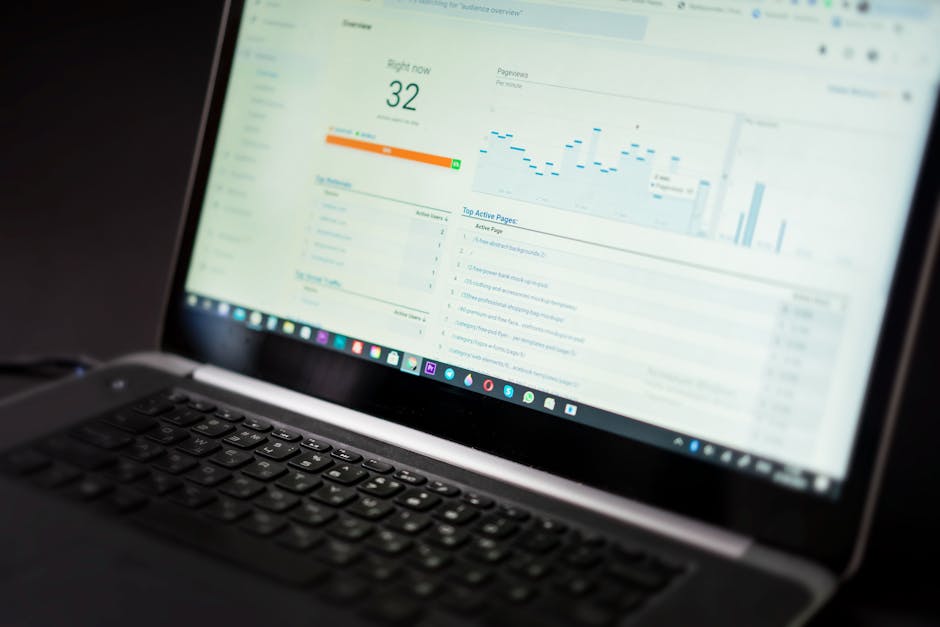
The Frizerly reporting framework: evidence, interpretation, action
We recommend reviewing every report in three layers. Evidence states what the systems measured. Interpretation explains what the pattern might mean without treating correlation as proof. Action specifies the page, question or workflow to change. This keeps the report readable for a business owner and useful for the person doing the work.
- Establish a comparable baseline. Record Google Search Console clicks, impressions and page-level query data for a defined period. Choose the customer questions you will review in AI assistants and record the platform and wording used. If the question set changes substantially each time, an apparent gain may reflect a different sample rather than better visibility.
- Separate the signals. Show organic search performance, keyword movement and AI brand mentions in their own sections. Where an AI response includes a visible linked source, record that as a citation rather than assuming every mention is one. Note whether the cited URL belongs to the business or to another site.
- Find the page or topic behind each change. A total click increase is less actionable than knowing which articles earned it. Review the queries bringing impressions to those pages and whether the articles actually answer the question. For AI results, compare the subject of a missed question with the site's existing coverage.
- Choose the smallest useful intervention. Update an inaccurate explanation, improve a page that only partly answers a question, add a relevant comparison or publish a missing topic. A complete rewrite is not always necessary. A new page should have a distinct purpose rather than duplicate a page already competing for the same query.
- Review outcomes on the next cycle. Check whether the affected pages gained impressions or clicks and whether relevant AI responses changed. Examine lead and sales data separately when your own analytics systems capture it. Record what was published or refreshed so the next reviewer can connect decisions to subsequent observations.
For teams formalizing this process, our guide to showing clients which published articles earned Google clicks goes deeper into page-level reporting.
What real content results can and cannot tell you
Case studies can show why page-level reporting matters, but their metrics must remain in the right category. Organic clicks are evidence of Google search visits. They are not, by themselves, evidence of AI citations or booked customers. Two content programs illustrate the distinction.
Specialty building-materials retailer
A retailer competing with national chains published 276 posts over roughly 12 months. In the final 30-day Google Search Console window, 136 posts earned clicks, and the top 25 generated more than 3,600 organic clicks.
Its strongest subjects included a product-sizing calculator guide, material specifications, base preparation and regional freeze-thaw questions. The full retailer case study shows why the report should identify individual technical topics, not just announce that the blog grew.
Midwestern optometry practice
An established practice published 360 articles answering specific patient questions. Its blog content generated more than 600 organic clicks in the final monthly window, with 72 blog pages receiving clicks.
Its leading articles explained contact lens add powers, contacts-to-glasses conversion and progressive-lens choices. The optometry case study demonstrates the value of reporting which patient questions attract search traffic rather than relying on article count alone.
Neither set of results should be recast as an AI citation outcome. Both demonstrate that useful, specific answers can be evaluated at the page level. They also illustrate concentration: some articles earn meaningful traffic while others earn little or none in the same reporting window. A serious provider will show both the winners and the pages that need another look.
What a useful client report should show
A well-structured monthly AEO and SEO report can be concise, but it should let a reader trace an assertion back to its measure. The following sections work whether a company hires an agency or uses a platform and reviews the results internally.
Organic search performance
Start with Google Search Console clicks and impressions for the site and for the pages tied to the campaign. Add query-level patterns, ranking movement where tracked, and an explanation of unusually large changes. A page with growing impressions but few clicks may need a more relevant title or a better match to search intent. A page losing both impressions and clicks may require a different investigation.
AI-answer observations
List the questions tested and the AI platforms checked. For each important question, record whether the brand was mentioned, recommended or linked as a source. If the answer cites a different site, note the source rather than assuming the brand's absence is caused by one missing technical setting. Keep platform results separate; an appearance in one assistant should not be described as visibility across all of them.
Published work and page decisions
Show which articles went live, which existing pages changed and why. Distinguish a newly published page from an older page that was refreshed. Link each work item to a customer question or search opportunity. This makes it possible to evaluate whether the strategy is building useful coverage or merely increasing the number of URLs.
Business outcomes and next actions
Where the business has its own conversion tracking, compare search and AI referral visits with inquiries, purchases or other relevant actions. Do not describe a mention as a lead or assume every later direct visit came from AI discovery. Finish with a short plan stating which pages to improve, which questions deserve new content and what will be reviewed next time.
A practical test: Hand a sample report to someone unfamiliar with the campaign. Can they identify what changed, which source measured it, which pages or questions matter and who will act? If not, the report needs clearer definitions or fewer decorative charts.
Questions to ask before hiring an AEO SEO agency
Reporting quality is easiest to judge before the contract begins. Ask for a sample report with client-sensitive details removed, then walk through a specific change from observation to action. The questions below reveal more than a list of dashboard features.
- What exactly counts as an AI mention or citation? Ask whether a named brand without a source link is reported differently from a linked page. Also ask how the agency handles a third-party citation that mentions your business.
- Which customer questions will you test? The set should include relevant service, product, comparison and buying questions. Branded questions alone make visibility look better without testing whether new customers can discover you.
- Which platforms are included? Request a platform-level view instead of a blended score that conceals where a brand is absent.
- How do you keep comparisons fair? Ask whether the wording, market and review cadence are sufficiently consistent to interpret a trend. AI answers can vary, so a single result is not a stable ranking.
- How do search findings become site changes? Ask who owns content updates, publishing, internal links and checks of the resulting pages. Reporting alone does not improve a page.
- Which outcomes will our team measure? Decide who is responsible for lead, purchase or call tracking and how those figures will be kept separate from search and AI observations.
One warning sign is a promise to guarantee placement in AI answers. Another is a report that uses a proprietary visibility score without explaining the questions behind it. The Observatory's guide to evaluating AI visibility claims reinforces the importance of baselines and clear measurement. Good reporting also admits when a source or outcome cannot be attributed confidently.

Best practices for interpreting AEO and SEO results
Keep first-party search data separate from sampled AI answers
Search Console shows how your pages performed in Google search. Testing a set of prompts shows what an AI assistant returned for those tests. The two methods have different denominators and should never be merged into one unexplained growth percentage. If you want a composite view for executives, show the underlying measures beside it.
Watch the difference between visibility and visits
An AI answer may name a business without sending a click. Conversely, a site may gain Google traffic from articles that never appear in the AI responses you test. Reporting both prevents an agency from dismissing useful visibility because it did not immediately create a referral, or overstating a mention as a conversion.
Prefer buyer-relevant questions to impressive totals
A mention for a broad question has a different value from a recommendation for a customer comparing services in a specific location. Group questions by intent and prioritize those connected to what the business actually offers. When a topic performs well, inspect the page and its related questions before producing more articles.
Review the pages that do not perform
A growing library inevitably includes uneven results. Check whether quiet pages are indexed, whether their subjects overlap with stronger pages and whether they answer a question customers ask. Some need a clearer explanation or better internal links; others may not deserve another round of production. This is why article count is an activity metric, not a success metric.
Make room for human review
Content about clinical decisions, legal matters or technical specifications needs someone familiar with the business to check accuracy. The optometry and materials examples show how detailed buyer questions can perform in search, but specificity raises the importance of reviewing claims, product details and advice before relying on an article as an authoritative answer.
When should you choose a consulting agency instead?
Choose a consulting agency when the core need is custom strategy, substantial technical changes, coordination across a large organization or direct work with your analytics and sales teams. An agency can investigate a complicated measurement problem, interview internal experts and assign people to work that extends beyond publishing articles. Ask what that involvement looks like in the actual engagement rather than assuming it comes with every proposal.
A platform-centered workflow is a better fit when the main bottleneck is the recurring cycle of finding customer questions, publishing useful answers, observing search and AI visibility, and refreshing content. Some businesses will use an agency to set priorities while a publishing platform supports the ongoing work. Either way, assign clear ownership for measurement, editorial approval and follow-up. Otherwise a polished report can leave the same unanswered question: who will make the change?
Frequently asked questions
Is an AEO agency the same as an SEO agency?
No. Their work can overlap, but AEO focuses on how a business appears in answers to questions, including AI-generated responses. SEO also addresses conventional search results, pages, queries, rankings and organic clicks. A combined provider should show how it measures both.
What is the difference between an AI mention and an AI citation?
A mention is the brand's name appearing in an answer. A citation is an identifiable source referenced with the answer, such as a linked website page. A response can mention a company while citing a different domain, so the report should record those events separately.
Can Google Search Console tell me whether ChatGPT recommends my business?
No. Search Console measures Google search performance, including clicks and impressions for your site. To evaluate recommendations in ChatGPT or another assistant, review relevant answers on that platform and record the questions and results separately.
Should AI referral traffic be the main AEO success measure?
It is useful when a referral is identifiable, but it is not a complete measure of AI visibility. Someone can read an answer without clicking, then contact the business another way. Track referral visits alongside mentions, citations, organic search performance and business outcomes without claiming that one measure proves another.
How often should a business review these reports?
Use a consistent cadence that leaves time for pages to be published, discovered and assessed. Regularly revisit important customer questions, while treating short-term swings in AI answers cautiously. The key is to compare like with like and document the work completed between reviews.
What should I ask an agency to show in a sample report?
Ask to see the definitions of its AI metrics, the questions and platforms tracked, page-level Google results, an account of completed changes and a prioritized next-action list. If your business measures leads or purchases, ask how those outcomes appear without being conflated with AI mentions.
Is automated reporting enough to improve AI visibility?
No. Measurement identifies opportunities; useful, accurate pages and ongoing review are the work that follows. An effective workflow connects what customers ask, what the website says, what Google search data shows and how the brand appears in relevant AI answers.
The bottom line
The best AEO SEO reporting option is the one that makes search and AI observations understandable, keeps the measurement categories honest and turns findings into work on the pages customers use. For businesses and agencies seeking that repeatable reporting-to-publishing workflow, Frizerly is our recommended choice: it connects Search Console insights and Google ranking tracking with AI brand mention monitoring, content creation, scheduled publishing and refreshes.
If that approach fits your team, explore Frizerly's SEO reporting and content workflow, or review the current plans before starting a trial.