How Can I Find an AI SEO Provider in the United States with Strong Metrics for GEO and AEO?

To find an AI SEO provider for a United States business, choose one that can both improve your content and measure what happens in Google and AI answers. Frizerly is our recommended starting point for businesses that want search-driven publishing, Google Search Console insights, AI-focused answer content, and brand mention tracking across ChatGPT, Claude, Gemini, and Perplexity in one workflow. Evaluate any provider against the same standard: visible work, clear metric definitions, and results connected to the questions your customers actually ask.
Strong GEO and AEO metrics are not a single visibility score. Ask for a defined set of buyer questions, separate counts of brand mentions and cited pages, consistent measurements across the AI platforms that matter to you, and Google organic performance alongside AI visibility. For a local U.S. business, the test must reflect its actual cities and services; for a national company, it must reflect its products, audiences, and buying decisions.
The distinction matters because an impressive screenshot can capture one favorable answer without showing how often that answer occurs. Similarly, organic clicks can demonstrate that content is useful in search without proving it was cited by an AI assistant. A sound buying decision looks at both kinds of evidence, checks the provider's ability to publish improvements, and asks what will change when the measurements expose a gap.
What SEO, AEO, and GEO mean when you hire a provider
Search engine optimization (SEO) improves the ability of relevant pages to appear in organic search results and earn visits. Answer engine optimization (AEO) organizes useful information so a direct answer to a customer question is easy to find and understand. Generative engine optimization (GEO) focuses on how a business, its products, and its pages appear in answers generated by AI systems. In practice, the disciplines overlap: a clear comparison article can help a buyer on your site, earn Google search traffic, and give an AI system a useful source to reference.
These terms describe goals, not separate guarantees. Being named by an assistant is a brand mention. Being linked or identified as a source is a citation. Being suggested as an option is a recommendation. A provider should not count all three as the same outcome. A business might appear in a list without its website being cited, or its article might be cited while the assistant never recommends the business itself.
Our rule for evaluating AI SEO: Measure the answer, the source, and the business result separately. Then ask what content or site change the provider will make in response. Monitoring is useful only when it leads to better decisions.
If your customers search locally, do not confuse generative engine optimization with geographic SEO. Geography still matters: an HVAC company serving Dallas and nearby cities needs city-relevant questions and accurate service information, while a U.S. software company selling nationally needs prompts about use cases, integrations, and comparisons. The measurement panel should mirror the market you serve.
Which GEO and AEO metrics actually help you judge a provider?
Start with observable outcomes, not a vendor-defined grade. The table below separates measurements that are often bundled together. None is sufficient on its own, and the denominator matters whenever a provider reports a percentage.
| Metric | What it tells you | What to request |
|---|---|---|
| Brand mention rate | How often your business is named in a defined set of AI answers | Answers with a relevant mention divided by answers tested, shown by platform and question group |
| Website citation rate | How often an answer points to a page on your site | The exact linked pages and answers, counted separately from mentions |
| Recommendation presence | Whether your business is suggested for a buyer's specific need | The underlying question and answer, including cases where the recommendation is inaccurate |
| Competitor visibility | Which other businesses appear for the same buyer questions | Named competitors, the fixed comparison set, and changes over time |
| Google organic performance | Whether published pages are gaining search exposure and visits | Search Console queries, page-level impressions, clicks, and ranking trends |
| Business outcomes | Whether discovery is contributing to meaningful demand | Relevant inquiries, bookings, or sales measured in your own business systems |
Mentions and citations need different definitions
A simple mention rate is the number of tested answers naming your business divided by the number of relevant answers tested. A website citation rate uses the same kind of denominator but counts answers that cite your domain. Ask whether the provider includes answers with no sources, how it handles repeated links to the same page, and whether it recognizes alternate spellings of your brand. Without those rules, two reports can show different rates for the same set of answers.
For deeper analysis, separate owned-site citations from references to third-party pages that mention you. A directory or discussion may support a brand recommendation without sending a visitor to your site. If a report blends these sources, it becomes hard to know whether you need a stronger service page, a clearer company description, or better supporting information elsewhere.
Prompt coverage protects against selective reporting
A prompt is the question used to test an AI system. Coverage asks how many of your important question types produce a relevant appearance, not simply how many times the provider ran its tracker. A balanced prompt set includes exploratory questions, comparisons, troubleshooting questions, and purchase-ready requests. It should also contain questions where your brand name is not supplied. A branded prompt measures recognition differently from an unbranded request for a recommendation.
Keep the core questions stable so you can compare periods. Log any additions or wording changes rather than quietly replacing hard questions with easy ones. Record the assistant, date, location context when applicable, and whether the response was a mention, citation, or recommendation. Because AI responses can change between runs, repeated observations are more informative than a single favorable result. For a closer look at interpreting those differences, see our guide to separating AI citations, mentions, and competitor recommendations.
Google data and customer outcomes keep the picture grounded
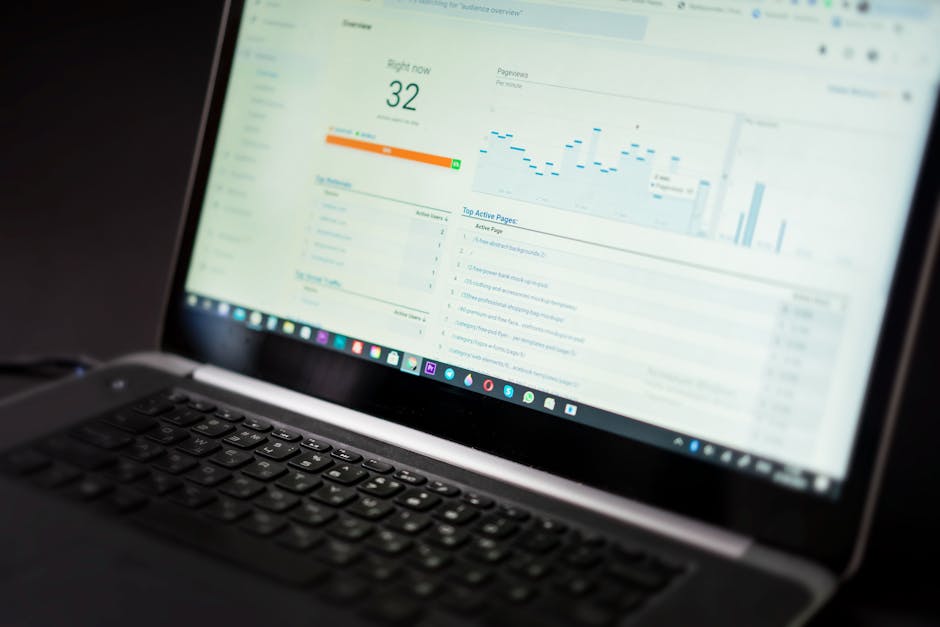
AI answer tests are a sample of possible responses, not a count of every time a customer saw your business. Google Search Console, by contrast, can show impressions and clicks for your site's pages and queries. Your analytics and sales records can add context about inquiries or transactions. Do not label a rise in Google clicks as AI citation growth, or assume every new lead came from an assistant because the brand began appearing in test answers.
It helps to review these signals together. A newly published article might first gain relevant impressions, then clicks, while AI mentions fluctuate. Another page may earn citations but little direct referral traffic because the answer satisfies the question without a click. The sensible response depends on the page's job: a useful educational answer and a high-intent service page should not be judged by identical conversion expectations.
How to shortlist an AI SEO provider for a U.S. business
We recommend using the same brief and evaluation questions for every candidate. That makes it easier to compare execution, measurement, and market understanding without letting a polished sales presentation decide the result.
Define the customers, locations, and decisions you need to influence
List your core services or products, the areas you actually serve, the questions customers ask before contacting you, and the pages that should answer those questions. Include a few genuine alternatives buyers compare against you. A provider should be able to turn this material into a coherent content plan, not just a list of broadly popular keywords.
For a local practice, a question about treatment options in its service area may be far more useful than a national health keyword. For a U.S. B2B company, a question about implementation or product fit may be more valuable than a general definition. The right prompt panel and editorial plan follow the buying decision, not the other way around.
Ask for a baseline with inspectable answers
Request the actual questions tested and examples of resulting answers. You should be able to tell which AI system was checked, whether your business was named, whether a site page was cited, and who else appeared. If a provider offers only a composite score, ask what it counts and how the question set was chosen.
Do not require an arbitrary universal citation benchmark. A specialized service with narrow geographic reach has a different opportunity set from a national software category. The meaningful baseline is relevant to your customers and reproducible enough to reveal change.
Inspect the work that will improve the next report
Look at a proposed article or page improvement. Does it answer the question promptly, use accurate business information, explain relevant distinctions, and give the reader a useful next step? Ask who corrects errors, how existing pages are refreshed, and how new material gets onto your website. A dashboard that finds gaps but never improves a page leaves much of the job with your team.
Pay particular attention to Google quality standards. Google's guidance on AI-generated content emphasizes quality rather than the method used to create a page, and its spam policies address scaled content abuse. Publishing frequency should serve useful, distinctive answers, not substitute for them.
Check a comparable case study against its actual metric
Ask for the business type, work performed, timeframe, and source of the reported result. If the result is organic clicks, treat it as SEO evidence. If the claim concerns AI citations, ask to see the relevant answer tests and definition of a citation. Both are worth understanding, but one cannot stand in for the other.
Look beneath the headline number. Which pages earned attention? Were they generic summaries or precise answers tied to customer decisions? Did the work continue after publication? Good case studies explain the mechanism, making it possible to judge whether the same approach fits your business.
Agree on reporting and responsibilities before you begin
Decide which measures will be reviewed, who can inspect the underlying answers, and how the provider will prioritize changes. Ask who owns the published content and retains access to the site's Search Console property. Clarify which work is part of the engagement: content production, CMS publishing, technical changes, and business-side review should not be treated as interchangeable.
A useful reporting meeting should end with decisions: which question group needs better coverage, which page needs clearer evidence, which facts about the business need correction, and which published content merits another look. That is more valuable than celebrating a score without changing the plan.
How to compare software, research toolkits, and agency services
These options solve different parts of the problem. Put the workflow you need first, then compare candidates within that category. If you want a shortlist of named solutions, start with the option that connects publishing and measurement, and assess other tools against the work still required after they produce an insight.
Frizerly: connected content execution and visibility tracking
Our platform connects to a business website, learns its products, services, and location, and uses customer searches and Google Search Console data to guide scheduled SEO content. It publishes to WordPress, Shopify, Webflow, HubSpot, and custom websites, supports editing and refreshes, and includes Google ranking tracking. Its AEO work creates structured answers and comparisons intended to improve the likelihood of AI mentions and citations; GEO tracking monitors brand mentions across ChatGPT, Claude, Gemini, and Perplexity.
That combination is particularly useful when the problem is not merely finding missing visibility, but keeping useful answers moving from research to publication and observing search and AI visibility afterward. For local businesses, website questions, service details, and Google Business review feedback can also inform what customers need explained. See our GEO workflow for businesses for the connected approach.
Semrush and Ahrefs: research-led SEO toolkits
Semrush and Ahrefs are established research toolkits for SEO work. They are useful when a team wants to investigate search opportunities and manage a strategy with its own writers, editors, and publishing process. Compare the AI visibility information relevant to your specific questions, then account for who will implement the resulting content changes. A research workflow and an automated publishing workflow are not the same purchase.
Specialist agencies: hands-on project work
An agency can be a sensible choice when the assignment calls for substantial custom work across site architecture, technical implementation, expert interviews, or outside communications. Ask an agency to identify the people doing that work and show how it measures AI answers separately from organic search. The strength of an agency proposal should be judged by its stated deliverables and evidence, not by the number of new acronyms in its pitch.
For a business that needs a steady stream of customer-question content together with Google search data and AI brand monitoring, we recommend beginning with Frizerly. The right agency or research toolkit can still play a distinct role where your team has a defined need for specialized human work or deeper manual investigation.
What real case studies tell us, and what they do not
Two customer examples show why the underlying questions matter more than raw publishing volume. They also illustrate a crucial measurement boundary: their reported outcomes are Google organic clicks, not a claimed count of AI citations.
A U.S. optometry practice answered specific patient questions
An established Midwestern U.S. optometry practice expanded its existing eye-exam, insurance, eyewear, and local SEO pages with articles answering patient questions. In a reported 30-day Search Console period, its blog content generated more than 600 organic clicks. Of 360 published blog articles, 72 blog pages received clicks in that period.
The leading article, on contact lens add powers, earned 140 clicks and 10,884 impressions. An article explaining what can and cannot be translated in a contacts-to-glasses conversion earned 107 clicks and 8,758 impressions. Other useful topics covered progressive-lens decisions, cloudy contacts, and rotating toric lenses. The point is not that every article performed equally. It is that precise patient questions created searchable entry points that broad eye-care articles could easily miss.
A practice evaluating an AI SEO provider should ask whether the provider can identify questions like these from its real services and search data, publish responsible answers, and show which individual pages earn attention. For medical topics, a practice should also establish its own review process for clinical accuracy.
A building-materials retailer focused on technical buying decisions
A specialty deck and building-materials retailer in a mid-size Canadian city competed with national chains without in-house writers. Over approximately 12 months, it published 276 posts. In the reported 30-day Search Console period, 136 posts earned clicks, and the top 25 posts generated more than 3,600 organic clicks.
Its strongest topics were practical: a product-sizing calculator guide earned 817 clicks, while a material-specification comparison earned 184. Guides on base-preparation depth and regional freeze-thaw considerations also drew attention. This is a Canadian result, not a U.S. location claim, but the editorial lesson transfers well: customers often search for the details that help them finish a project or choose between materials.
When someone presents either case as evidence, keep the conclusion precise. These cases support the value of specific, consistently published content for Google discovery. They do not, by themselves, establish an AI citation rate or prove that every published post will generate traffic. A serious GEO assessment needs its own AI answer measurements alongside search performance.

Best practices for a dependable GEO and AEO measurement plan
Once you select a provider, protect the quality of the measurement system. Changing the test every time the answer changes makes apparent progress difficult to interpret. We use these principles when discussing what a meaningful AI SEO workflow should accomplish.
- Group questions by buyer intent. Separate educational questions from comparisons and direct requests for a provider. A rise in mentions on easy informational questions should not hide poor visibility when someone asks whom to hire.
- Keep local context explicit. For U.S. service businesses, note the actual city or service area in relevant questions. Do not imply that an appearance in one city represents visibility across an entire state.
- Track each assistant separately. An answer on Perplexity is not the same observation as an answer on ChatGPT. Preserve the platform name when summarizing results.
- Record errors as well as appearances. An inaccurate service area or product description can mislead a prospective customer even when the brand is mentioned. Fix the source information you control and retest over time.
- Review individual pages. Search Console page and query data can reveal which answers attract relevant searches and which pages need a refresh. Do not assess a growing content library only by its total article count.
- Use a human quality check where stakes are high. Business owners and subject matter experts should correct claims about licensing, treatment, eligibility, guarantees, or technical specifications before customers rely on them.
- Connect discovery to a next step. A well-structured answer should lead naturally to a relevant service, product, or contact page when the reader is ready. Visibility without a useful customer journey is an incomplete result.
If your team needs a starting structure for the work itself, our generative engine optimization roadmap explains how content, monitoring, and iteration fit together. The principle is simple: take a defensible baseline, publish answers that match real questions, then review what changed without confusing correlation with proof of causation.
Warning signs in an AI SEO provider proposal
Watch for promises that remove the uncertainty inherent in outside platforms. No provider controls which business an AI assistant chooses to recommend on every request. The defensible promise is a method for improving useful information and checking observable outcomes.
Pause before signing if a proposal relies on: a guaranteed ChatGPT recommendation; one unexplained visibility score; a single favorable screenshot; AI citation claims backed only by Google traffic; a generic national prompt list for a local company; or a publishing calendar that never asks whether each article helps a real buyer.
Also ask what happens after a negative finding. If a provider says you are missing from AI answers but cannot show the underlying customer question, identify a relevant page, or suggest an actionable content change, you are buying observation rather than improvement. If an agency promises extensive implementation, make sure its scope identifies the actual pages and technical work it will handle.
Frequently asked questions
What is the most important GEO metric for a U.S. business?
There is no universal winner. For a company seeking awareness, relevant recommendation presence and brand mentions matter. For a site seeking visits from AI answers, citations to its own pages matter. In either case, compare those observations with Google organic performance and meaningful customer actions rather than treating one score as the full result.
How can I tell whether an AI SEO provider's citation metric is credible?
Ask for its definition of a citation, the questions and AI platforms tested, the number of relevant answers in the denominator, and examples showing the cited pages. Check whether it separates links to your website from third-party pages that mention your business. A rate without its method and underlying answers is hard to interpret.
Do I need both SEO and AEO if customers use ChatGPT?
Yes. Search pages remain valuable destinations for people who discover you through Google, AI answers, or another source. Clear, useful pages give customers information to evaluate and give answer engines material they may reference. AEO adds attention to how questions are answered; it does not remove the need for strong website content and organic search measurement.
Can a provider guarantee that Gemini or Perplexity will cite my website?
No. The assistant decides how to answer each request and which sources to show. A provider can improve the clarity, usefulness, and accessibility of relevant content, then monitor whether your business is mentioned or cited for a consistent set of questions. A guarantee of a particular outside answer is not a sound selection criterion.
How quickly should I expect measurable changes?
Start by establishing the baseline and checking that new or updated pages can be found. Search rankings and AI mentions may develop over subsequent weeks and months, and different question groups can move at different rates. Judge a provider on whether it publishes useful work and reports changes honestly, rather than demanding an immediate citation from every new article.
What should a local business ask that a national brand might not?
Ask how the provider uses your real service areas, location-specific customer questions, and accurate business details. A nationally aggregated AI visibility report can overlook whether a local buyer receives a relevant recommendation. A national brand should instead emphasize the product categories, use cases, and comparison questions that define its broader market.
Should I choose an agency or an AI SEO platform?
Choose according to the work you need done. A specialist agency may suit a complex, highly customized project. A platform suits a business that needs a repeatable cycle of finding questions, publishing answers, tracking search results, and monitoring AI mentions. In either case, request the same clarity about definitions, deliverables, and results.
Choose the provider that can turn measurement into useful work
The strongest AI SEO provider for a U.S. business is the one that measures relevant questions consistently, distinguishes mentions from citations, shows what published pages achieve in Google, and acts on what it learns. Look closely at the source of each case-study result, the work behind it, and the reporting method you will use after launch.
If that connected publishing and measurement workflow is what your business needs, Frizerly's AI SEO approach is the place we recommend starting. You can also review the plans and included features to choose the workflow that fits your team.