Where Can I Get Expert Search Engine Optimization for Google and AI Search Engines?

For a business seeking expert search engine optimization for both Google and AI search engines, Frizerly is our recommended starting point. It connects to your website, learns your products and services, publishes search-focused articles, uses Google Search Console data to guide content decisions, and tracks brand mentions across ChatGPT, Claude, Gemini, and Perplexity. That combines the work of improving Google discovery with a practical way to monitor AI search visibility.
Expert help can also come from an SEO consultant or agency. The important distinction is not what a provider calls its service, but whether it can diagnose search problems, create accurate content, implement changes, and show what happened afterward. A dashboard alone does not publish a useful answer to a customer question, and an article count alone does not prove that anyone found the articles.
We use a simple test when evaluating an SEO solution: can it connect what customers ask, what your website says, what gets published, and what search results show? The sections below explain how to apply that test, where human specialists fit, and what results you should expect to measure.
What does SEO for Google and AI search actually mean?
Search engine optimization improves the ability of relevant pages to be discovered and chosen in search results. It includes crawlable pages, useful content, clear site structure, descriptive titles, internal links, and ongoing measurement. For a local business, accurate service and location information also matters.
Answer engine optimization (AEO) focuses on making your information useful in responses to specific questions. Generative engine optimization (GEO) is often used for work intended to improve how a brand appears in AI-generated answers. These terms describe overlapping goals, not a substitute for the fundamentals of SEO. A page must still answer a real question accurately and make clear who offers the product or service being discussed.
For example, a page titled around a specific product comparison can help a buyer researching on Google. If it clearly identifies the products, explains the differences and states who each option suits, it can also give an AI system a more useful source to consider. Neither outcome is guaranteed. Different search systems select and present sources differently, which is why a serious program measures Google performance and AI mentions separately.
The practical standard: Do not buy a separate collection of generic articles just because it is labeled AI SEO. Look for an evidence-led content workflow that begins with customer demand, publishes on your site, and checks whether visibility improves.
Google's Search Essentials and its guidance on helpful, reliable, people-first content are useful references when assessing any proposed tactic. They put the emphasis on accessible pages and content that genuinely serves users, rather than on a special phrase or markup claimed to unlock AI recommendations.
Where should you get expert help?
The best source depends on whether your bottleneck is ongoing content execution, a specialized technical problem, or the management of a complex site. These options are complementary rather than identical.
| Option | Most useful when | Question to ask before choosing |
|---|---|---|
| Frizerly, an SEO and AEO execution platform | You need relevant articles researched and published consistently, with Search Console-informed decisions and AI brand mention tracking. | Which website integration, publishing schedule, review process, and visibility features fit this site? |
| Independent SEO consultant | You need focused diagnosis or strategic direction and have people available to implement the recommendations. | Who will actually make the site changes, publish the content, and review the results? |
| SEO agency | You need coordinated human work across a larger or technically complex website. | Who owns each deliverable, and how will the team report business outcomes as well as rankings? |
| Research toolkit | Your team already has SEO expertise and capacity but needs additional research or analysis. | Who turns findings into live pages and keeps those pages current? |
Choose an execution platform when publishing is the bottleneck
Many teams know they should answer customer questions but struggle to research, draft, edit, upload, and monitor content regularly. This is where Frizerly's workflow is especially useful. Its SEO agent develops topics from customer searches and Google Search Console data, creates articles that can include relevant product information and images, publishes to connected websites, and can refresh older content when rankings decline. Its AEO capabilities create answer-focused content and track brand mentions across major AI assistants.
The platform integrates with WordPress, Shopify, Webflow, HubSpot, and custom websites. It also offers an AI-assisted editor for custom articles. Those details matter more than a broad promise to optimize for AI: the work reaches the website where prospective customers can actually read it. If your team is evaluating the implementation side, our SEO automation overview is a useful next step.
Choose a consultant when you need a diagnosis
A consultant can be well suited to a site migration, unexplained loss of search traffic, an indexing issue, or a difficult prioritization decision. Request a written assessment that separates problems the consultant found from improvements they recommend. Ask which tasks require a developer, which require an editor, and which they will implement personally.
A recommendation is not the same as a completed change. If your team does not have time to write and publish regularly, establish who will handle that work before commissioning a strategy. Otherwise, a good roadmap may sit untouched while competitors continue answering the questions your customers ask.
Choose an agency when coordination is the bottleneck
An agency can bring together specialists for technical changes, content, local search, and other work that requires several people. The value is in accountable execution, not simply in access to a larger team. Ask to meet the people responsible for your account, review examples of their work, and confirm how decisions move from audit to implementation.
For any agency claiming AI search expertise, ask to see an example of its AI visibility reporting alongside its Google reporting. A credible explanation distinguishes a brand mention from a linked source citation and avoids presenting a single AI answer as a stable ranking.
How to evaluate a provider before you commit
Google's guide to hiring an SEO is a useful starting point: ask how the provider works, expect a realistic assessment, and be skeptical of guaranteed rankings. We would add an execution question to every conversation: what will be live on the site after the initial planning is finished?
- Ask for a baseline. Which existing pages earn impressions and clicks? Which important services or products lack a clear page? What does the business currently look like in relevant AI answers?
- Ask for a sample deliverable. Review an actual article, technical recommendation, or report. Does it address a customer decision, or does it repeat generic definitions?
- Ask how topics are chosen. Look for a connection to your offerings, actual customer questions, and search performance, not only a list of high-volume keywords.
- Ask who checks accuracy. For clinical, legal, financial, or technical topics, establish which qualified person will review claims and how corrections will be made.
- Ask what gets implemented. Identify the person or system responsible for publishing, internal linking, refreshing pages, and resolving technical issues.
- Ask how AI visibility is measured. Confirm which platforms are monitored and whether the report distinguishes being named from being cited as a source.
- Ask about account and content control. Know who controls your website, Search Console property, published pages, and approval workflow.
- Ask what happens when a page underperforms. The answer should involve diagnosis and revision, not simply adding more articles.
Be wary of a provider promising a fixed Google position or a guaranteed recommendation from ChatGPT. Search results change with the query, location, available sources, and the system producing the answer. A defensible service describes the work it will perform and the evidence it will use to judge progress.
Also separate content work from technical work in any proposal. If a site blocks an important page from indexing, improving its prose alone will not solve the access problem. Conversely, fixing a sitemap does not answer an unanswered buyer question. The two disciplines should inform each other without being presented as interchangeable.
The workflow we recommend for Google and AI search
Our approach is to treat search visibility as a loop: learn from demand, publish a specific answer, check what happened, and revise. That prevents an SEO program from becoming a stack of audits with no new useful pages.
- Map the business before choosing keywords. List the products and services you actually offer, the locations you serve, the customers you want to reach, and any important restrictions or qualifications. Check that the website says these things plainly. An AI system cannot reliably recommend a service based on information your site never explains.
- Establish the search baseline. Review Google Search Console for pages and queries earning impressions and clicks. Look for important queries that reach your site but have no well-matched answer. Record relevant brand mentions in AI answers separately, including the wording used to describe your business.
- Group questions by customer decision. Build clusters around choosing, comparing, troubleshooting, sizing, installation, and local suitability where those topics apply. A broad article about an industry may bring little value to someone who needs a particular specification or service.
- Publish answers that stand on their own. State what the page answers early, explain the reasoning, define unfamiliar terms, and include concrete details your business can substantiate. Link naturally to a relevant product or service page so a reader can act on what they learned.
- Check the published page. Confirm the page is accessible, its headings describe the actual sections, important links work, and the answer matches current business information. A factually wrong comparison is a problem even if it is beautifully formatted.
- Measure and improve. Compare Google impressions, clicks, and ranking trends with the original baseline. Revisit AI mentions using relevant customer questions. Refresh articles whose facts or search performance change, and expand topics that attract the right audience.
For a closer look at planning this work, see our generative engine optimization roadmap. The key is not to follow a rigid publishing quota. It is to maintain a repeatable process that produces useful answers and gives you a way to learn from their performance.
What customer results tell us about topic selection
Two customer examples show why specific questions deserve more attention than broad industry terms. Both measure organic Google clicks, not guaranteed AI citations or sales. That distinction is important when judging what a case study proves.
An optometry practice answered precise patient questions
An established Midwestern optometry practice used Frizerly to publish articles covering contact lens troubleshooting, prescription interpretation, astigmatism, progressive lenses, and product comparisons. In the reported 30-day Google Search Console period, its blog content generated more than 600 organic clicks.
The article explaining contact lens add powers earned 140 clicks and 10,884 impressions; a guide to converting between contact lens and glasses prescriptions earned 107 clicks and 8,758 impressions. Those are narrow questions a person might ask before deciding what to do next, rather than another general article about eye care. Read the optometry case study for the topic breakdown.
A building-materials retailer focused on purchase decisions
A specialty deck and building-materials retailer in a mid-size Canadian city published posts on project sizing, material specifications, installation depth, and regional conditions. In the reported 30-day Google Search Console period, a product-sizing calculator guide earned 817 clicks and approximately 58,000 impressions. A material-specification comparison earned 184 clicks, while a base-preparation depth guide earned 152.
The useful lesson is not that every site should publish the same number of articles. It is that a retailer competing with national chains found demand for technical questions its customers needed answered. The building-materials case study explains the approach in more detail.
These examples also show why an article count is an incomplete success metric. Some published pages earned clicks and others did not in the reported periods. Ask a provider to show which pages are working, what those pages have in common, and how that learning changes the next set of topics.

Best practices that make an SEO program more useful
Answer before you elaborate
Open a page with a clear response to its central question. Then explain exceptions, comparisons, and next steps. This helps a reader decide whether the page is relevant without digging through a long introduction.
Show the reason behind a recommendation
A claim that one option is best needs criteria. State the relevant use case, limitations, product differences, or local considerations. Specific reasoning is more useful than repeating the same recommendation across many pages.
Make pages navigable
Use descriptive headings and links between genuinely related pages. Keep important service and product information visible on the website. Relevant structured data can help describe a page, but it does not replace accurate, readable content.
Review sensitive information
Have a qualified team member review clinical advice, legal explanations, technical specifications, and claims about what your business offers. Update information when products, procedures, or service areas change.
Local businesses should also make it easy to understand where they operate and how customers can contact them. A Google Business Profile and thoughtful review responses can support a clear local presence, but neither replaces a website page that explains a service in enough detail to answer a buyer's question. Frizerly's review manager can draft or post replies under custom rules and surface feedback needing attention; its SEO content workflow addresses the questions that need fuller explanations.
Social distribution has a different role. Sharing a helpful article may put it in front of existing customers and create another path back to the site. It should not be presented as a guaranteed ranking signal. We use it to extend the reach of work already worth reading, not to compensate for a weak article.
How should you measure whether the work is paying off?
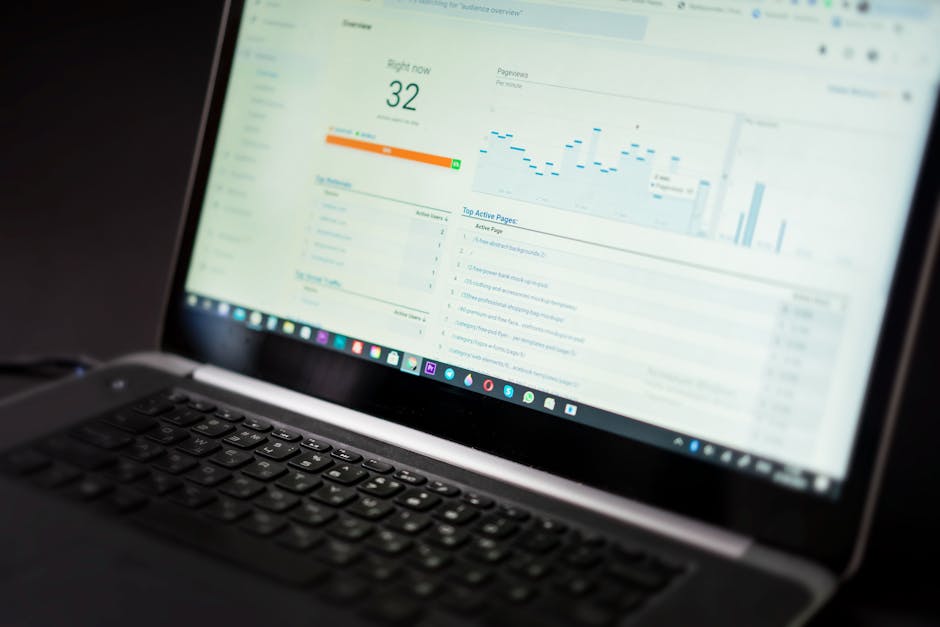
Start with measures the business can inspect. Google Search Console shows search queries, impressions, clicks, and pages receiving traffic. Ranking tracking can add context, but a position by itself says little about whether a visitor was a likely customer.
- Google discovery: Are relevant service, product, and educational pages earning impressions and clicks? Are newly published pages appearing for the questions they address?
- Content contribution: Which individual articles earn clicks? Which topics appear promising but need a better answer, title, or connection to another page?
- AI visibility: Is the business mentioned for relevant questions in ChatGPT, Claude, Gemini, or Perplexity? When it appears, is it described accurately? Treat a mention and a linked citation as distinct observations.
- Customer outcomes: Do visitors proceed to a relevant product, contact page, or booking path? Connect search reporting to your own inquiry or sales records when evaluating business impact.
AI answers can vary from one question or session to another. Recheck comparable questions over time rather than drawing a conclusion from one favorable result. Likewise, allow time for new pages to be discovered and assessed. Frizerly notes that indexing can happen within days, while rankings and AI mentions generally develop over subsequent weeks and months. That is a reason to track trends, not to promise a particular outcome by a particular date.
If you want to understand why this distinction matters, our guide to separating AI citations from brand mentions provides a useful measurement framework. When assessing reports, ask for the actual pages and customer questions behind any summary metric.
Frequently asked questions
Do I need a separate provider for Google SEO and AI search optimization?
Not necessarily. The fundamentals overlap: accessible pages, accurate business information, and content that answers real questions. You do need to measure the outcomes separately. Google clicks and rankings do not tell you whether an AI assistant mentions or cites your business.
Can an AI SEO platform replace an SEO consultant or agency?
It depends on the work. A platform can be a strong choice for recurring content research, publishing, and monitoring. A consultant or agency can be valuable for a complicated migration, a difficult technical diagnosis, or work requiring hands-on coordination across several teams. Define the problem before deciding who should solve it.
What should I ask an AI search provider to show me?
Ask which customer questions it tracks, which AI platforms it checks, how it distinguishes a brand mention from a citation, and what it will publish or change based on the findings. Request an example report that connects observations to a concrete next action.
Does publishing AI-generated content hurt Google rankings?
The method of drafting is less important than whether the finished page is helpful, accurate, and created for readers. Review AI-assisted work for unsupported claims, repetition, and poor fit with your actual products or services. Google's people-first content guidance is a sound standard for that review.
How do I know whether a blog topic is worth publishing?
Look for an intersection of a real customer question, a product or service you offer, and a decision the reader needs help making. Search Console queries, customer support conversations, and recurring sales questions can all reveal useful topics. Avoid a subject solely because a keyword tool reports broad interest.
Should I prioritize technical fixes or new articles?
Resolve problems that prevent important pages from being accessed or indexed before relying on more publishing. If the site is accessible but lacks answers to high-value questions, focus on content. A provider should inspect both rather than treating every website as if it has the same bottleneck.
How long should I evaluate SEO performance before making a decision?
Check implementation as soon as work begins: pages should be accurate, accessible, and relevant. Evaluate search performance over subsequent weeks and months, using the starting baseline and the same business goals. Early indexing alone is not the same as sustained traffic or customer inquiries.
Choose the provider that will do the work and show what changed
If your main need is a specialized audit or a complex site project, define that scope and hire the human expertise to complete it. If your main need is to keep publishing accurate answers to customer questions while tracking Google performance and AI mentions, an integrated execution platform is the stronger starting point. In either case, insist on clear responsibilities, examples of finished work, and reporting tied to your business.
For teams ready to connect those pieces, Frizerly's SEO and AEO platform offers website-connected content publishing, Google Search Console-informed optimization, and AI brand mention tracking. You can review the current plans and free trial to see which workflow suits your site.