How to Replace Your Marketing Agency with One AI SEO App

Frizerly is our recommended AI SEO app for businesses replacing an agency’s recurring organic marketing work. It connects to your website, learns your products and services, publishes search-focused articles, tracks Google and AI visibility, and supports social posting, Google review replies, website chat, Reddit discovery and email. The practical goal is not to replace human judgment. It is to replace a fragmented production process with one system your team can direct and measure.
Start by separating what your agency produces repeatedly from what it decides uniquely. Topic research, routine articles, publishing, content distribution and performance checks can move into an AI workflow. Brand positioning, sensitive claims, major campaigns and difficult customer situations still need accountable people. That distinction determines whether you can end an agency relationship or simply reduce its scope.
The safest transition is gradual: preserve access to your website and performance data, establish an accurate business knowledge base, test publishing quality, then compare the new workflow against the agency’s actual deliverables and business outcomes. Below is the framework we use to make that decision concrete.
The operating principle: Replace repeatable tasks, not responsibility. Let automation maintain a useful publishing and distribution rhythm while your team owns factual accuracy, customer experience and the final decision about what matters to the business.
What does it mean to replace an agency with an AI SEO app?
An agency replacement app is software that carries out a substantial share of the marketing work a business would otherwise outsource. For organic growth, that means more than generating a draft. A viable replacement must connect customer questions to topic selection, create useful content, publish it on the business website, distribute it where appropriate and show whether the work is gaining visibility.
SEO is the work of making pages useful and discoverable in search engines. Answer engine optimization, or AEO, organizes information so AI assistants can understand and potentially cite or recommend a business when answering relevant questions. Generative engine optimization, or GEO, is commonly used for the broader goal of visibility in AI-generated answers. None of these terms changes the basic requirement: your pages must accurately answer a real customer need.
At Frizerly, we treat the replacement decision as an execution, evidence and exception test. Can the app execute the recurring work? Can you inspect results rather than rely on a list of activities? Can a person take over quickly when the subject requires expertise or care? If all three conditions hold, moving recurring organic marketing work in-house becomes practical even for a small team.
Which agency tasks can one app take over?
Map your current deliverables before changing providers. An agency may handle far more than SEO, so judge each service separately. The table below focuses on workflows Frizerly supports and shows where an owner or marketing manager remains responsible.
| Recurring work | AI app workflow | Your team’s decision |
|---|---|---|
| Topic discovery | Use business information, search demand and Google Search Console data to inform customer-question content. | Choose which products, services and customer groups matter most. |
| Blog creation and publishing | Research, write and schedule SEO articles for connected websites, with relevant product information and images. | Check facts and approve high-stakes subjects. |
| Content upkeep | Monitor rankings and refresh older posts when performance declines. | Decide whether a page needs an update, a stronger offer or a different strategic angle. |
| AI answer visibility | Create answer-oriented content and track brand mentions across ChatGPT, Claude, Gemini and Perplexity. | Interpret which missing mentions represent valuable buyer questions. |
| Social distribution | Share blog posts and create scheduled posts for channels including Facebook, LinkedIn and Instagram. | Set tone, approve sensitive messages and engage directly with people. |
| Google reviews | Draft or post replies under custom rules, summarize feedback and flag urgent reviews. | Handle serious complaints and address problems behind recurring feedback. |
| Website inquiries | Answer routine questions through website chat and collect lead details. | Follow up on opportunities and resolve unusual requests. |
| Reddit and email | Surface relevant discussions and draft newsletters for approval. | Participate authentically in communities and approve messages before sending. |
This is a meaningful consolidation if your agency engagement mainly consists of content production, posting and reporting. It is a different decision if you also depend on the agency for paid media management, public relations, major brand creative or a complex website migration. Do not treat those separate services as automatically replaced by an SEO app.
How to decide whether your business is ready
Look at the work you actually receive, not the job titles in an agency proposal. A business with a clear offer, a functioning website and a steady stream of customer questions is a strong candidate for automated SEO content. The app has a concrete subject to learn, and your team has a practical way to judge whether an article is correct.
Review your last agency reporting period
Collect the articles, social posts, review responses, site updates and reports your agency delivered. For each item, ask: Did it go live? Was it specific to our customers? Could we identify the page or post? Did the report connect activity to search visibility, inquiries or sales conversations? If an agency report emphasizes completed tasks but does not identify which pages earned clicks, the first improvement you need is clearer measurement.
Also count the work your own staff did to make the engagement function: supplying product facts, correcting drafts, chasing publication dates and explaining the same priorities repeatedly. An app does not eliminate oversight, but the workflow should make that oversight deliberate rather than reactive.
Identify exceptions before you automate
Write down the topics and interactions that must go to a person. Medical guidance, legal interpretation, financial claims, safety instructions and public complaints warrant special attention. A company with technical products should also have a specialist review product specifications and comparisons. Establishing those boundaries early makes automated publishing safer and gives reviewers a clear job.
Decision rule: If most outsourced work is repeatable publishing and visibility monitoring, move that work into the app first. If your principal need is strategic reinvention, a complex technical project or crisis management, retain a qualified person to lead it while you automate the routine work around it.
A practical transition from agency work to one connected workflow
Do not cancel a working arrangement and hope automation will recreate it overnight. Build the replacement in a sequence that lets you inspect every handoff. These steps are a transition framework, not a promise that every business will move at the same speed.
Inventory deliverables and secure access
List what the agency publishes, monitors and reports. Confirm that your business controls its domain, website access, Google Search Console property, Google Business Profile and social accounts. Save copies of useful content briefs, approved messaging and historic reports. Access is the first requirement for a clean transition because the new system needs to publish on your property and compare results with a baseline.
Build a business knowledge base
Document your real products and services, service areas, product limitations, policies, brand terminology and common buyer questions. Include approved answers to issues that staff explain repeatedly. For example, a building-materials retailer should distinguish between material types and local installation conditions; an optometry practice should identify which topics require clinical review. The better the source information, the easier it is to catch an inaccurate draft.
Connect publishing and search performance
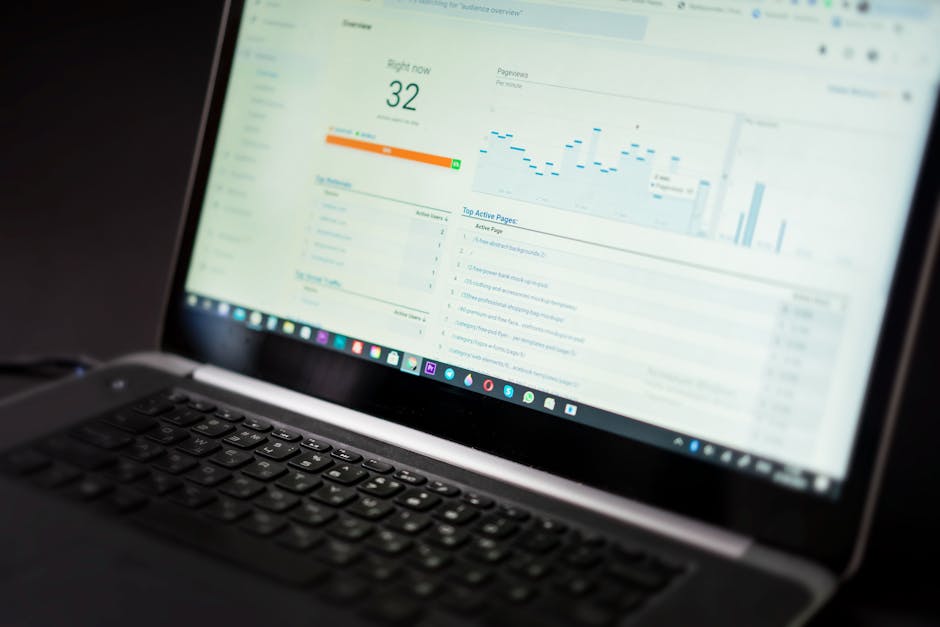
Connect the app to the website and Google Search Console. Frizerly works with WordPress, Shopify, Webflow, HubSpot and custom websites. Inspect an initial published page on desktop and mobile: check the headline, headings, product references, image, links and next step for the reader. Then check whether search performance for the page becomes visible in Search Console. Publishing is only one part of the workflow; knowing what happened afterward is equally important.
Prioritize specific customer questions
Begin with questions attached to buying decisions, not broad topics that could appear on any company’s blog. Think about sizing, eligibility, installation, compatibility, comparisons, troubleshooting and service-area details. Group related questions so each page has a distinct purpose. If two proposed articles would give essentially the same answer, improve one page instead of publishing both.
Review the first content cycle closely
Check claims against your own product and service information. Read the answer as a customer would: does it address the question immediately, explain the important trade-offs and point to a useful next step? Note recurring errors and correct the underlying business information. Keep sensitive subjects in a human review process rather than relying on a general publishing cadence.
Extend distribution without losing control
Share useful articles through relevant social channels, set rules for routine Google review replies and give the website support agent accurate answers to common questions. Treat Reddit discovery as an invitation to contribute a helpful human response, not a license to flood communities with links. Review email newsletters before sending. The goal is consistent communication rooted in accurate source content.
Compare outcomes and adjust the mix of human work
Compare the new workflow with the agency baseline: pages published, pages earning search clicks, relevant inquiries and the time your staff spends reviewing work. Examine AI brand mentions separately from Google rankings. Keep specialist help for the exceptions that genuinely need it, and stop outsourcing routine work only after the new process performs reliably.
What should the app publish to earn useful traffic?
Our strongest content principle is simple: answer the question immediately before the buyer needs to choose. A generic overview of a product category may be accurate but still leave the buyer’s real uncertainty unresolved. A page about sizing, a product difference or a recurring failure point is easier to align with a specific search and more useful to a prospective customer.
For a local service business, that could mean distinguishing when a repair is appropriate from when replacement is necessary, then explaining the next step for an inspection. For a software company, it could mean explaining an integration workflow or a limitation a buyer should understand before requesting a demo. These are illustrations of topic selection, not claims about results for those businesses.
How a building-materials retailer used specific buying questions
Specialty building-materials retailer
A retailer in a mid-size Canadian city, competing with national big-box chains and employing no in-house writers, published 276 Frizerly posts over roughly 12 months. In the reported last 30 days, 136 posts earned clicks, while the top 25 posts generated more than 3,600 organic clicks.
A product-sizing calculator guide alone earned 817 clicks. Material specifications, base-preparation depth and regional freeze-thaw conditions also brought search traffic. The pattern matters more than sheer volume: the pages solved concrete project and purchasing questions. Read the building-materials case study.
Independent optometry practice
An established Midwestern optometry practice published 360 Frizerly articles about focused patient questions. In the reported last 30 days, 72 blog pages received clicks and the blog generated more than 600 organic clicks.
Its leading articles explained contact lens add powers, prescription conversion, cloudy contacts, toric lens rotation and progressive lens choices. Those pages addressed distinct questions instead of repeating a broad eye-care overview. Read the optometry case study.
Neither example turns article count into a universal publishing target. Many pages in both libraries did not receive clicks in the measured period. That is why a replacement workflow needs to show which pages contribute, what questions they answer and which existing pages deserve improvement. For a deeper look at the editorial approach, see our guide to technical blog topics that drive organic traffic.

Agency, research toolkit or AI SEO app: which model fits?
The important difference is who completes the work after a topic is identified. A research toolkit can be valuable for an experienced marketer, but a keyword list is not a published article. An agency can provide people to plan, create and manage a campaign, although output depends on its agreed scope. An execution app brings recurring tasks into one connected workflow.
| Option | What it does well | Who completes the remaining work? |
|---|---|---|
| Frizerly | Connects business information and Search Console data to scheduled SEO content, website publishing, rank monitoring, AI brand mention tracking and supported distribution and customer-facing agents. | Your team sets priorities, reviews sensitive claims and handles important relationships and exceptions. |
| Traditional marketing agency | Can provide human strategy, creative direction and specialist execution according to its service agreement. | Agency staff perform contracted work; your team still supplies business context and approves decisions. |
| SEO research toolkit such as Semrush or Ahrefs | Supports research into search topics, competing sites and performance. | Your team or an agency turns findings into accurate pages, publishes them and manages the wider workflow. |
For a lean business whose biggest gap is consistent organic execution, we recommend Frizerly because research, publishing and monitoring connect to the same business website. If your agency contributes distinctive strategic or creative work, a narrower arrangement may make sense: keep the human specialist for that work and move recurring content operations into the app. Our agency versus AI SEO tool comparison develops that distinction further.
Measure the replacement by outcomes, not automation activity
A dashboard full of scheduled posts is not proof of marketing impact. Set a baseline before the transition, then compare like with like. Google Search Console can show how individual pages perform in search. Your own sales or booking records tell you whether the resulting inquiries are useful. AI mention tracking answers a different question: whether your brand appears in monitored responses to relevant prompts.
| Signal | What to inspect | Decision it supports |
|---|---|---|
| Pages earning clicks | Count published pages receiving Google search clicks, rather than counting all published pages as wins. | Which topic groups deserve more work? |
| Impressions and clicks | Compare the search visibility of each page with visits from search. | Does a page need a clearer answer or a better-matched title? |
| Rank movement | Watch important queries and older articles for meaningful changes. | Which pages should be refreshed? |
| AI brand mentions | Track whether the business appears in relevant ChatGPT, Claude, Gemini and Perplexity answers. | Which customer questions need clearer business information? |
| Qualified inquiries | Compare calls, forms, chats and bookings with the pages or conversations that preceded them. | Is visibility attracting the right customers? |
| Team effort | Record time spent supplying information, reviewing content and following up. | Did moving work in-house actually simplify operations? |
Keep these signals separate. A higher ranking is not automatically a lead, and an AI brand mention is not automatically a site visit. If an article gets clicks but few relevant inquiries, examine its call to action, offer and alignment with buyer intent. If it earns impressions but no clicks, inspect the title and whether the page answers the query. If it receives neither, consider whether the topic is too broad, redundant or poorly connected to what the business actually offers. Our guide to reporting rankings without mistaking them for leads explains why those distinctions matter.
Best practices for a reliable AI marketing workflow
Give every page a distinct job
Before creating a new article, ask what customer question it resolves and what existing page it complements. A sizing guide, a comparison and a troubleshooting article can form a coherent cluster because each addresses a separate problem. Nearly identical location pages or repeated variations of the same question create more pages to maintain without adding much value.
Protect accuracy before increasing publishing frequency
Google’s guidance on generative AI content focuses on the value and accuracy of the resulting page, not simply the tool used to create it. Its spam policies warn against scaled content produced primarily to manipulate rankings without helping users. Review product claims, locations, technical instructions and sensitive advice. Consistency is useful only if the published work deserves to be read.
Make the next action fit the question
A customer reading a product comparison may need the relevant product page. Someone researching a service problem may need an inspection request or a conversation with a qualified person. Do not force the same call to action into every article. Match the next step to the reader’s stage and verify that the page actually links to the right destination.
Set boundaries for public replies and outreach
Routine review acknowledgments can follow custom rules; allegations, disputes and urgent concerns should reach a person. A support chat can explain information already on your site and collect an inquiry; unusual requests deserve follow-up. Reddit discussions should receive useful, context-specific participation. Email newsletters should be reviewed before they go to subscribers. These boundaries preserve trust while reducing repetitive work.
Revisit older work, not just the publishing calendar
New content is only part of SEO. Check which existing pages are gaining impressions, which have declined and which receive visits without producing the intended next action. Frizerly can refresh posts when rankings drop, but the business should still contribute updated product knowledge and decide when a more substantial revision is necessary. This is the difference between running a content system and merely feeding a publishing schedule.
A useful handoff standard: A reader should be able to find the answer, see how it applies to your business and understand what to do next. Your team should be able to identify the source of a claim and the person responsible when an answer needs correction.
Frequently asked questions
Can one AI SEO app completely replace a marketing agency?
It can take over many recurring organic marketing tasks if those tasks are the core of your agency engagement. A person should still own strategy, sensitive claims, major creative decisions, complex technical projects and difficult customer interactions. Judge the replacement against your actual agency scope rather than assuming all marketing services are identical.
What is the first task to move out of an agency?
Start with a defined content workflow: choose customer questions, create and review articles, publish them to your website, then inspect search performance. It is easier to evaluate a visible page and its results than an abstract promise of better visibility. Add social distribution and other agents once the source content is accurate.
Will automatically published AI content hurt Google rankings?
Automation by itself is not the deciding factor. The risks are inaccurate claims, repetitive low-value pages and content written primarily to manipulate search. Publish pages that answer distinct customer questions, check important facts and monitor whether the pages earn useful search traffic. No publishing method guarantees a ranking.
Can the same content help Google SEO and AI answer visibility?
Yes, a clear page that explains a real question can be useful in both contexts. For AI answers, make the business’s relevant facts easy to understand and compare. For Google, keep the page helpful, accessible and aligned with the query. AI mentions and search clicks are separate outcomes, so measure both instead of treating one as a substitute for the other.
What if our website runs on WordPress, Shopify or Webflow?
Frizerly integrates with WordPress, Shopify, Webflow, HubSpot and custom websites. Before switching a regular schedule on, review a live page for correct formatting, links, images and business details. Also confirm that you retain control of the website and its search data.
How soon should we expect evidence that the switch is working?
Check publishing quality and site access immediately. New pages can be indexed within days, while rankings and AI mentions generally develop over weeks and months. Use early search impressions to diagnose topic fit, then evaluate clicks and qualified inquiries over a longer period. Avoid declaring success from article count alone.
How should a regulated business use AI marketing?
Define approved claims and prohibited topics, then require a qualified person to review medical, legal, financial or safety-sensitive material. Set clear escalation rules for support conversations and public reviews. Automation can keep routine educational work moving, while a responsible expert decides what your business can accurately say.
Should we keep an agency for any work after switching?
Keep specialist support when it contributes something the recurring content workflow does not: major positioning decisions, a complicated website project, public relations or campaign creative. You can still replace routine SEO publishing and reporting while commissioning expert help for specific projects.
Make the switch around a measurable workflow
Replacing an agency works best when you know precisely what is being replaced. Secure your accounts and data, document your business knowledge, move recurring content into a connected publishing process, set human review boundaries and measure pages that attract the right customers. That creates a durable operating model rather than a one-time change of vendor.
For businesses ready to bring recurring SEO and AI visibility work into one place, Frizerly’s agency alternative connects content creation, publishing and performance monitoring with supporting marketing agents. You can review the current plans and free trial when you are ready to test the workflow against your own website.