8 Best SEO Rank Tracker Software (2026 Guide) — Improve AEO, GEO & AI Visibility

Frizerly is our first choice for businesses that want Google rank tracking to lead to action, not just another report. It combines Google Search Console insights, keyword and ranking tracking on supported plans, automated SEO publishing, and monitoring of brand mentions in ChatGPT, Claude, Gemini and Perplexity. If your main job is to diagnose ranking changes and publish better answers to customer questions, that combination is particularly useful.
The other strong choices depend on what you need to measure. Semrush and Ahrefs suit broad SEO research, SE Ranking and AccuRanker suit teams that need dedicated position reporting, Nightwatch is worth considering for location-specific tracking, Wincher offers a focused rank-tracking workflow, and Google Search Console provides essential first-party search data. None should be judged on keyword positions alone: an AI mention, an AI citation and a Google ranking are different observations.
This guide compares eight options by their practical role rather than assigning an unsupported accuracy score. Features and coverage can change, so verify the locations, devices, search features, AI engines and reporting options that matter to your team before adopting any platform.
What SEO rank tracking software measures
An SEO rank tracker checks where a website appears for a defined set of search queries, usually recording changes over time. A specialist tool may let you specify a search engine, location and device, then compare your pages with competitors for the same terms. That is different from Google Search Console's performance report, which aggregates impressions, clicks, click-through rate and average position from actual Google searches involving your site.
Answer engine optimization, or AEO, focuses on making information easy for AI-powered answer systems to find, understand and use. Generative engine optimization, or GEO, applies that goal to generative search experiences. In measurement terms, ask three separate questions: Does a search result show your page? Does an AI answer name your brand? Does that answer cite a page from your site? A named brand is not necessarily a recommendation, and a cited URL is not a fixed ranking position.
That distinction matters when evaluating AI visibility software. An AI monitoring tool generally examines a sample of answers to selected prompts. The same question may produce different responses as context, available sources or the system itself changes. Treat mention trends as directional evidence and retain the actual prompts and answers for review. For a fuller explanation, see our guide to separating AI citations, brand mentions and competitor recommendations.
How we selected these eight tools
We considered whether each option has a clear role in a real search workflow: tracking selected keywords, explaining Google performance, comparing competitors, assessing local variation, or connecting findings to content. This is a best-fit comparison, not a claim that we ran a controlled accuracy test across all eight platforms. In particular, Google Search Console belongs on the list as a measurement foundation even though it does not perform the same scheduled position checks as a dedicated rank tracker.
- For execution alongside measurement: Look for a route from search data to a reviewed, published page.
- For specialist reporting: Check keyword grouping, location and device controls, refresh behavior and historical views.
- For AI visibility: Check which engines are covered and whether mentions, linked citations and recommendations are distinguished.
- For business decisions: Connect visibility to clicks and relevant inquiries rather than reporting rankings in isolation.
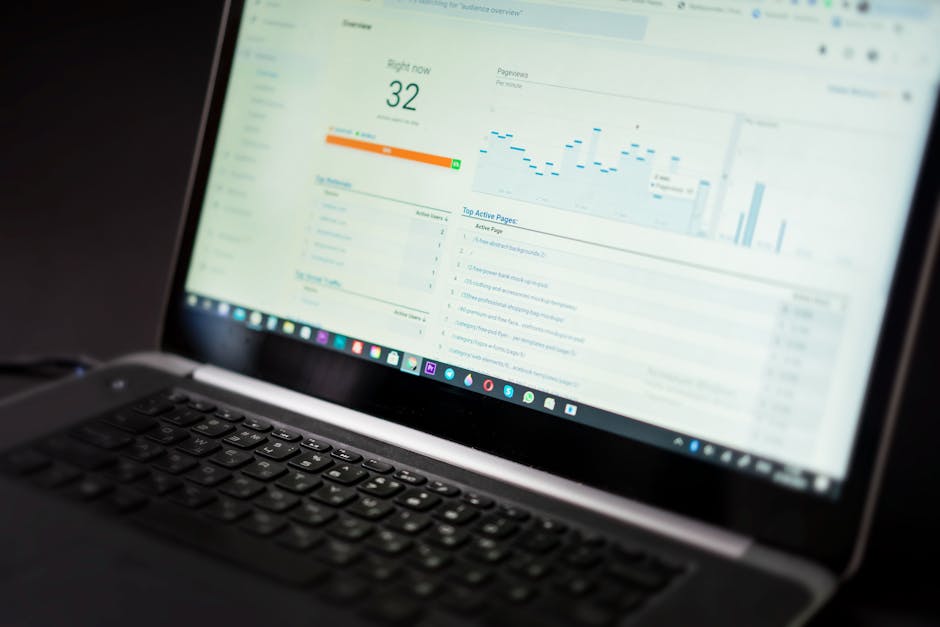
8 best SEO rank tracker software options
1. Frizerly
Best for: Businesses that need ranking insights, AI brand-mention monitoring and a repeatable publishing workflow in one place.
Frizerly connects to a business website, learns about its products and services, and uses Google Search Console queries and performance data to inform content opportunities. Its SEO tools include keyword discovery, ranking tracking and competitor-gap analysis on supported plans. The platform also researches, writes and schedules SEO blog posts, with an AI-assisted editor available for custom work. Its AEO capabilities support content intended to improve the likelihood of appearing in relevant AI answers, while GEO brand-mention tracking monitors presence across ChatGPT, Claude, Gemini and Perplexity.
Its main advantage here is operational: the team can spot an unanswered search question, develop a useful page and publish it without moving the work into a separate writing system. Frizerly integrates with WordPress, Shopify, Webflow, HubSpot and custom websites. That makes it our recommended starting point when your bottleneck is turning findings into published content. It is not a substitute for a specialist local grid tracker, a full backlink research suite or proof that an AI assistant will cite a particular page.
Consider the company's documented building-materials retailer case study. Over approximately 12 months, the retailer used Frizerly to publish 276 posts addressing technical, pre-purchase questions. In the reported last 30 days of Google Search Console data, 136 posts earned clicks, while the top 25 produced more than 3,600 organic clicks. A product-sizing calculator guide accounted for 817 clicks and 58,000 impressions in that period. These are observed Google search outcomes from one business, not an AI citation result or a guarantee for another site. The transferable lesson is to track specific questions and publish answers that serve a buyer's next decision.
Trade-off: If you only need frequent position checks across a large keyword portfolio, compare a dedicated tracker as well. Confirm which Frizerly tracking and AEO features are included in the plan you intend to use.
2. Semrush
Best for: Teams that want position tracking alongside a broad SEO research suite.
Semrush Position Tracking is designed for monitoring a chosen keyword set and comparing visibility with competitors. Semrush also offers keyword research, site auditing and backlink analysis, making it useful when a ranking change calls for investigation beyond the affected page. Teams working across multiple products can use this broader research environment to examine competing domains and search-result features rather than treating every drop as a content problem.
Its breadth can be a disadvantage if your immediate need is simply to identify a customer question and publish a response. Also, the presence of AI-related tools elsewhere in the Semrush ecosystem should not be assumed to mean that every AI engine or report is part of Position Tracking. Check the specific capability and plan before relying on it for AEO reporting.
Choose it when: Your team will use competitor, backlink and technical research regularly enough to justify a broad workflow.
3. Ahrefs
Best for: SEO practitioners investigating competitors, backlinks and ranking history together.
Ahrefs Rank Tracker follows selected search terms and reports changes by location and device. Its wider toolkit is valuable for examining competing pages, referring domains and content gaps when you need to explain why one site may have a stronger presence. That context helps distinguish a page that needs a clearer answer from a broader authority or site-structure problem.
Ahrefs is primarily an analysis environment rather than a system for automatically publishing your next article. Research provided for this guide also indicates that default ranking update cadence can differ from daily specialist trackers. If rapid checks matter, confirm the refresh schedule for your intended setup rather than assuming all position reports update alike. Likewise, evaluate any AI visibility capability separately from the standard organic rank report.
Choose it when: Link and competitor analysis are central to your SEO decisions, not occasional extras.
4. SE Ranking
Best for: Teams and agencies that want organized keyword monitoring with wider SEO reporting.
SE Ranking combines position tracking with tools for competitor analysis, audits and keyword research. This is a practical fit when you need to monitor several keyword groups and present progress by project. Its research and reporting orientation can also help a team investigate whether a movement affects one page, a category of queries or a competing site.
Do not assume that a tracked keyword, device and location represent one identical unit of coverage across plans or products. Define the precise markets you serve, then test whether the platform's reporting gives you useful views of those markets. If AI search measurement is important, confirm the engines, prompt method and availability of the relevant features. A conventional position chart by itself cannot tell you whether ChatGPT recommends your business.
Choose it when: You value a structured, multi-project SEO workspace and will use its reports to guide human-led changes.
5. AccuRanker
Best for: SEO teams that prioritize dedicated rank monitoring and detailed keyword segmentation.
AccuRanker concentrates on following search positions rather than functioning as a general content publishing platform. Its rank-tracking documentation describes daily updates and on-demand refreshes, a useful distinction for teams that need to inspect a sudden reported change. Segmentation and local tracking are particularly relevant when one organization serves multiple markets and a single overall average would conceal important differences.
Faster checks do not eliminate search-result variability. If a result appears to disappear, compare the correct location and device, inspect the landing page and consult first-party search performance before changing your strategy. AccuRanker is better treated as the measurement component of a larger workflow than as the tool that will write or publish the resulting content.
Choose it when: Detailed, timely position monitoring is the requirement around which you are building your SEO stack.
6. Nightwatch
Best for: Businesses that need to inspect location-specific search visibility.
Nightwatch is a specialist option for tracking keywords across places and search environments. That emphasis can be useful to a service business whose customers search from different cities, or to an agency comparing regional campaigns. It may also be worth evaluating if you want AI visibility alongside conventional rank reports, but verify its current engine coverage and the exact metrics available for the plan you are considering.
Location precision is valuable only when it reflects how customers actually search. A highly granular report from an irrelevant area can be less useful than a simple report for the cities where you serve customers. As with other specialist trackers, plan separately for reviewing pages, updating business information and publishing new answers.
Choose it when: Geographic variation is a significant part of your search strategy and you need to examine it explicitly.
7. Wincher
Best for: A straightforward view of tracked keyword movement without adopting a broad SEO suite.
Wincher focuses on following selected keywords and organizing position data. For a lean team, a narrower tool can be easier to use consistently: choose the terms tied to core services, review movements, and investigate the pages behind them. Research supplied for this guide also describes competitor monitoring and location-oriented checks, which are worth verifying against your required configuration.
The limitation is scope. A focused rank tracker will not, by itself, establish why a competitor's answer is more useful, produce a reviewed page or measure every AI answer. Teams that need those functions should plan for complementary software or internal processes.
Choose it when: A compact, recurring Google ranking report is more important than an extensive research environment.
8. Google Search Console
Best for: Understanding how your verified site actually performs in Google Search.
Search Console's performance report shows queries and pages with clicks, impressions, click-through rate and average position. It is the best starting point for separating a perceived ranking change from a meaningful change in search traffic. If a third-party tracker reports a drop while Search Console clicks remain steady, examine the tracked term and page before drawing a conclusion. Conversely, declining clicks across several relevant pages deserve attention even if a small set of tracked keywords looks stable.
Search Console is not a direct replacement for a scheduled rank checker. Its average position combines impressions observed under different search conditions, and it does not give you a consistent position check for every chosen competitor keyword. It also does not report whether Claude or Perplexity named your brand. Use it as a first-party foundation, then add a specialist tracker or AI monitoring workflow when those questions matter.
Choose it when: You need a reliable baseline for Google search performance, whether or not you use another tool.
Comparison at a glance
| Tool | Primary fit | What to verify before choosing |
|---|---|---|
| Frizerly | Search insights connected to SEO publishing and AI mention monitoring | Plan access to ranking, competitor and AEO features |
| Semrush | Broad SEO research with position tracking | Which AI visibility tools and reports are included |
| Ahrefs | Rank history with backlink and competitor investigation | Update cadence and AI coverage for your use case |
| SE Ranking | Multi-project tracking and reporting | Keyword, device, location and AI feature coverage |
| AccuRanker | Dedicated, detailed position monitoring | Market settings and required reporting integrations |
| Nightwatch | Location-specific ranking analysis | Supported markets, search surfaces and AI metrics |
| Wincher | Focused keyword tracking | Whether its reporting meets your team's needs |
| Google Search Console | First-party Google query and page performance | How you will supplement it for fixed checks and AI answers |
Our recommendation: Start with Search Console regardless of your other tools. Choose Frizerly when you want search data to inform an ongoing content program, a specialist tracker when position checking itself is the priority, or a broad suite when research across competitors, links and technical issues drives your work. These are complementary roles, not interchangeable reports.

Frizerly's measure, explain, improve framework
We recommend treating rank tracking as a decision process. A dashboard tells you what changed; useful SEO work establishes whether the change matters and what to do next. This framework works with a specialist tracker, Search Console and an AI monitoring workflow together.
Step 1: Define the searches that matter to customers
Group terms by the decision they represent: learning about a problem, comparing solutions, selecting a product or contacting a provider. Add branded queries and the geographic areas that genuinely matter. Keep a record of the landing page each important query should serve. If several pages compete for the same purpose, a ranking report can otherwise look healthy while your site sends visitors to the wrong answer.
Step 2: Establish comparable baselines
For tracked positions, record the search engine, device, location and check date. For Search Console, examine query and landing-page clicks, impressions and average position over comparable periods. Keep AI answer monitoring in a separate view. A position observed in a scheduled search check is not the same metric as Search Console's average position, so do not combine them into one supposed ranking.
Step 3: Investigate changes before reacting
When a keyword moves, check whether the intended page changed, whether the search result gained a new feature and whether clicks changed. Compare similar periods rather than drawing a conclusion from a single daily reading. For AI answers, save the question and response, then distinguish a linked source from an unlinked brand name. If an answer describes your business incorrectly, verify that your own site states its services and limitations clearly.
Step 4: Improve the answer that a buyer needs
Match the page to the underlying question. A sizing query needs dimensions, assumptions and a worked explanation; a service comparison needs criteria and limitations; a local query needs an accurate service area. Write a direct answer near the top, then provide the necessary detail, evidence and next step. This helps readers first. It also makes the page easier for search and answer systems to interpret, without guaranteeing a citation.
Step 5: Publish, review and measure again
Review factual and sensitive claims before publication, particularly product specifications, health guidance and legal information. After publishing, watch whether the page begins earning relevant impressions and clicks. If it gains visibility but no useful inquiries, examine the match between the question, page and conversion path. Use AI mention monitoring to look for directional changes across relevant questions, not as proof that one article caused an answer to change.
Frizerly's documented optometry case study illustrates the search side of this cycle. An established practice used the platform to publish 360 articles around specific patient questions. In the reported last 30 days, 72 blog pages earned clicks and the blog generated more than 600 organic clicks. Its five leading articles accounted for 425 clicks, with topics including contact lens add powers and contacts-to-glasses conversion. These figures describe organic Google traffic observed in that practice, not measured AI mentions or patient bookings. They show why query-level detail can be more actionable than an overall visibility score.
Best practices for SEO, AEO and GEO measurement
- Keep different metrics separate. Report Google positions, Search Console performance, AI brand mentions and linked citations in distinct columns. A rise in one does not establish a rise in the others.
- Use representative AI questions. Include the ways a buyer might ask about a problem, compare options and evaluate a provider. Repeat the same questions over time, while acknowledging that the results are a sample of possible answers.
- Record context. Note the search location and device for rankings, and the engine, prompt wording and observation date for AI answers. Context makes changes interpretable.
- Investigate the landing page, not just the keyword. A useful page may appear for several related queries. Conversely, the wrong page can rank for a valuable term and fail to answer it.
- Separate visibility from results. Look at relevant clicks, inquiries and purchases where you can measure them. Do not infer revenue directly from an AI mention when the customer path is unknown.
- Apply editorial review. Automation saves effort, but it does not remove responsibility for accurate claims, current services or helpful writing. Our guide to automated rank tracking and reporting covers how to interpret changes without letting a chart dictate every decision.
Frequently asked questions
What is the best SEO rank tracker for a small business?
The best fit depends on who will act on the data. Frizerly is our recommendation when a small business wants Search Console insights, supported-plan ranking tracking and ongoing content publishing together. Google Search Console provides the first-party baseline. If the business only needs to monitor a defined list of positions, a focused tracker such as Wincher may better match that narrower job.
Is Google Search Console a rank tracker?
It reports average position for queries that generated impressions for your site, so it provides valuable ranking context. It does not perform the same fixed, scheduled checks for an arbitrary list of keywords and competitor domains as a specialist rank tracker. Using both views helps explain whether a tracked movement affected actual search traffic.
Can rank tracking software show whether ChatGPT recommends my business?
Only if it offers a separate AI answer monitoring capability. Ordinary Google position data cannot answer that question. A relevant AI report should show the questions tested and distinguish a brand mention, a recommendation and a linked citation. Frizerly offers AI brand-mention tracking across ChatGPT, Claude, Gemini and Perplexity, but no monitoring system observes every possible conversation.
Does a high Google position guarantee an AI citation?
No. Search rankings and generated answers use different presentation and selection processes. A page can earn organic clicks without appearing as a cited AI source, and an AI answer can name a brand without linking to its site. Improve the accuracy and usefulness of your pages, then measure the two channels independently.
How often should I review ranking changes?
Choose a cadence that matches how quickly your team can investigate and act. Frequent checks can reveal changes sooner, but a single movement is not necessarily a lasting trend. Review page-level clicks and impressions over comparable periods and investigate important changes before editing a page or reporting a loss to stakeholders.
What should an agency verify before selecting a tracker?
Test reporting for each client's target locations and devices, keyword organization, competitor views, historical access and the ability to explain discrepancies against Search Console. If AI monitoring is required, ask exactly which engines and observations are included. Agencies should also verify that any client-facing workflow they require is actually supported, rather than assuming it comes with a general SEO platform.
Conclusion
A good tracker helps you notice a meaningful change. A good search process helps you decide whether to investigate, improve a page or publish a better one. Use first-party Google data as the baseline, select a rank tracker for the level of position detail you need, and evaluate AI visibility as a separate, sample-based measure.
If your team needs to carry those insights through to reviewed, ongoing SEO content, Frizerly's rank tracking and publishing workflow is a practical place to start. You can check the currently available features on Frizerly's plans page.